There is a specific kind of magic that happens inside a well-seasoned cast iron skillet. When you combine the smoky, savory depth of seared kielbasa with the earthy crunch of fresh garden vegetables, you get Amish sausage and green beans—a meal that feels like a warm hug from a rustic farmhouse kitchen. This dish isn’t just about sustenance; it’s about the interplay of textures, from the “snap” of a blistered bean to the golden, pillowy interior of a roasted potato cube.
In this recipe, we are moving away from the mushy, over-boiled versions of the past. Instead, we are utilizing high-heat searing and caramelization to elevate humble ingredients into a gourmet experience. Every bite offers a contrast of dark char marks and vibrant emerald greens, making it as visually stunning as it is delicious. If you are looking for more simple healthy dinner ideas, this one-pan wonder is destined to become a permanent fixture in your weekly rotation.
The beauty of the Amish sausage and green beans lies in its simplicity. By focusing on the quality of the sear and the timing of the vegetables, we create a complex flavor profile using only a handful of pantry staples. Whether you’re a seasoned home cook or a beginner, the sensory cues of sizzling fat and the aroma of browning onions will guide you to a perfect result every single time.
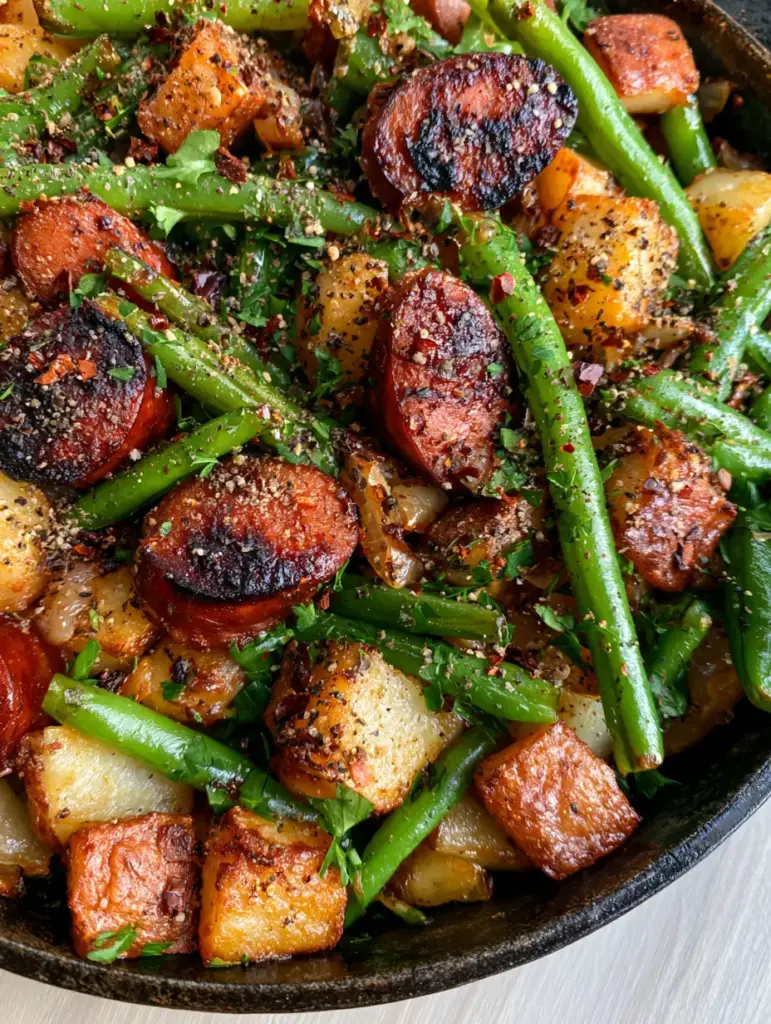
The Heritage Harvest: Why This Skillet Meal Works
- Textural Harmony: We achieve crispy, golden-brown roasted potato cubes that act as a hearty base for the tender-crisp green beans.
- Maillard Magic: Thick slices of smoked sausage are seared until they develop dark, caramelized char marks, releasing savory oils into the pan.
- Vibrant Freshness: Fresh green beans are blistered over high heat to maintain their bright emerald color and a satisfying crunch.
- Aromatic Depth: Translucent caramelized onions and cracked black pepper provide a savory backbone that ties the entire dish together.
- Minimal Cleanup: As a true one-pan meal, you get maximum flavor with only one rustic skillet to wash at the end of the night.
The Anatomy of Flavor: Essential Ingredients for Amish Sausage and Green Beans
To achieve the visual and culinary results seen in our farmhouse photos, each ingredient must be selected and prepared with intention. Here is what you will need for this masterclass in skillet cooking.
Smoked Sausage (Kielbasa): 14 oz (400g). Look for a high-quality smoked kielbasa or rope sausage; the pre-cooked nature allows us to focus entirely on achieving those deep, dark sear marks for maximum flavor.
Potatoes: 1.5 lbs (680g). I recommend Yukon Gold or Russet potatoes cut into 3/4-inch (2cm) cubes. These varieties hold their shape well while developing that essential golden-brown crust. If you love potatoes, you might also enjoy these extra-crispy smashed baby potatoes.
Fresh Green Beans: 1 lb (450g). Trim the ends but keep them whole or in large segments. Freshness is non-negotiable here; frozen beans will not achieve the same blistered, “emerald” look we are targeting.
Yellow Onion: 1 large (approx. 250g). When sliced thinly and sautéed, these onions become translucent and sweet, providing a necessary counterpoint to the salty sausage.
Avocado Oil or Ghee: 3 tbsp (45ml). You need a fat with a high smoke point to blister the beans and crisp the potatoes without burning the solids.
Seasoning Trio: 1 tsp (5g) Kosher salt, 1 tsp (5g) cracked black pepper, and 1/2 tsp (2.5g) red pepper flakes. The pepper flakes provide a gentle heat that cuts through the richness of the smoked meat.
Fresh Parsley: 1/4 cup (15g) chopped. This final “dusting” adds a pop of color and a fresh, herbaceous finish that brightens the entire skillet.
Precision Tools for a Professional Finish
To replicate the rustic, top-down smartphone photo look, your choice of equipment is vital. A 12-inch (30cm) cast iron skillet is the gold standard for this recipe. Cast iron retains heat better than stainless steel, which is crucial for creating those blister marks on the green beans and the dark char on the sausage.
You will also need a sharp chef’s knife for uniform potato cubes and a sturdy metal spatula. A metal spatula allows you to scrape the flavorful “fond” (browned bits) off the bottom of the pan, ensuring that every bit of seasoning stays with your food rather than sticking to the iron.
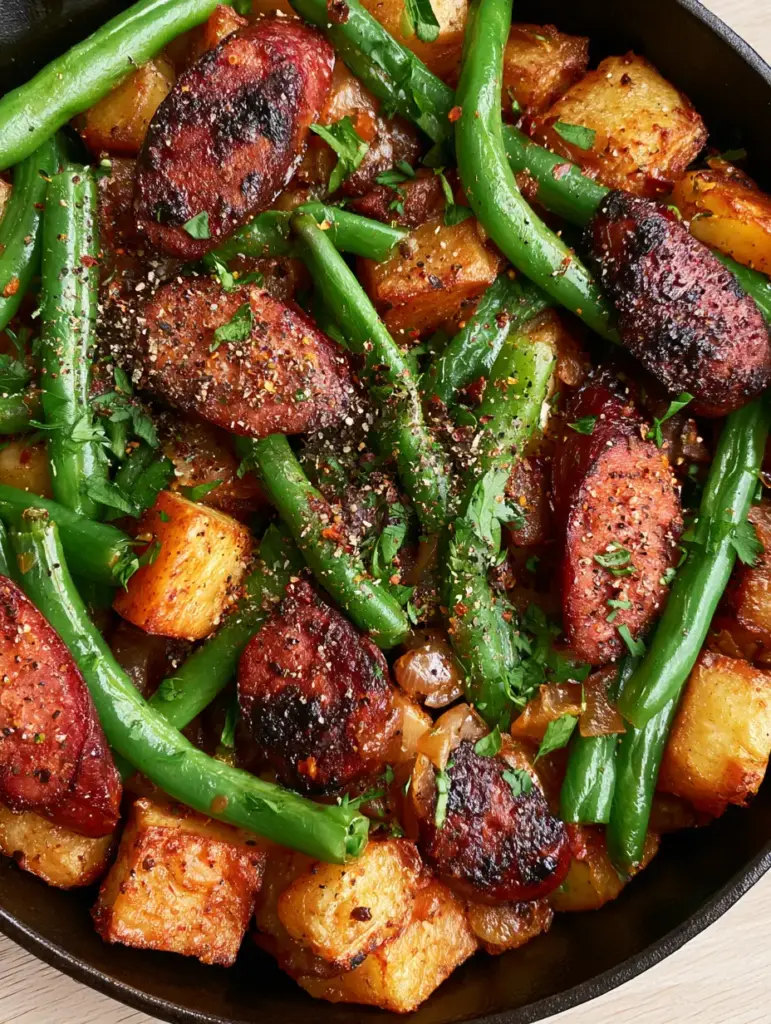
Mastering the Sizzle: Your Step-by-Step Cooking Guide
Phase 1: The Crispy Potato Foundation
Heat 2 tbsp (30ml) of oil in your cast iron skillet over medium-high heat. Once the oil is shimmering, add your potato cubes in a single layer. Do not crowd the pan; if necessary, cook in batches to ensure every cube has contact with the hot iron.
Allow the potatoes to sit undisturbed for 4-5 minutes. This patience is what creates the golden-brown roasted edges. Toss occasionally until the potatoes are fork-tender and possess a deep golden hue. Remove them from the pan and set aside on a plate.
Phase 2: Searing the Smoked Sausage
In the same skillet (no need to clean it!), add the sliced sausage rounds. The residual potato starch and oil will help the meat develop those dark caramelized char marks. Sear for 3 minutes per side until the edges are slightly crisp and the fat has rendered out.
The smell at this stage should be intensely smoky. Once the sausage looks like it belongs in a rustic farmhouse photo, remove it and place it with the potatoes. If you enjoy this flavor profile, you’ll love my creamy cajun sausage pasta.
Phase 3: Blistering the Beans and Onions
Add the final tablespoon of oil if the pan looks dry. Toss in the sliced onions and the fresh green beans. Spread them out as much as possible. You are looking for “blister marks”—small brown or blackened spots on the skin of the beans that indicate high-heat cooking.
Sauté for 5-7 minutes. The onions should become translucent and slightly charred at the edges, while the beans should remain a vibrant, tender-crisp emerald green. Do not overcook; the “snap” of the bean is the hallmark of a well-made Amish sausage and green beans dish.
Phase 4: The Final Integration
Return the potatoes and sausage to the skillet. Sprinkle generously with the cracked black pepper and red pepper flakes. Toss everything together for 2 minutes to allow the flavors to meld and the potatoes to reheat. Turn off the heat and finish with a dusting of fresh chopped flat-leaf parsley.
Expert Tips for Success
- Dry Your Vegetables: Ensure your green beans and potatoes are completely dry before they hit the pan. Moisture creates steam, and steam is the enemy of a crispy, blistered texture.
- The “No-Stir” Rule: When you first put the potatoes and sausage down, leave them alone! If you move them too early, you’ll tear the surface instead of creating a crust.
- Uniformity Matters: Cut your potato cubes to the same size so they all finish cooking at the exact same moment.
- Deglaze if Needed: If the bottom of your pan starts getting too dark, add a splash of water or chicken broth to loosen those flavorful bits.
How to Store, Reheat, and Prep Ahead
This dish stores remarkably well, making it a favorite for meal prep. Place leftovers in an airtight container and refrigerate for up to 4 days. While you can freeze this dish, the texture of the green beans will soften significantly upon thawing.
To reheat, I highly recommend using the skillet again rather than the microwave. A quick 5-minute toss over medium heat will help re-crisp the potatoes and sausage. If you’re looking for more veggie-heavy sides to prep, check out my sautéed asparagus and mushrooms.
What to Serve With Amish Sausage and Green Beans
While this is a complete one-pan meal, it pairs beautifully with light, acidic side dishes that cut through the richness of the sausage. A crisp vinegar cucumber salad provides a refreshing temperature and flavor contrast.
If you’re serving a larger crowd, a side of crusty sourdough or a light cucumber and tomato salad can round out the table perfectly. For those who want more greens, a simple sautéed vegetable medley is always a winner.
Frequently Asked Questions
You can, but cast iron is preferred for its heat retention, which is key for getting the dark char marks on the sausage and the blistered texture on the green beans.
While you can use frozen beans, they contain more moisture and will steam rather than blister. For the best texture and ’emerald’ look shown in the photos, fresh beans are highly recommended.
Ensure your skillet is properly seasoned and preheated with oil. Most importantly, do not move the potatoes for the first 4-5 minutes; once a crust forms, they will naturally release from the pan.
Yes, this recipe is naturally gluten-free. Just ensure your smoked sausage brand does not use any wheat-based fillers, which is rare but worth checking.
A pre-cooked smoked sausage like Kielbasa or Polish sausage works best. It allows you to focus on achieving a high-heat sear without worrying about the meat being undercooked in the middle.
The Perfect One-Pan Amish Sausage and Green Beans Recipe
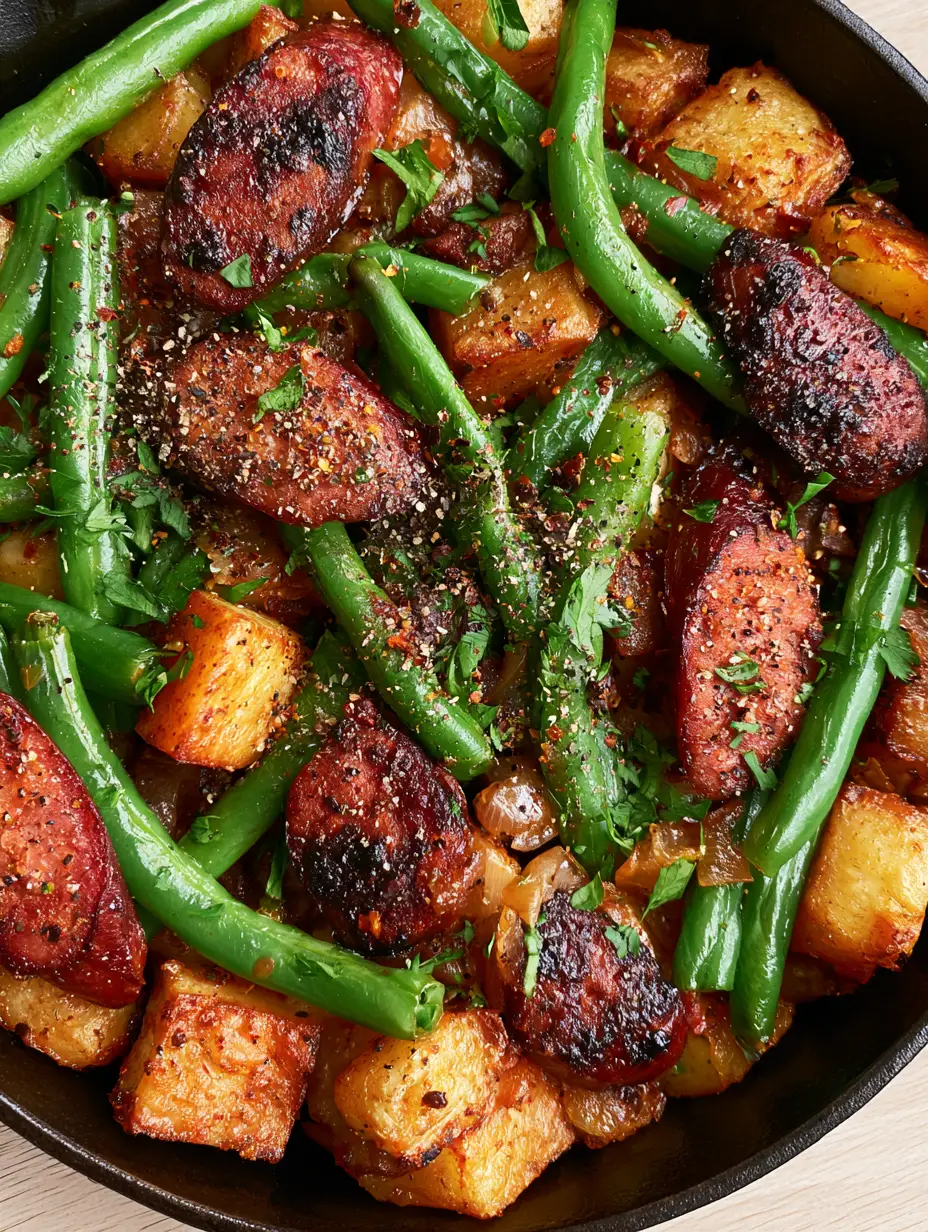
Amish Sausage and Green Beans: The Ultimate One-Pan Skillet Dinner
Ingredients
Equipment
Method
- Heat 2 tbsp of oil in a cast iron skillet over medium-high heat. Add potato cubes and sear undisturbed for 4-5 minutes until golden brown and crispy. Toss and continue cooking until fork-tender. Remove and set aside.
- In the same pan, add sausage slices. Cook for 3 minutes per side until dark caramelized char marks appear and edges are crisp. Remove and set aside with potatoes.
- Add remaining oil if needed. Sauté onions and green beans for 5-7 minutes over medium-high heat until beans are blistered and onions are translucent and slightly charred.
- Return potatoes and sausage to the skillet. Add black pepper and red pepper flakes. Toss for 2 minutes to meld flavors. Garnish with fresh parsley and serve immediately.
Notes
Ensure the skillet is preheated before adding ingredients to get the best sear.
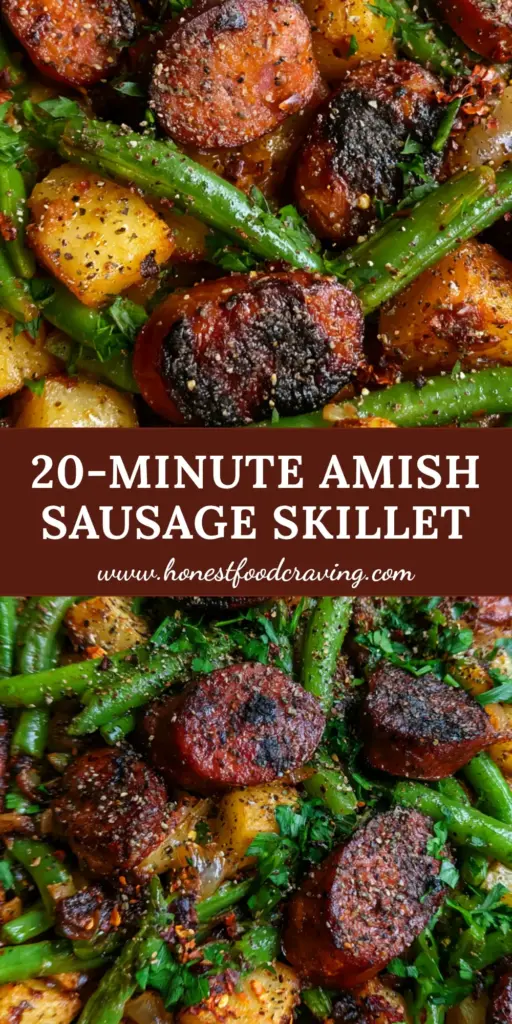
Bring the Farmhouse Home
There is nothing quite like the satisfaction of a meal that looks exactly like it does in the pictures. This Amish sausage and green beans skillet proves that with the right technique, simple ingredients can become extraordinary. The combination of charred meat, blistered vegetables, and crispy potatoes is a culinary trifecta that never fails to impress.
Did you make this recipe? I would love to hear about your results! Leave a comment below, and don’t forget to share your photos and follow honestfoodcraving on Pinterest for more rustic kitchen inspiration!