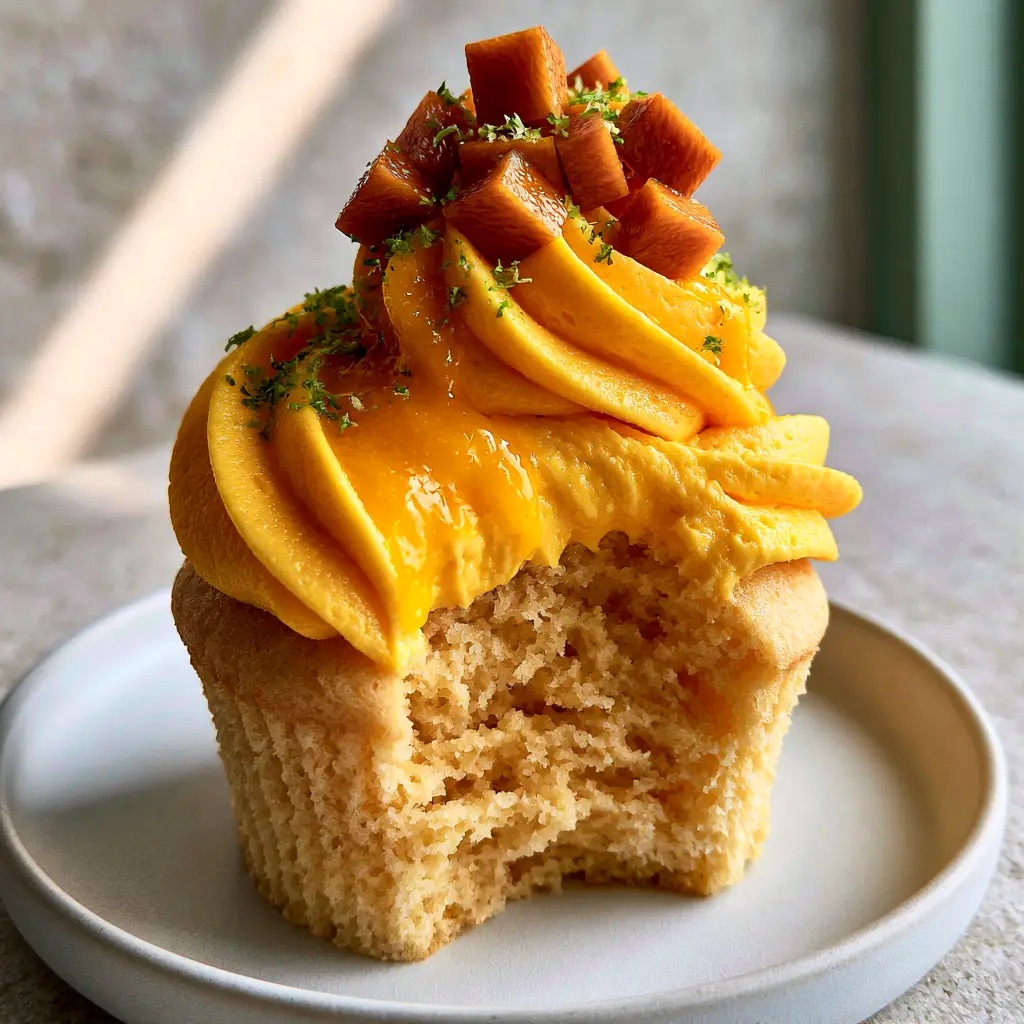
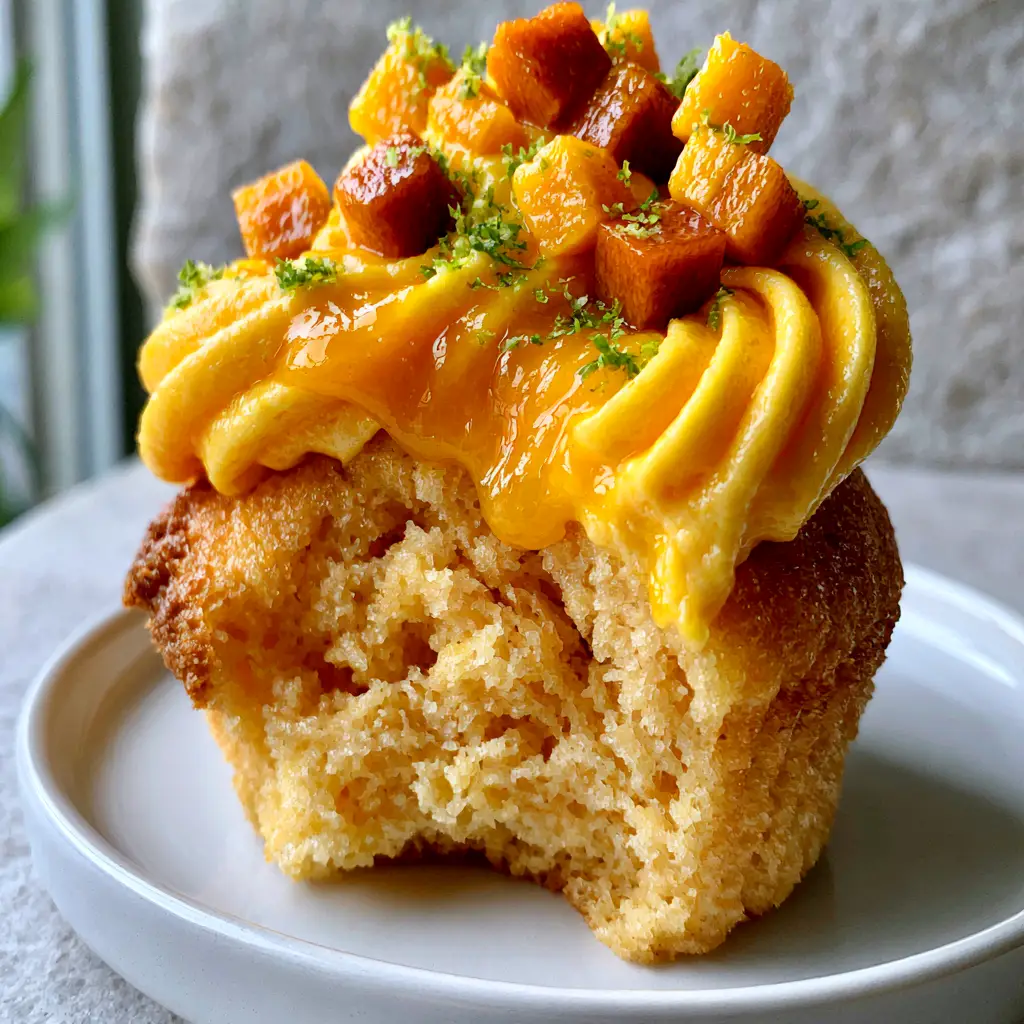
This professional-grade mango cupcakes recipe delivers a bakery-style experience right in your home kitchen, featuring a moisture-rich golden sponge and a vibrant fruit-forward finish. The secret lies in the contrast between the incredibly airy, light interior crumb and the dense, velvety mango buttercream that crowns each piece.
Imagine biting into a cupcake where the sponge yields effortlessly, revealing a delicate golden texture that tastes as sun-drenched as it looks. We have meticulously designed this recipe to ensure a structural masterpiece, topped with a thick, glossy mango puree drizzle that catches the light like liquid gold.
Whether you are preparing these for a summer garden party or a sophisticated indoor celebration, the addition of fresh diced mango cubes and a fine dusting of lime zest provides a gourmet sensory experience. The zest adds a necessary aromatic brightness that cuts through the richness of the silk-smooth buttercream.
What Makes These The Ultimate Mango Cupcakes?
- Unrivaled Texture: A specific ratio of cake flour and sour cream creates an airy interior crumb that remains moist for days.
- Dual Mango Intensity: We use both a concentrated mango reduction in the frosting and a glossy puree drizzle for maximum flavor impact.
- Visual Sophistication: The combination of vibrant orange-yellow buttercream, precisely diced fruit, and green lime zest creates a stunning professional aesthetic.
- Natural Vibrancy: No artificial colors are needed here; the deep-orange hue comes entirely from high-quality ripe mangoes.
The Essential Ingredients for a Golden Moist Sponge
Creating the perfect base for our mango cupcakes recipe requires a balance of fats and leavening agents to achieve that signature golden hue and light-as-air feel. Each ingredient serves a scientific purpose in the structural integrity of the cake.
Cake Flour: 2 ½ cups (315g) of cake flour is essential because its lower protein content ensures a tender, fine-grained crumb that won’t become tough. Unlike all-purpose flour, cake flour allows the mango flavor to shine without being overshadowed by a heavy bread-like texture.
Granulated Sugar: 1 ½ cups (300g) of sugar does more than sweeten; it helps aerate the butter during the creaming process and retains moisture in the sponge. This ensures the cupcake remains soft even after being refrigerated with the buttercream.
Unsalted Butter: 1 cup (225g) of softened butter provides the foundational richness and that classic “golden” flavor profile. Ensure it is truly at room temperature (about 65°F or 18°C) to allow for proper emulsification with the liquids.
Large Eggs: 3 large eggs (approx. 150ml) act as the primary binder and provide the structure needed for the cupcakes to rise tall and proud. The proteins in the eggs set during baking, trapping the air bubbles created by the leavening agents.
Sour Cream: ½ cup (120g) of full-fat sour cream is our “secret” moisture weapon, adding acidity that reacts with the leavening agents for a higher lift. It contributes to the “airy interior crumb” seen in our visual blueprint by breaking down gluten strands.
Baking Powder & Salt: 2 ½ tsp (12g) of baking powder provides the lift, while ½ tsp (3g) of fine sea salt enhances the tropical notes of the mango. Never skip the salt, as it balances the natural sugars in the fruit.
Whole Milk: ¼ cup (60ml) of milk helps thin the batter slightly to a pourable consistency, ensuring the cupcakes bake with a flat, even top perfect for frosting. If you enjoy tropical variations, you might also like my mango strawberry sunset cupcakes.
Foundations of the Silky Mango Buttercream & Glossy Drizzle
The frosting is where the “vibrant orange-yellow” visual comes to life, requiring a concentrated mango base to avoid a greasy or broken texture. We avoid watery purees by creating a thick reduction first.
Fresh Ripe Mangoes: You will need 3 large mangoes (roughly 900g total) to create the puree for the reduction, the drizzle, and the diced garnish. Look for varieties like Alphonso or Ataulfo for the deepest orange color and smoothest fiber-free texture.
Powdered Sugar: 4 cups (500g) of sifted powdered sugar provides the body and sweetness for the buttercream swirl. Sifting is mandatory to achieve the “velvety, non-greasy texture” described in the visual prompt.
Additional Butter: 1 ½ cups (340g) of cold-to-room-temperature butter is whipped until pale and voluminous before the mango reduction is added. This creates the “high, silky swirl” that holds its shape under the weight of the drizzle.
Fresh Lime: 1 whole lime is required for both the juice (to brighten the puree) and the fine lime zest dusting that finishes the dish. The aromatic oils in the zest provide a sensory contrast to the sweet mango.
Professional Tools for Bakery-Style Results
To achieve the macro-level perfection of a handheld smartphone photo, you need a few specific kitchen tools. These ensure the “precisely diced” cubes and the “silky swirl” are easily attainable.
A 12-cup muffin tin is standard, but to match the “no wrappers visible” look, ensure you use high-quality non-stick spray or butter and flour the tins meticulously. A stand mixer fitted with a paddle attachment is vital for creaming the butter and sugar to the correct aeration level.
For the mango components, a high-speed blender ensures the puree is completely smooth, while a fine-mesh sieve will remove any remaining fibers. Use a large star piping tip (like a 1M or 2D) to create the high, silky swirl of buttercream.
Step-by-Step Instructions for the Perfect Mango Cupcake
1. Preparing the Mango Reduction & Drizzle
Peel and pit two of the mangoes, placing the flesh into a blender and processing until completely smooth. Pour the puree into a small saucepan over medium-low heat and simmer, stirring frequently, for 15-20 minutes.
You are looking for the volume to reduce by half, resulting in a thick, glossy mango puree that coats the back of a spoon. Remove half of this reduction to a small bowl—this will be your drizzle—and let the rest cool completely for the buttercream. If you’re a fan of mango-based treats, you must try my mango bingsu for another refreshing take.
2. Crafting the Golden Sponge Batter
Preheat your oven to 350°F (175°C). In the bowl of your stand mixer, cream the butter and granulated sugar together for at least 5 minutes until the mixture is pale and fluffy.
Add the eggs one at a time, beating well after each addition to ensure the emulsion doesn’t break. In a separate bowl, whisk together the cake flour, baking powder, and salt. Gradually add the dry ingredients to the butter mixture, alternating with the sour cream and milk.
3. Baking for an Airy Interior Crumb
Divide the batter evenly among the cupcake wells, filling each about two-thirds full. Bake for 18-22 minutes, or until a toothpick inserted into the center comes out clean with just a few moist crumbs.
The tops should be a light golden brown and spring back when lightly touched. Remove from the tin immediately and allow to cool on a wire rack. Cooling is crucial; if the sponge is even slightly warm, your silky buttercream will melt.
4. Whipping the Silky Mango Buttercream
Beat the remaining butter until it is extremely light and airy, about 3 minutes. Slowly add the powdered sugar one cup at a time, followed by 3-4 tablespoons of the cooled mango reduction.
Whip on high speed for another 2 minutes until the frosting turns a vibrant orange-yellow. If the frosting feels too soft, chill it for 10 minutes before piping. This is the same technique I use to ensure the perfect texture for my funfetti cake pops.
5. Assembly and Garnishing
Pipe a high, elegant swirl onto each cupcake using your star tip. Using a small spoon, artfully pour the glossy mango puree drizzle over the peaks of the frosting, allowing it to catch the light.
Finely dice the remaining mango into “precisely diced tiny cubes” and place 3-5 cubes on top of the drizzle. Finish with a “fine dusting of lime zest” across the entire cupcake for a professional, unedited food blog look.
Expert Tips for Success
- Room Temperature Ingredients: Ensure eggs, sour cream, and butter are all at room temp. This is the only way to achieve the emulsified batter that leads to an airy interior.
- The “Bite” Test: To get that perfect crumb seen in the smartphone photo, do not overmix the batter once the flour is added. Overmixing develops gluten, which makes the cake tough rather than airy.
- Mango Fiber Control: Always pass your puree through a fine-mesh sieve. Even the best mangoes can have small fibers that will clog your piping tip and ruin the “silky” look.
- Temperature Control: If your kitchen is hot, the buttercream may lose its “non-greasy texture.” Keep the finished cupcakes in a cool environment until serving.
Storage and Freshness Guidelines
These cupcakes are best enjoyed the day they are made to maintain the “moist golden sponge” texture. However, they can be stored in an airtight container in the refrigerator for up to 3 days. Because of the fresh mango garnish, they should not be left at room temperature for more than 4 hours.
If you need to make them ahead of time, bake the sponges and store them at room temperature, then frost and garnish just before serving. The mango reduction for the drizzle can be made up to 5 days in advance and stored in the fridge.
What to Serve With Mango Cupcakes
These tropical treats pair beautifully with other bright, fresh flavors. For a full brunch spread, consider starting with a savory dish like shrimp fried rice or a light cucumber and tomato salad.
If you are hosting a themed party, the vibrant colors of these cupcakes look incredible next to a blooming quesadilla ring or even a plate of air fryer tacos. The lime zest in the cupcakes bridges the gap between sweet and savory perfectly.
Frequently Asked Questions
You can substitute the butter with a high-quality vegan block butter and use a flax egg or commercial egg replacer, though the ‘golden sponge’ color and airy texture may vary slightly from the original recipe.
Yes, frozen mango works well for the puree reduction and drizzle. Thaw and drain them first. However, for the diced garnish, fresh mango is highly recommended for the best texture and visual appeal.
The key is using cake flour and room temperature ingredients, combined with the creaming method. Be careful not to overmix once you add the flour, as this keeps the protein structure light.
Use a microplane or fine grater and apply very light pressure. Only grate the green outer layer; once you see white (the pith), stop and rotate the lime.
Curdling usually happens if the mango puree is too watery or added while still warm. Ensure you reduce the puree until thick and let it cool completely to room temperature before whipping it into the butter.
The Ultimate Mango Cupcakes Recipe Card
Mango Cupcakes Recipe with Silky Mango Buttercream and Glossy Puree
Ingredients
Equipment
Method
- Puree mango flesh and simmer in a saucepan until reduced by half to create a thick, glossy concentrate.
- Cream butter and sugar for 5 minutes until fluffy. Add eggs one at a time.
- Fold in dry ingredients alternating with sour cream and milk. Bake at 350°F (175°C) for 20 minutes.
- Whip butter, powdered sugar, and cooled mango reduction. Pipe onto cooled cupcakes.
- Drizzle with mango reduction, top with diced mango cubes and lime zest.
Notes
Ensure mango reduction is completely cool before adding to buttercream to prevent melting.
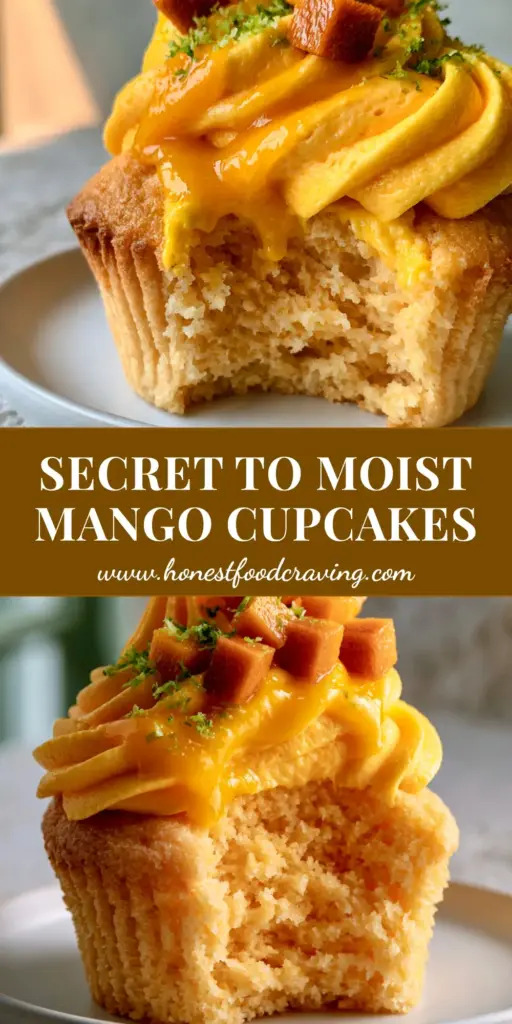
Share This Tropical Delight!
This mango cupcakes recipe is a testament to how fresh fruit and proper technique can transform a simple dessert into a work of art. From the glossy drizzle to the airy sponge, every bite is a celebration of tropical flavor. If you make these, please leave a comment below and let me know how they turned out!
Don’t forget to take a photo and tag us! For more visual inspiration and to save this recipe for later, follow us and pin these images to your favorite boards on Pinterest.