There is a specific culinary magic that happens when a seasoned cast iron skillet meets the high heat of a morning kitchen. The sound of a vigorous sizzle and the aroma of earthy fungi mingling with sweet alliums is enough to wake up any appetite. This recipe for sauteed asparagus and mushrooms is designed to be more than just a side dish; it is a masterclass in texture and color.
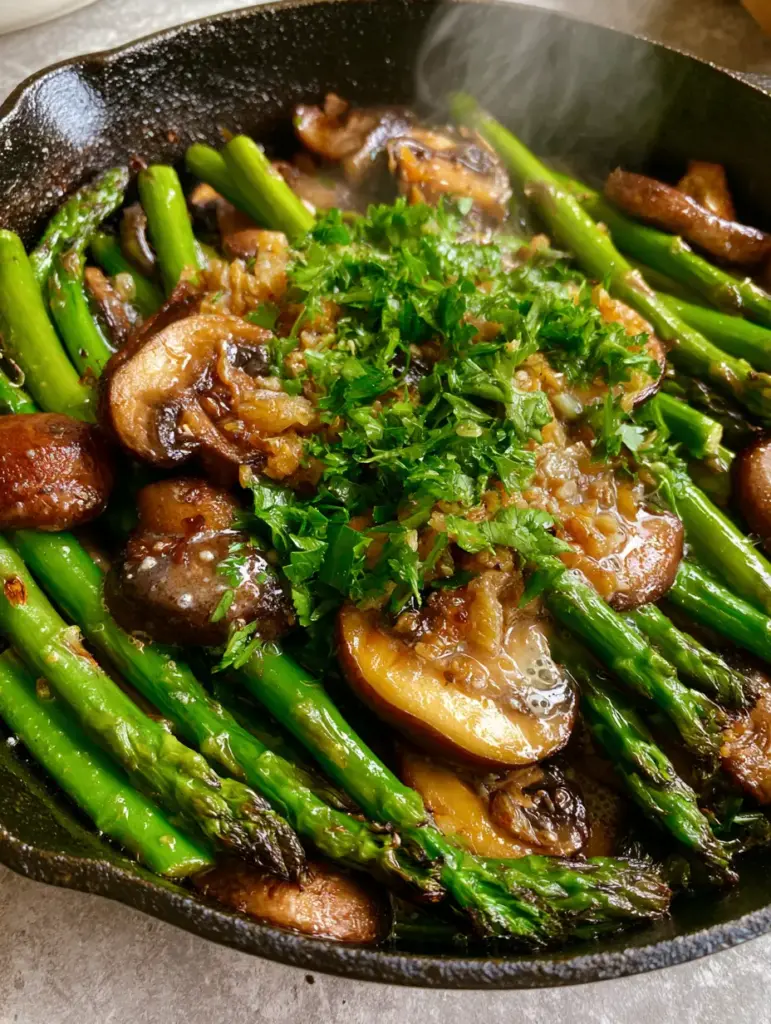
Imagine emerald-green spears with distinct charred blister marks resting alongside thick-cut cremini mushrooms seared to a deep, mahogany gold. Every surface is coated in a shimmering glaze of melted garlic butter, punctuated by bits of golden-fried minced garlic and a heavy snowfall of fresh, bright parsley. This isn’t just cooking; it’s a visual and sensory experience that brings restaurant-quality technique to your home stovetop.
Whether you are looking for a quick weeknight addition to your rotation of healthy dinner ideas or a sophisticated pairing for a weekend feast, this dish delivers. It hits all the right notes: the umami of the mushrooms, the snap of the asparagus, and the rich, velvety finish of sea salt and cracked black pepper.
The Secret to Perfection: Why This Skillet Side Works
- The Maillard Reaction: By using high heat and a cast iron surface, we achieve a deep golden-brown crust on the mushrooms that locks in moisture while intensifying their savory flavor.
- Vibrant Emerald Contrast: We use a specific searing technique to ensure the asparagus stays crisp-tender and saturated in color rather than becoming dull or mushy.
- Infused Garlic Butter: Instead of just tossing in raw garlic, we fry it until golden, creating a nutty, mellow aromatic base that clings to every vegetable surface.
- Dual-Texture Balance: The meaty bite of the thick-cut creminis perfectly complements the slender, charred snap of the asparagus spears.
Ingredients for the Ultimate Sautéed Vegetable Medley
1 lb (450g) Cremini Mushrooms: Also known as Baby Bellas, these offer a deeper flavor and firmer texture than white button mushrooms. We slice them thick to ensure they maintain their structural integrity during the high-heat sear.
1 lb (450g) Fresh Asparagus: Look for medium-thickness spears that are firm to the touch. These will develop those beautiful charred blister marks on the tips while remaining tender in the center.
3 tbsp (42g) Unsalted Butter: Quality butter provides the glistening finish and rich mouthfeel. Using unsalted allows us to control the final seasoning precisely with sea salt flakes.
4 cloves Garlic: We mince these finely so they can transform into golden-brown nuggets of flavor during the final minutes of cooking.
2 tbsp (30ml) Avocado Oil or Light Olive Oil: We need a high-smoke point oil for the initial sear. This prevents the butter from burning while we achieve that deep color on the vegetables.
1/4 cup (10g) Fresh Flat-Leaf Parsley: Chopped finely, this adds a necessary burst of brightness and a pop of contrasting green to the deep browns of the seared mushrooms.
1 tsp (5g) Sea Salt Flakes: These provide a delicate crunch and a clean saltiness that enhances the natural sweetness of the charred asparagus.
1/2 tsp (1g) Cracked Black Pepper: Freshly cracked pepper provides a woody heat that cuts through the richness of the garlic butter.
Essential Tools for Visual Success
To achieve the look of the “high-resolution, unedited smartphone photo” captured in our visual blueprint, a seasoned 12-inch (30cm) cast iron skillet is your best friend. The heavy bottom retains heat better than stainless steel, which is crucial for getting those blister marks on the asparagus without overcooking the interior.
You will also need a sharp chef’s knife for clean cuts on the mushrooms and a pair of stainless steel tongs. Tongs allow you to flip individual asparagus spears to ensure they get even contact with the hot surface for that perfect emerald-and-char appearance.
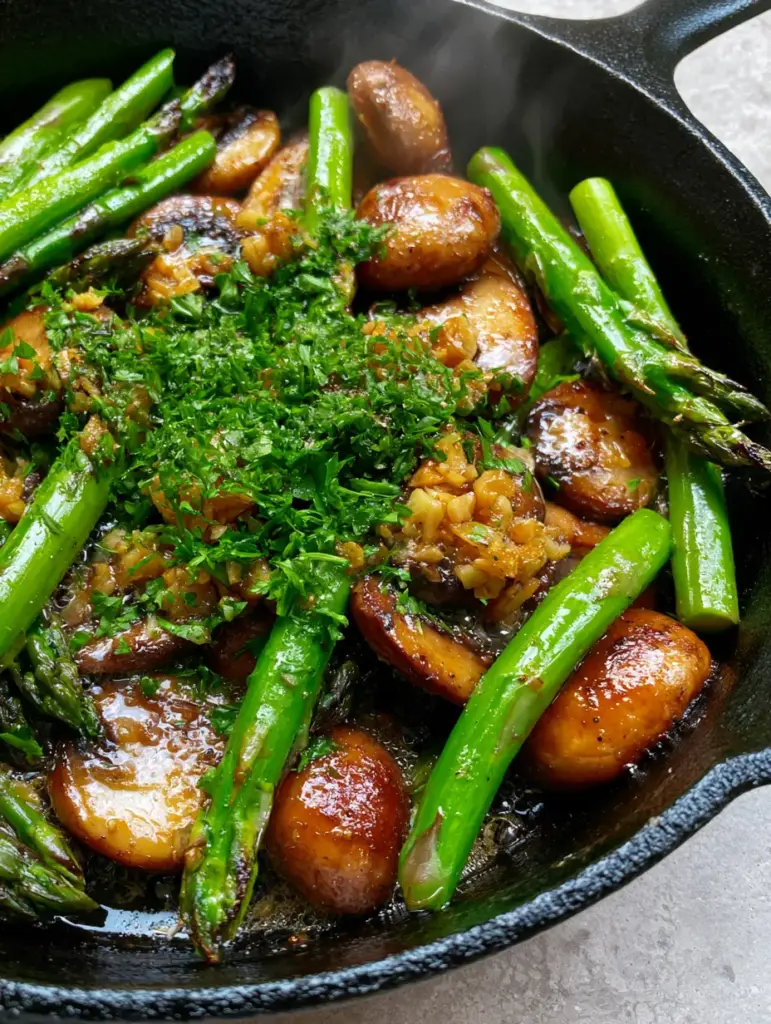
Step-by-Step Guide to Sauteed Asparagus and Mushrooms
Prepping the Vegetables for Maximum Texture
Start by cleaning your cremini mushrooms with a damp paper towel rather than rinsing them. Mushrooms are like sponges; if they soak up water, they will steam in the pan instead of searing to a golden brown. Slice them into 1/4-inch (6mm) thick pieces.
For the asparagus, trim the woody, fibrous bottom inch (2.5cm) off. You can find the natural breaking point by snapping one spear; the rest can be cut to that same length. Ensure they are completely dry before they hit the oil.
Achieving the Deep Golden Mushroom Sear
Place your cast iron skillet over medium-high heat and add the neutral oil. Once the oil is shimmering and just starting to wisps of smoke, add the mushrooms in a single layer. Resist the urge to stir them immediately.
Let them sit undisturbed for 3-4 minutes until a deep golden-brown crust forms on the bottom. Flip them and cook for another 2 minutes. This “hard sear” is what creates the glossy, shimmering coating we are looking for. Remove the mushrooms from the pan and set them aside momentarily.
Charring the Emerald Asparagus Spears
In the same hot skillet, add a tiny bit more oil if needed and lay the asparagus spears down. You want to hear a loud sizzle. Cook for 4-5 minutes, turning occasionally with tongs.
Look for the visual cue: the tips should begin to show slight charred blister marks while the stalks turn a saturated, vibrant emerald green. They should be crisp-tender—yielding to a fork but still possessing a definitive snap.
The Garlic Butter Finish
Reduce the heat to medium and return the mushrooms to the skillet. Add the 3 tbsp (42g) of butter and the minced garlic. As the butter melts and begins to foam, it will pick up the browned bits (fond) from the bottom of the pan.
Sauté for 1-2 minutes until the garlic turns a beautiful golden color. Do not let the garlic turn dark brown or black, as it will become bitter. The butter should be glistening on every vegetable surface, creating a light steam rising from the dish.
Final Seasoning and Garnish
Turn off the heat. Sprinkle the sea salt flakes and cracked black pepper evenly over the skillet. Toss in the freshly chopped parsley, ensuring the bright green herbs stick to the buttery coating of the vegetables.
Expert Tips for Skillet Success
- Don’t Crowd the Pan: If the mushrooms are overlapping, they will release moisture and boil in their own juices. Cook in batches if your skillet isn’t large enough to keep them in a single layer.
- The Butter Timing: We add the butter at the very end. This ensures the milk solids don’t burn during the high-heat searing phase, keeping the flavor sweet and nutty.
- Dry is Key: Any residual water on the asparagus or mushrooms will kill the Maillard reaction. Use a kitchen towel to pat everything bone-dry before cooking.
- Carryover Cooking: Remove the skillet from the heat when the asparagus is just slightly underdone. The residual heat of the cast iron will finish them perfectly as you plate.
How to Store and Reheat Your Sautéed Greens
These sauteed asparagus and mushrooms are best served immediately while the butter is liquid and the asparagus is snappy. However, if you have leftovers, store them in an airtight container in the refrigerator for up to 3 days.
To reheat, avoid the microwave, which will make the asparagus rubbery. Instead, toss them back into a hot skillet with a teaspoon of water or a small knob of butter for 2 minutes. This restores the glisten and brings the mushrooms back to life.
What to Pair with This Skillet Side Dish
This versatile side dish complements a wide variety of proteins. It is the natural companion to a perfectly seared steak sandwich or a juicy roasted chicken. The earthy tones of the cremini mushrooms also make it a great topping for a savory beef bowl.
If you are looking for a lighter meal, serve these vegetables alongside fresh shrimp and avocado bowls or fold them into a creamy bacon and asparagus pasta for an extra hit of texture. For those following a vegetarian lifestyle, these are spectacular served over a bed of creamy polenta or quinoa.
Common Questions About Sautéing Asparagus and Mushrooms
Yes, but cremini mushrooms (baby bellas) have less water content and a deeper flavor, which results in a better sear and more umami taste.
Look for a vibrant emerald green color and charred blister marks on the tips. It should be tender enough to pierce with a fork but still have a firm ‘snap’ when bitten.
Avoid washing mushrooms with water; instead, wipe them with a damp paper towel. Also, ensure the skillet is very hot and don’t crowd the pan, which allows moisture to evaporate instantly.
Absolutely. This dish is low in carbohydrates and high in healthy fats from the butter and oil, making it an excellent side for ketogenic or low-carb diets.
Adding butter at the end prevents the milk solids from burning at the high temperatures required to sear the mushrooms and char the asparagus, ensuring a sweet, nutty flavor.
The Perfect Sauteed Asparagus and Mushrooms Recipe
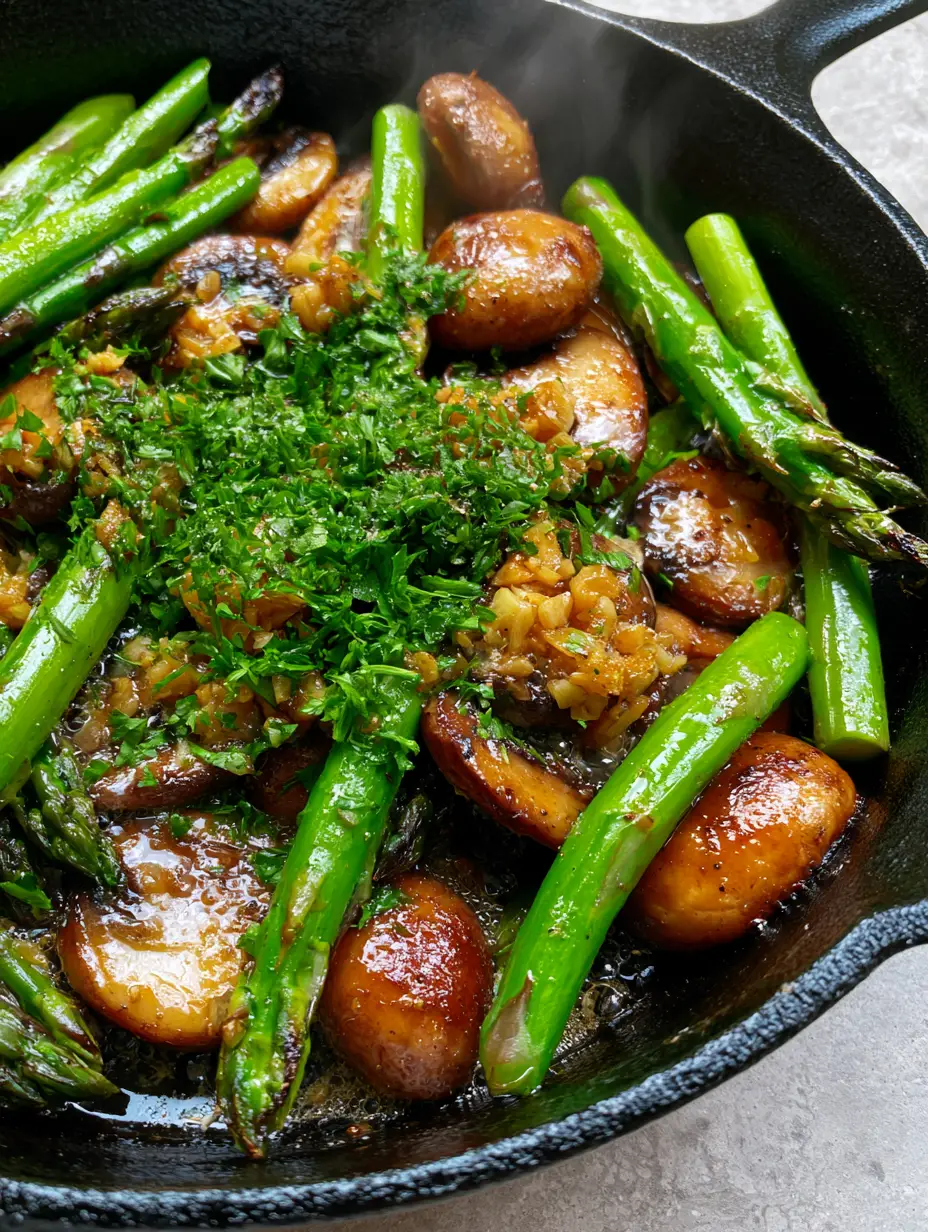
Sauteed Asparagus and Mushrooms in Glistening Garlic Butter
Ingredients
Equipment
Method
- Wipe mushrooms clean and slice into thick 1/4-inch pieces. Trim woody ends from asparagus and ensure all vegetables are bone-dry.
- Heat oil in a cast iron skillet over medium-high heat. Add mushrooms in a single layer and sear for 3-4 minutes undisturbed until deep golden-brown. Flip and cook 2 minutes more, then remove from pan.
- In the same skillet, add asparagus. Cook for 4-5 minutes, turning occasionally until vibrant emerald green with charred blister marks on the tips.
- Reduce heat to medium. Add mushrooms back to the pan along with butter and minced garlic. Sauté for 1-2 minutes until garlic is golden and vegetables are glistening.
- Turn off heat. Season with sea salt flakes, cracked pepper, and fresh parsley. Serve immediately.
Notes
Add butter at the end to prevent the milk solids from burning during the high-heat sear.
Bringing the Skillet to the Table
Mastering the art of the sauteed asparagus and mushrooms is a foundational skill for any home cook. By focusing on high-heat techniques and the quality of your fats, you transform simple produce into a luxury experience. The contrast between the charred tips and the buttery mushrooms is a testament to how simple ingredients, when treated with forensic attention to detail, can outshine the most complex entrees.
If you enjoyed this recipe, I would love to hear from you! Leave a comment below with your favorite way to season skillet vegetables. Don’t forget to sign up for our newsletter for more culinary deep-dives, and be sure to share this recipe to Pinterest so you can find it later!