The Vietnamese Rice Paper Rolls Recipe, also known as Gỏi Cuốn, is a masterclass in culinary contrast. It is a dish where the snap of raw purple cabbage meets the tender give of poached shrimp, all bound within a skin so translucent it looks like spun glass. This recipe is more than a meal; it is a visual and sensory experience that brings the vibrant flavors of a Ho Chi Minh City street market directly to your kitchen table.
Achieving that perfect, professional look requires a blend of fresh ingredients and a specific rolling technique. In this guide, we will break down the forensic details—from the exact julienne of the carrots to the specific hydration level of the rice paper—to ensure your rolls look exactly like the hyper-realistic masterpieces seen in high-end culinary photography. Whether you are seeking a light lunch or a show-stopping appetizer, this is the definitive method for success.
The Anatomy of a Perfect Summer Roll
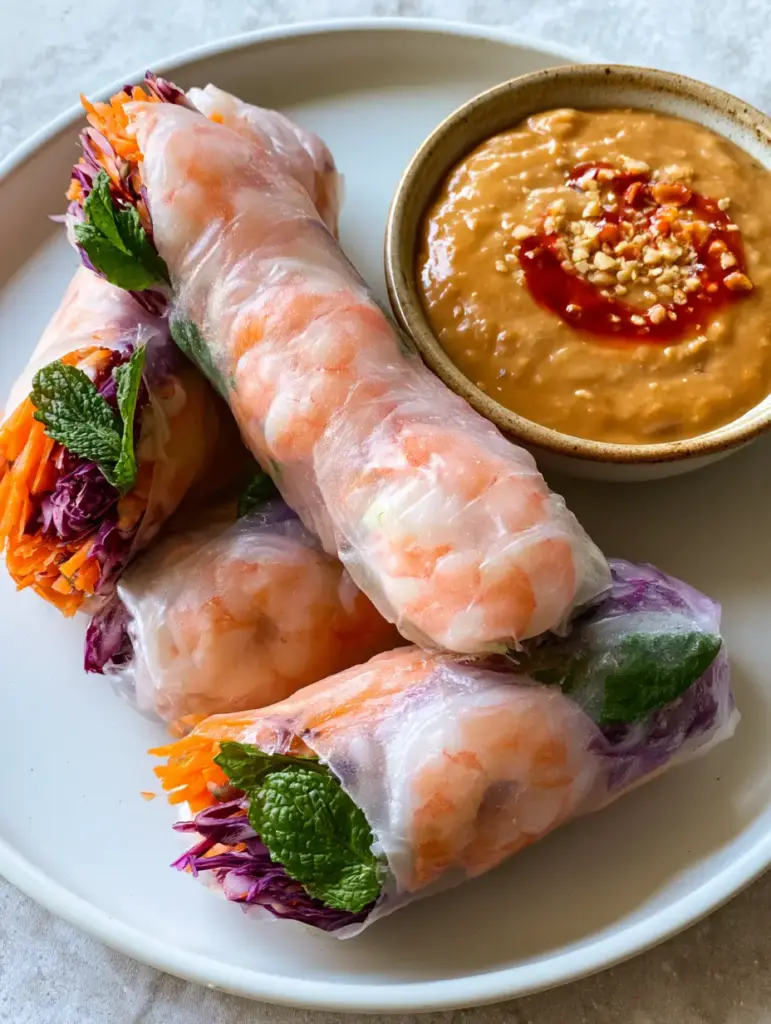
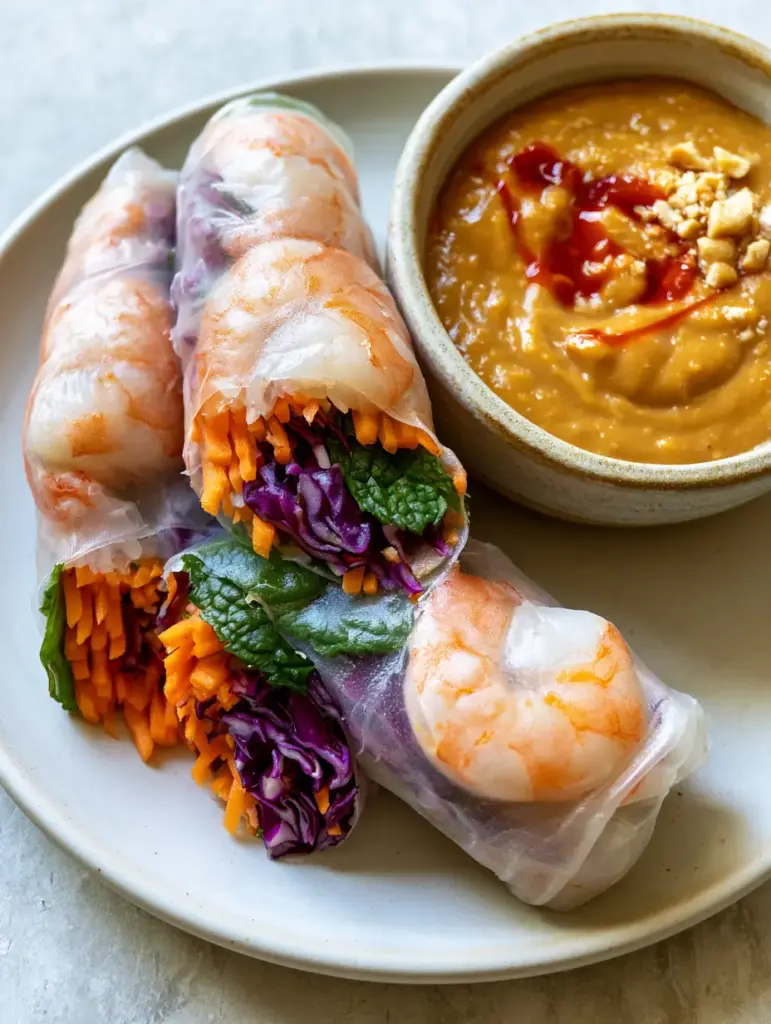
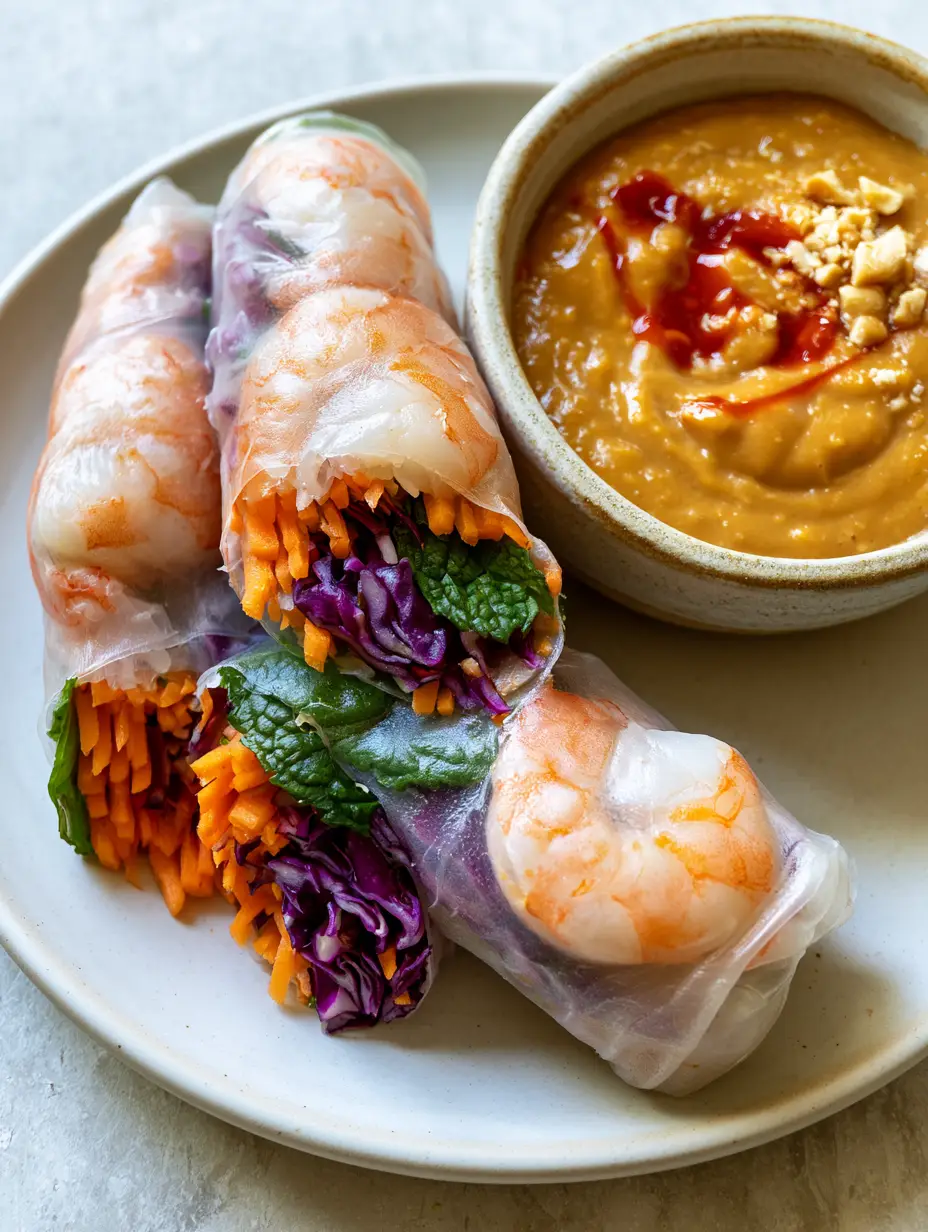
- Translucent Precision: The rice paper must be hydrated just enough to be pliable but remain crystal clear, revealing the vibrant orange, green, and purple layers within.
- Textural Harmony: Every bite delivers a crunch from the raw cabbage and carrots, a softness from the vermicelli, and a meaty snap from the poached shrimp.
- Fragrant Herb Profile: Fresh mint leaves are not just a garnish; they provide a cooling floral note that cuts through the richness of the peanut sauce.
- Visual Composition: By layering the pink shrimp and emerald mint leaves on the outside of the roll, we create a professional aesthetic that is as beautiful as it is delicious.
Vibrant Components for Your Vietnamese Rice Paper Rolls Recipe
To achieve the specific visual results of our blueprint, you will need a mix of fresh produce and foundational pantry staples. Each ingredient plays a structural or flavor-enhancing role in the final dish.
Rice Paper Wrappers (Bánh Tráng): Look for 22cm circular wrappers made with a high percentage of rice flour for the clearest finish. These wrappers provide the structural “skin” that holds the delicate fillings together.
Poached Pink Shrimp: Use 16-20 count large shrimp, poached whole and then halved lengthwise. This technique exposes the bright pink interior and ensures the shrimp lies flat against the rice paper for that iconic look.
Rice Vermicelli Noodles: These thin, white noodles provide the bulk and soft texture of the roll. They must be cooked just until al dente to avoid a mushy mouthfeel.
Green Butter Lettuce: This specific variety offers a soft, pliable leaf that acts as a barrier, keeping the internal moisture of the noodles from tearing the delicate rice paper. It also pairs beautifully with fragrant coconut-based side dishes.
Julienned Carrots and Shredded Purple Cabbage: These provide the “bright orange” and “deep purple” visual stripes. Precision cutting is key here; use a mandoline or a sharp chef’s knife for uniform, thin strips.
Fresh Mint Leaves: Use whole leaves to ensure they are visible through the translucent paper. The oils in the mint provide an essential aromatic lift to the entire Vietnamese Rice Paper Rolls Recipe.
Creamy Tan Peanut Sauce: A blend of creamy peanut butter, hoisin, and a splash of water for consistency. This serves as the rich, savory anchor for the fresh rolls.
Red Chili Oil and Crushed Peanuts: These are the finishing touches for the sauce bowl. The chili oil adds a “red swirl” for visual depth and a slow-building heat, while the peanuts add a necessary toasted crunch.
Essential Tools for Culinary Success
A wide, shallow bowl or a specialized rice paper water bath is necessary for even hydration. This prevents the paper from curling or becoming unevenly gummy during the assembly process.
A very sharp Chef’s knife or a mandoline is required for the “hyper-realistic textures” of the carrots and cabbage. Uniformity in your vegetable cuts ensures the rolls are easy to bite through and visually symmetrical.
A clean, damp wooden cutting board or a plastic rolling mat provides the ideal surface. If the surface is too dry, the rice paper will stick and tear; if it is too wet, the paper will over-saturate and lose its structural integrity.
Step-by-Step Rolling Mastery
Preparing the Protein and Noodles
Bring a pot of water to a simmer with a pinch of salt (5g) and a slice of lemon. Poach the shrimp for 2-3 minutes until they turn a vibrant pink and are opaque throughout. Immediately plunge them into an ice bath to stop the cooking process, then peel and slice them in half lengthwise.
In the same water, boil the rice vermicelli for 3-5 minutes. Drain and rinse thoroughly under cold water to remove excess starch. This step is vital to ensure the noodles remain distinct and “white” as per our visual blueprint, much like the precision needed for a balanced shrimp rice bowl.
Hydrating the Rice Paper
Fill a shallow dish with 2 cups (480ml) of lukewarm water. Submerge one sheet of rice paper for exactly 5-8 seconds. It should still feel slightly firm when you remove it; it will continue to soften as you lay it on your work surface.
Lay the damp paper flat on your board. Smooth out any wrinkles with your fingers. The paper should look crystal clear and flawlessly smooth, ready for the vibrant layers to be added.
The Layering Technique
Place two or three shrimp halves, pink side down, in the upper third of the rice paper. Place a few mint leaves next to them. This ensures these elements are the first thing seen through the translucent skin.
On the lower third, place a piece of butter lettuce, then top with a small bundle of vermicelli, julienned carrots, and purple cabbage. This creates a “structural core” that makes the Vietnamese Rice Paper Rolls Recipe easy to handle.
The Professional Fold
Fold the bottom of the paper up over the vegetable core, tucking it tightly. Fold the left and right sides inward toward the center. Continue rolling upward tightly, maintaining even pressure until the roll is sealed against the shrimp and mint.
The final result should be a plump, cylindrical roll where the colors of the vegetables are clearly visible through the skin. Repeat this process until all ingredients are used, placing the finished rolls on a matte ceramic plate so they do not touch and stick together.
The Secret to a Glossy Peanut Dip
In a small stoneware bowl, whisk together 1/2 cup (125g) creamy peanut butter, 2 tbsp (30ml) hoisin sauce, 1 tsp (5ml) soy sauce, and 2-3 tbsp (30-45ml) warm water. Whisk until the sauce is “thick, creamy, and golden-brown.”
Just before serving, use a spoon to create a deliberate “swirl of red chili oil” on the surface. Finish with a “dusting of crushed roasted peanuts” for texture. This sauce provides the fatty, savory contrast needed to complement the fresh, raw ingredients of the rolls.
Expert Tips for Success
- Temperature Matters: Use lukewarm water for dipping. Hot water will make the rice paper too soft too quickly, leading to tears, while cold water takes too long to hydrate the starch.
- Don’t Overfill: It is tempting to pack the rolls, but overfilling leads to bursting. Aim for a “plump” look without stretching the paper to its breaking point.
- The Damp Towel Trick: If you are making a large batch, cover the finished rolls with a damp paper towel. This prevents the rice paper from drying out and becoming chewy or brittle.
- Shrimp Orientation: Always place the colorful side of the shrimp (the outside) against the paper. This is the secret to that “high resolution” professional look.
Storage and Freshness Guide
This Vietnamese Rice Paper Rolls Recipe is best enjoyed immediately. The rice paper begins to harden and become rubbery after about 4-6 hours in the refrigerator. If you must store them, wrap each roll individually in plastic wrap to prevent them from sticking to each other or drying out.
The peanut sauce, however, can be made up to 5 days in advance. Store it in an airtight container in the fridge and whisk in a teaspoon of warm water to loosen it up before serving. Do not freeze the rolls, as the textures of the raw vegetables and the rice paper will be destroyed upon thawing.
What to Serve With This
While these rolls are a complete meal on their own, they pair beautifully with other Southeast Asian-inspired dishes. For a larger feast, consider serving them alongside a flavorful rice dish or even a light dessert like mango cupcakes to lean into the tropical flavor profile.
If you have leftover shrimp and vegetables, they can easily be transformed into a quick stir-fry the next day, perhaps following the logic of a savory shrimp fried rice.
Frequently Asked Questions
These are best eaten within 2-4 hours. To store longer, wrap each roll individually in plastic wrap and cover with a damp cloth to prevent the rice paper from hardening in the fridge.
Yes! Thinly sliced pork belly, baked tofu, or even poached chicken work well. Ensure they are sliced thin and kept dry so they don’t compromise the rice paper’s integrity.
The secret is placing the halved shrimp (pink side down) and mint leaves on the rice paper first, in the upper third, before adding the bulky noodles and lettuce. This keeps them directly against the translucent skin.
After boiling the rice vermicelli, rinse them immediately and thoroughly under cold running water. This removes the surface starch that causes clumping.
Tearing usually happens if the paper is over-hydrated. Dip the paper for only 5-8 seconds in lukewarm water; it should still feel slightly stiff when you lay it down. It will continue to soften as you add fillings.
The Definitive Vietnamese Rice Paper Rolls Recipe
Vietnamese Rice Paper Rolls Recipe: The Ultimate Guide to Crystal Clear Gỏi Cuốn
Ingredients
Equipment
Method
- Poach shrimp in salted simmering water for 2-3 minutes until pink and opaque. Ice bath, peel, and slice in half lengthwise.
- Boil vermicelli noodles for 3-5 minutes, drain, and rinse under cold water to prevent sticking.
- Dip one rice paper sheet in lukewarm water for 5-8 seconds and lay flat on a damp board.
- Place shrimp (pink side down) and mint on the upper third; place lettuce, noodles, carrots, and cabbage on the lower third.
- Fold the bottom up, tuck in the sides, and roll tightly upward to seal.
Notes
Keep finished rolls covered with a damp towel to prevent drying.
Closing & Call to Action
Mastering the Vietnamese Rice Paper Rolls Recipe is a rewarding journey into the textures and flavors of authentic Vietnamese cuisine. By focusing on the visual layering and the precision of your vegetable cuts, you can create a dish that is as much a work of art as it is a healthy, delicious meal. If you enjoyed this recipe, please leave a comment below and share your results! Don’t forget to follow us on Pinterest for more culinary inspiration.