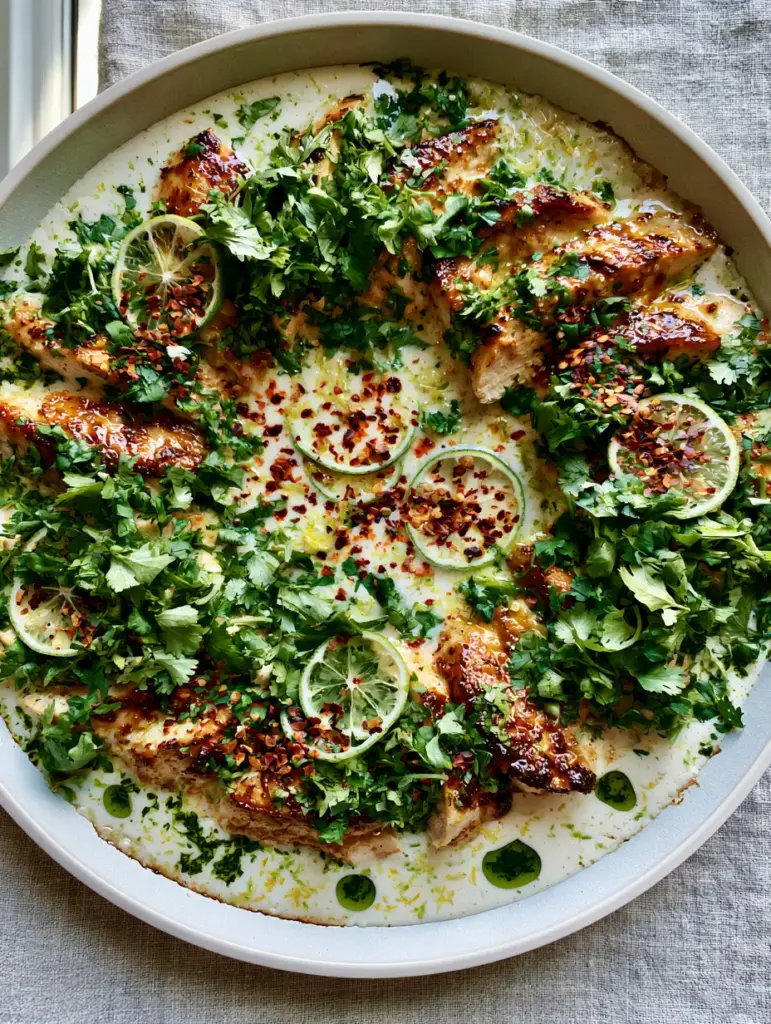
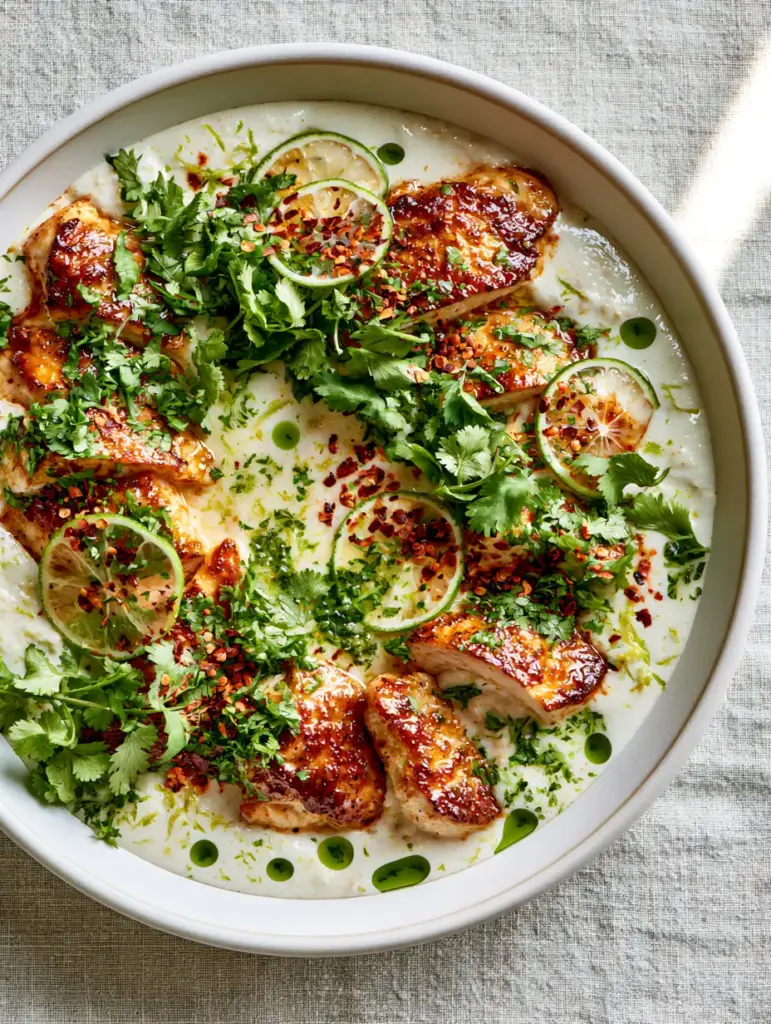
There is something inherently therapeutic about the sizzle of a well-seasoned chicken breast hitting a hot pan. This coconut chicken recipe captures that sensory magic, transforming humble ingredients into a restaurant-quality masterpiece that looks as stunning as it tastes. Imagine thick, golden-brown chicken slices resting in a velvety pool of ivory coconut reduction, punctuated by the vibrant green of fresh cilantro and the citrusy brightness of lime zest.
Designed for the home cook who appreciates the intersection of visual aesthetics and deep flavor profiles, this dish is a masterclass in texture. The contrast between the crisp, seared exterior of the poultry and the silky, luscious sauce creates a mouthfeel that is both comforting and sophisticated. We are moving beyond basic weeknight fare and entering the realm of culinary artistry, all within the confines of a single white ceramic skillet.
Whether you are hosting a dinner party or simply looking to elevate your Tuesday night, this recipe delivers. Every element—from the micro-droplets of green herb oil to the subtle heat of red chili flakes—has been curated to ensure a balanced, vibrant bite. Let’s dive into the science and soul of this tropical-inspired comfort food.
Why This Silky Coconut Milk Reduction Works
- Maillard Perfection: By searing the chicken first, we develop a deep golden-brown crust that provides a structural and flavorful contrast to the creamy sauce.
- Emulsified Texture: Using full-fat coconut milk and reducing it slowly creates a thick, “velvety” consistency that clings to every slice of chicken.
- Zesty Brightness: The double-hit of lime wheels and freshly grated zest cuts through the richness of the coconut fats, keeping the palate refreshed.
- Visual Garnish Strategy: The inclusion of red chili flakes and green herb oil isn’t just for flavor; it provides the “color pop” necessary for world-class food presentation.
The Pantry Staples for a Velvety Sauce
Chicken Breasts: 1.5 lbs (680g) of boneless, skinless chicken breasts. We slice these into even strips to ensure a rapid sear and maximum surface area for the sauce to cling to.
Full-Fat Coconut Milk: 1 can (400ml/13.5oz). Do not use “light” versions here; the high fat content is essential for achieving that thick, glistening reduction seen in our visual blueprint.
Fresh Limes: 2 whole limes. One will be sliced into thin wheels for poaching and garnish, while the other is reserved for zest and juice to provide essential acidity.
Aromatics (The Foundation): 3 cloves (15g) of garlic and 1 inch (2.5cm) of fresh ginger. These “invisible” ingredients are finely minced to infuse the oil and milk with deep, savory notes.
High-Smoke Point Oil: 2 tbsp (30ml) of avocado or canola oil. This is scientifically required to achieve the deep golden-brown sear without burning the fats or the meat.
Jasmine Rice: 1.5 cups (300g) dry. This floral, long-grain rice serves as the perfect absorbent base for the heavy coconut milk reduction.
Garnish Essentials: 1/2 cup (15g) fresh cilantro, 1 tsp (2g) red chili flakes, and 1 tbsp (15ml) green herb oil. These provide the final visual and flavor layers that define the dish.
If you enjoy the tropical profile of this meal, you might also find success with our pineapple-infused Hawaiian chicken or perhaps a lighter coconut curry baked cod for your next seafood night.
Professional Tools for the Perfect Sear
To achieve the visual result described in our photography prompt, a high-quality 12-inch (30cm) skillet is non-negotiable. A white ceramic or enameled cast iron skillet is ideal because it allows you to monitor the color of the coconut milk reduction and the browning of the chicken with high precision.
You will also need a microplane for the lime zest. This tool ensures the zest is fine enough to distribute its essential oils without adding bitter white pith to the sauce. A sharp chef’s knife is required for slicing the chicken into uniform strips, which ensures they cook at the same rate and look professional on the plate.
Mastering the Maillard Reaction: Searing the Chicken
Start by patting your chicken breasts completely dry with paper towels. Any moisture on the surface of the meat will turn to steam, preventing the formation of that “golden-brown and glistening” crust we are aiming for. Season both sides generously with salt and white pepper.
Heat your skillet over medium-high heat until the oil begins to shimmer. Lay the chicken slices in a single layer, ensuring they do not touch. Listen for a loud, aggressive sizzle—this is the sound of moisture evaporating and proteins browning. Leave them undisturbed for 3-4 minutes until they release easily from the pan with a deep caramelized finish.
Flip the slices and cook for another 2 minutes. The chicken should not be fully cooked through at this stage; it will finish poaching in the coconut milk later. Remove the chicken from the pan and set it aside on a plate to catch any resting juices.
Crafting the Luscious Coconut Reduction
Turn the heat down to medium and add your minced garlic and ginger to the remaining oil in the skillet. Sauté for 60 seconds until fragrant, being careful not to let the garlic brown. Pour in the full-fat coconut milk, using a wooden spoon to scrape up the “fond” (the brown bits) from the bottom of the pan.
Bring the coconut milk to a gentle simmer. You will see small bubbles breaking the surface. Allow the liquid to reduce by about one-third. As the water content evaporates, the sauce will transition from a thin liquid to a thick, velvety coating. This process usually takes 5-7 minutes of consistent simmering.
Once the sauce has thickened, stir in the juice of half a lime. This acidity will instantly brighten the heavy fats of the coconut. If you find the sauce too thick, a splash of chicken stock can be used to loosen it, similar to the technique used in our spring herb chicken recipe.
Finishing Touches: Zest, Chili, and Herb Oil
Nestle the seared chicken slices back into the simmering coconut sauce. Add the thin lime wheels directly into the skillet. The heat will soften the limes, releasing their oils into the reduction while creating a beautiful visual focal point. Simmer for an additional 2-3 minutes until the chicken reaches an internal temperature of 165°F (74°C).
Now, we garnish for the “smartphone photo” finish. Sprinkle the grated lime zest evenly across the skillet. Follow with a generous handful of chopped fresh cilantro and a light dusting of red chili flakes for that essential color pop. The flakes provide a mild heat that balances the sweetness of the coconut.
Finally, use a spoon to dot the surface with green herb oil. These small green droplets will sit on top of the white sauce, creating a professional, marbled appearance that screams high-end food blog photography. Serve immediately over a bed of fluffy jasmine rice.
Pro Tips for Restaurant-Quality Results
- Don’t Crowd the Pan: If your skillet isn’t large enough, sear the chicken in two batches. Crowding causes the temperature to drop, leading to grey, boiled-looking meat rather than golden-brown perfection.
- Control the Heat: Coconut milk can curdle if boiled too vigorously. Maintain a steady “smile” (gentle bubbles) rather than a rolling boil.
- Herb Oil Hack: If you don’t have store-bought herb oil, blend 1/2 cup of cilantro with 1/4 cup of neutral oil and strain it through a coffee filter for a quick, vibrant green substitute.
- Rice Texture: Rinse your jasmine rice at least three times before cooking. This removes excess starch, ensuring the grains remain distinct and don’t turn into a mushy paste under the heavy sauce.
For more rice-based inspiration, you might enjoy our savory shrimp fried rice or the bold flavors of Moroccan chicken and rice.
Storing and Reheating Your Creamy Creation
This coconut chicken recipe stores exceptionally well in the refrigerator for up to 3 days. Store the chicken and sauce in an airtight glass container to prevent the coconut milk from absorbing other fridge odors. The sauce will thicken significantly when cold, almost turning into a gel-like consistency due to the healthy fats.
To reheat, place the chicken and sauce in a small saucepan over low heat. Add a tablespoon of water or coconut milk to help the sauce emulsify again. Avoid using the microwave if possible, as it can cause the chicken to become rubbery and the sauce to “split” or become oily.
We do not recommend freezing this dish. The emulsion of the coconut milk reduction often breaks during the thawing process, resulting in a grainy texture that lacks the velvety appeal of the fresh version.
What to Serve With This
The richness of the coconut sauce demands sides that offer contrast. A crisp cucumber salad provides a cooling crunch that works beautifully alongside the warm, creamy chicken. If you prefer something with more weight, a simple roasted vegetable medley or even a side of Thai basil-infused stir-fry can round out a multi-course Asian-inspired feast.
If you’re looking for a sweet finish, consider serving mango cupcakes for dessert, as mango and coconut are a classic tropical pairing that never fails to delight.
Frequently Asked Questions
Absolutely. Chicken thighs are more forgiving and will remain juicy. Just ensure you sear them long enough to render the fat and achieve a crispy, golden skin or surface.
While you can, the results will be much thinner and less ‘velvety.’ Full-fat canned coconut milk is essential for achieving the thick reduction and rich mouthfeel described.
Avoid bringing the sauce to a violent, rolling boil. Keep it at a gentle simmer (medium-low heat) to ensure the fats and solids stay emulsified.
It has a very mild heat from the red chili flakes. You can easily adjust the spice level by increasing or decreasing the amount of flakes used in the final garnish.
Herb oil is a mixture of neutral oil and fresh herbs. You can make it at home by blending cilantro or parsley with oil and straining it through a fine mesh or coffee filter.
The Ultimate Creamy Coconut Chicken Recipe
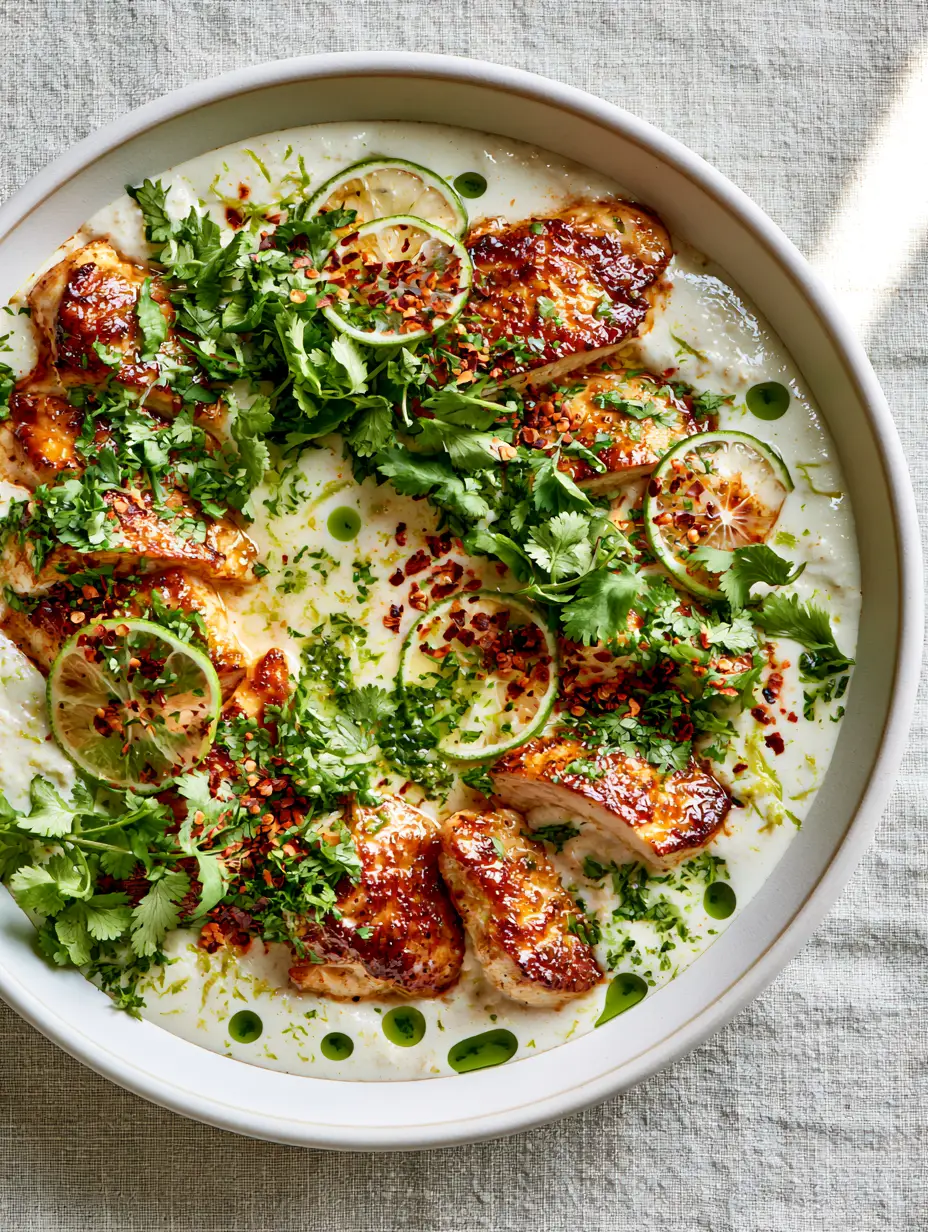
Coconut Chicken Recipe: Creamy Pan-Seared Bliss with Lime and Cilantro
Ingredients
Equipment
Method
- Pat chicken dry and season. Heat oil in skillet over medium-high. Sear chicken strips for 3-4 minutes per side until a deep golden-brown crust forms. Remove and set aside.
- Reduce heat to medium. Add minced garlic and ginger. Sauté for 60 seconds until fragrant but not browned.
- Pour in full-fat coconut milk. Scape the bottom of the pan to release the fond. Simmer for 5-7 minutes until the liquid reduces by one-third and becomes thick and velvety.
- Return chicken to the pan. Add lime wheels and lime juice. Simmer for 3 minutes until chicken is cooked through and sauce is glistening.
- Sprinkle with lime zest, chopped cilantro, and red chili flakes. Dot the surface with green herb oil droplets.
- Serve the creamy chicken and sauce over a bed of fluffy jasmine rice.
Notes
Use full-fat canned coconut milk for the most luxurious sauce texture.
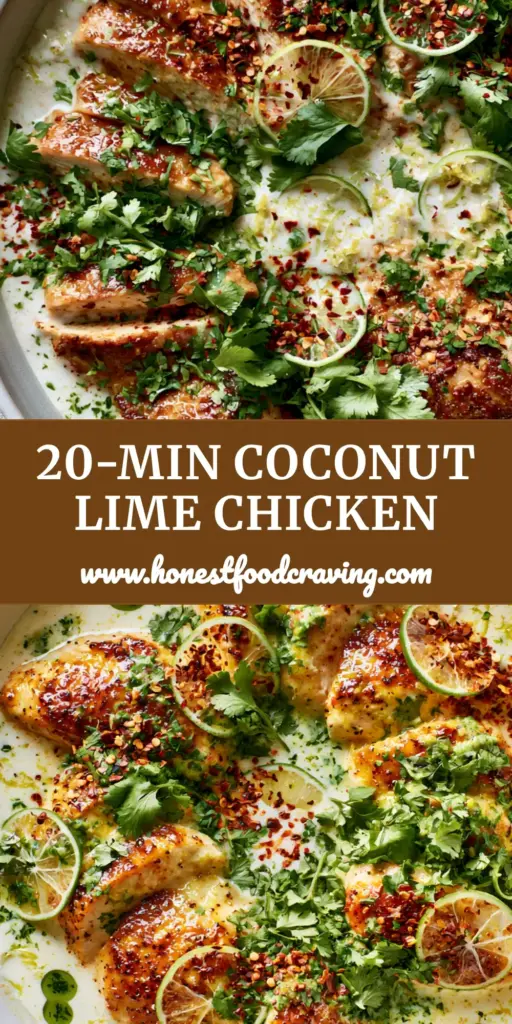
Closing & Call to Action
This coconut chicken recipe is a testament to how simple techniques like proper searing and sauce reduction can create a visually stunning and incredibly delicious meal. The combination of velvety coconut, bright lime, and golden chicken is a flavor profile that appeals to everyone. We hope this becomes a staple in your kitchen rotation!
Did you make this? We would love to hear how it turned out! Leave a comment below and let us know your favorite way to garnish this skillet. Don’t forget to share your beautiful recreations on Pinterest and tag us! For more kitchen inspiration, sign up for our weekly newsletter below.