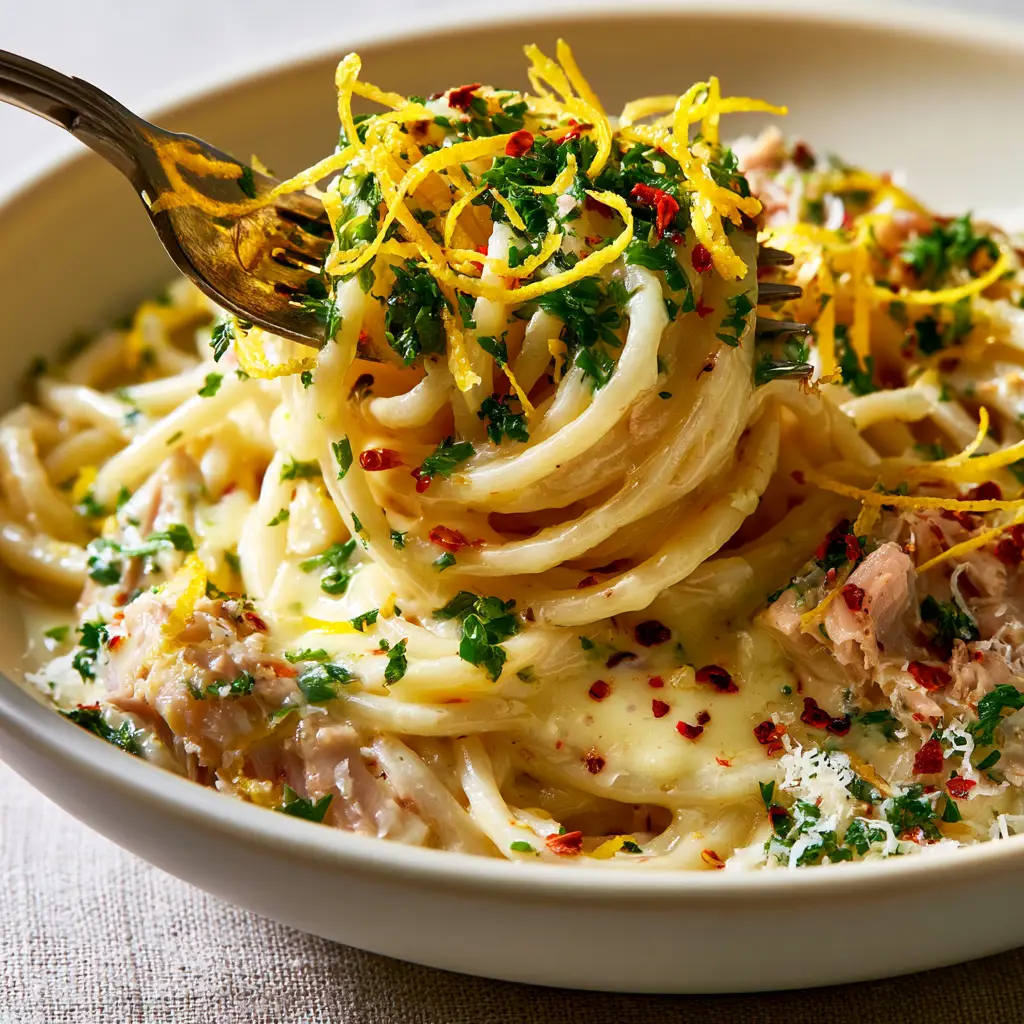
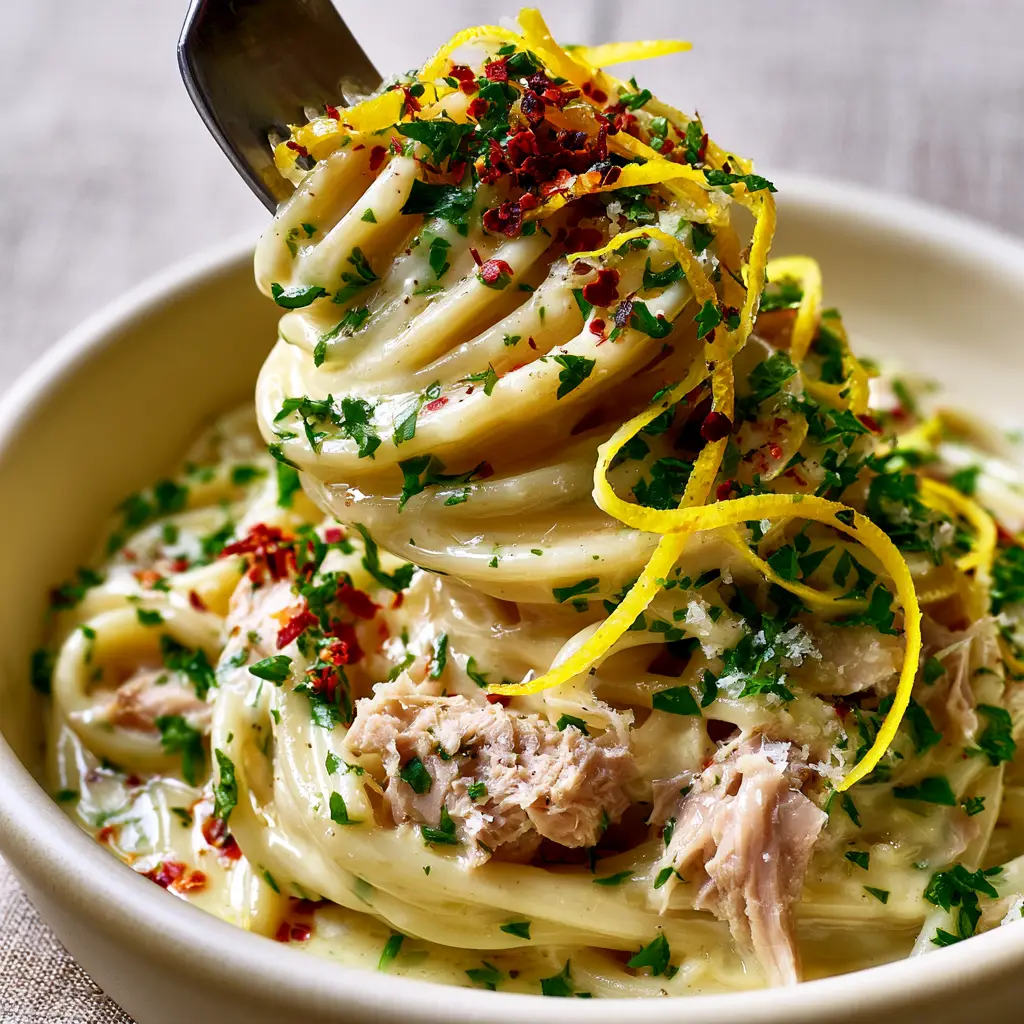
There is a profound culinary magic that happens when high-quality pantry staples meet fresh, vibrant aromatics. This Tuna Pasta isn’t just a quick weeknight meal; it is a masterclass in texture and balanced flavors. Imagine a fork lifting a perfectly coiled twirl of al dente spaghetti, every strand draped in a thick, glossy, pale-yellow lemon cream sauce that glimmers under the light.
As you take your first bite, you encounter meaty, large flakes of light pink tuna that provide a satisfying protein punch against the velvety backdrop of the cream. The brightness of the lemon zest curls and the earthy punch of finely chopped parsley cut through the richness, while a subtle heat from crushed red pepper flakes lingers on the palate. This dish is designed for those who appreciate the intersection of convenience and gourmet execution.
Using a neutral ceramic bowl for serving allows the vibrant colors—the forest green of the parsley, the sunny yellow of the zest, and the fiery red of the chili—to pop with professional photographic quality. Whether you are cooking for a quiet solo dinner or hosting a sophisticated evening, this recipe delivers a restaurant-level experience in under thirty minutes.
Why You Will Crave This Creamy Lemon Tuna Spaghetti
- Textural Harmony: The contrast between the firm, al dente pasta and the tender, meaty tuna flakes creates a sophisticated mouthfeel that elevates the humble canned fish.
- Emulsified Perfection: By utilizing starchy pasta water and heavy cream, we achieve a glossy, pale-yellow sauce that clings to the noodles rather than pooling at the bottom of the bowl.
- Zesty Flavor Profile: The dual use of fresh lemon juice and long curls of lemon zest ensures a layered citrus experience that brightens the entire flavor profile.
- Pantry-to-Table Elegance: This recipe proves that canned ingredients, when handled with forensic culinary care, can result in a dish worthy of a high-end bistro.
The Essential Components for a Meaty and Zesty Pasta
To achieve the visual and flavor standards of this Tuna Pasta, every ingredient must serve a specific structural or sensory purpose. We aren’t just boiling noodles; we are building a flavor foundation.
1 lb (454g) Spaghetti: Opt for a high-quality bronze-cut pasta. The rougher surface area of bronze-cut noodles is essential for grabbing onto that glossy lemon cream sauce, ensuring every bite is fully coated.
2 cans (5oz/142g each) Solid White Albacore Tuna: For those “large, meaty flakes” described in our blueprint, solid white tuna packed in olive oil is superior to chunk light tuna. Drain it slightly, but keep some of the oil for added depth.
1 cup (240ml) Heavy Cream: This provides the “thick, glossy” texture required for the sauce. The high fat content prevents the sauce from breaking when we introduce the acidic lemon juice.
2 large Lemons: You will need both the juice for the sauce and the zest—specifically “long thin curls”—for the final garnish. The acid provides the necessary contrast to the richness of the tuna and cream.
1/2 cup (50g) Freshly Grated Parmesan Cheese: This is a foundational “invisible” ingredient. It acts as a thickening agent and provides a salty, umami backbone that makes the sauce feel complete.
1/4 cup (15g) Fresh Italian Parsley: Finely chopped, this adds a burst of “bright green” color and a fresh, peppery finish that balances the sea-saltiness of the tuna.
1 tsp (2g) Crushed Red Pepper Flakes: These “vibrant red chili flakes” add a gentle heat that cuts through the creaminess, preventing the dish from feeling too heavy on the tongue.
2 tbsp (30g) Unsalted Butter: This is used to sauté the aromatics and creates a silkier finish for the sauce, contributing to that “subtle glisten” seen in professional photography.
Professional Tools for Culinary Precision
While this is a accessible dish, using the right tools ensures your results match the “Extreme macro” visual appeal of our recipe blueprint.
You will need a large stockpot to cook the spaghetti in plenty of salted water, allowing the starch to develop properly. A wide, deep skillet or sauté pan is necessary for the sauce; the large surface area allows the cream to reduce efficiently while providing enough room to toss the pasta without breaking the tuna flakes. For the “lemon zest curls,” a channel knife or a high-quality microplane is essential. Finally, a neutral ceramic bowl is the perfect canvas for presentation, highlighting the dish’s vibrant colors.
Step-by-Step: Mastering the Glossy Lemon Sauce
Achieving the perfect “pale-yellow lemon cream sauce” requires a specific sequence of emulsification. Follow these steps to ensure a professional-grade finish.
1. Boiling the Pasta to Al Dente Perfection
Bring a large pot of water to a rolling boil and salt it generously—it should taste like the sea. Add the 1 lb (454g) of spaghetti and cook it for 1-2 minutes less than the package directions. We are looking for a true “al dente” texture, as the pasta will continue to cook slightly in the lemon cream sauce. Crucial Tip: Before draining, reserve 1 cup (240ml) of the starchy pasta water. This is your “liquid gold” for sauce consistency.
2. Aromatics and the Cream Base
In your large skillet, melt 2 tbsp (30g) of butter over medium heat. If you want to lean into more seafood notes, you might consider how this technique differs from a garlic lemon pasta base. Add a pinch of red pepper flakes to the butter to infuse the oil. Pour in the 1 cup (240ml) of heavy cream and bring it to a gentle simmer. Let it reduce for 3-4 minutes until it thickens enough to coat the back of a spoon.
3. Incorporating the Lemon and Cheese
Whisk in 3 tbsp (45ml) of fresh lemon juice and 1/2 cup (50g) of freshly grated Parmesan cheese. Watch as the sauce transforms into a pale-yellow hue. The cheese should melt completely, creating tiny grains that disappear into the glossy liquid. If the sauce looks too thick, add a splash of the reserved pasta water and whisk vigorously to emulsify.
4. Folding in the Meaty Tuna Flakes
Gently fold in the 10oz (284g) of drained tuna. Use a spatula to break the tuna into “large flakes” rather than a fine mush. We want those meaty chunks to be visible and “nestled in the strands” of the pasta. Season with salt and cracked black pepper to taste.
5. The Final Toss and Garnish
Add the cooked spaghetti directly into the skillet. Toss gently using tongs to ensure every strand is coated in the glossy sauce. If the dish looks dry, add more pasta water a tablespoon at a time until the sauce glistens. Transfer the pasta to a neutral ceramic bowl. Garnish heavily with the finely chopped parsley, long curls of lemon zest, and an extra scattering of red chili flakes.
Expert Tips for Success
- Don’t Over-Stir the Tuna: To keep those “large, meaty flakes” intact, add the tuna at the very end and toss minimally. Over-working the fish will turn the sauce grey and grainy.
- Temperature Control: Never boil the sauce once the lemon juice is added. High heat can cause the cream to curdle when combined with acid. Keep it at a gentle simmer.
- The Glisten Factor: If your sauce looks matte instead of glossy, it needs more fat or moisture. A final pat of cold butter or a splash of pasta water right before serving will create that professional “glisten.”
- Zesting Strategy: Zest your lemons before juicing them. It is much easier to get long, beautiful curls from a firm, whole lemon than from a squeezed half.
Storage and Reheating Advice
This Tuna Pasta is best enjoyed immediately to appreciate the “glossy” nature of the sauce. However, if you have leftovers, store them in an airtight container in the refrigerator for up to 2 days. The tuna and cream do not freeze well, as the texture of the fish becomes mushy and the sauce will likely break upon thawing.
To reheat, place the pasta in a skillet over low heat. Add a splash of milk or water to loosen the sauce, as the pasta will have absorbed much of the moisture overnight. Stir gently until heated through, being careful not to overcook the noodles further.
What to Serve with Your Tuna Pasta
To round out this meal, consider a crisp, acidic side dish to balance the creamy profile. A simple arugula salad with a balsamic vinaigrette works beautifully. If you are looking for more seafood inspiration, you might enjoy comparing this to a creamy crab pasta or even a spinach and salmon pasta for your next dinner party. For a different texture profile, a side of roasted zucchini pairs perfectly, much like the flavors found in a tomato and zucchini pasta.
Frequently Asked Questions
Yes, while spaghetti is classic, fettuccine or linguine also work well. The key is to use a long pasta that can be twirled and coated in the glossy sauce.
Use a channel knife for long, thick curls. If you don’t have one, use a vegetable peeler to take off a strip of zest and then slice it into very thin ribbons with a sharp knife.
Use heavy cream with high fat content and avoid boiling the sauce once the lemon juice is added. Gently simmer the cream first, then whisk in the acid at the end.
For the best flavor and texture, use tuna packed in olive oil. It yields the ‘meaty flakes’ required for this recipe and adds a richer depth to the lemon cream sauce.
For a similar glossy result, you could use full-fat crème fraîche. Milk or half-and-half will not thicken as well and are more likely to break when lemon juice is added.
The Ultimate Creamy Lemon Tuna Pasta Recipe
Tuna Pasta with Glossy Lemon Cream Sauce and Fresh Parsley
Ingredients
Equipment
Method
- Boil the spaghetti in salted water until al dente. Reserve 1 cup (240ml) of pasta water before draining.
- Melt butter in a skillet over medium heat. Stir in heavy cream and simmer for 3-4 minutes until slightly thickened.
- Whisk in lemon juice and parmesan cheese until the sauce is glossy and pale yellow.
- Gently fold in the tuna, keeping large flakes intact. Season with salt and pepper.
- Toss the spaghetti into the sauce. Add pasta water as needed for a glistening finish. Garnish with parsley, lemon zest curls, and red pepper flakes.
Notes
Always zest your lemons before juicing them for the perfect curls.
Bring Gourmet Seafood to Your Kitchen
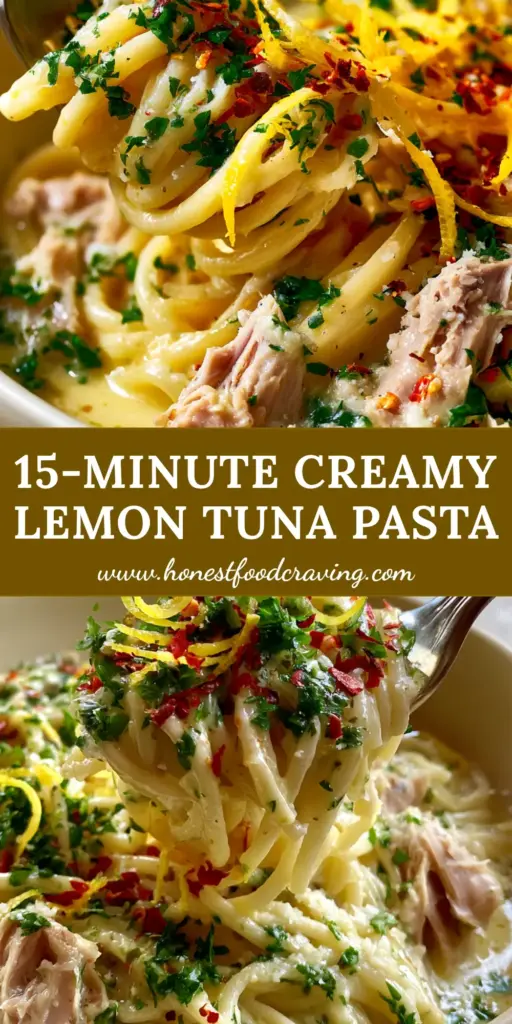
This Tuna Pasta proves that you don’t need expensive ingredients to create a stunning, restaurant-quality meal. By focusing on the “Visual Recipe Blueprint”—the glossy sauce, the meaty flakes, and the vibrant garnishes—you transform a pantry staple into a culinary highlight. If you enjoyed this recipe, please leave a comment below and share your photos with us!
Don’t forget to follow honestfoodcraving on Pinterest for more visually stunning recipe inspiration and kitchen tips. Happy cooking!