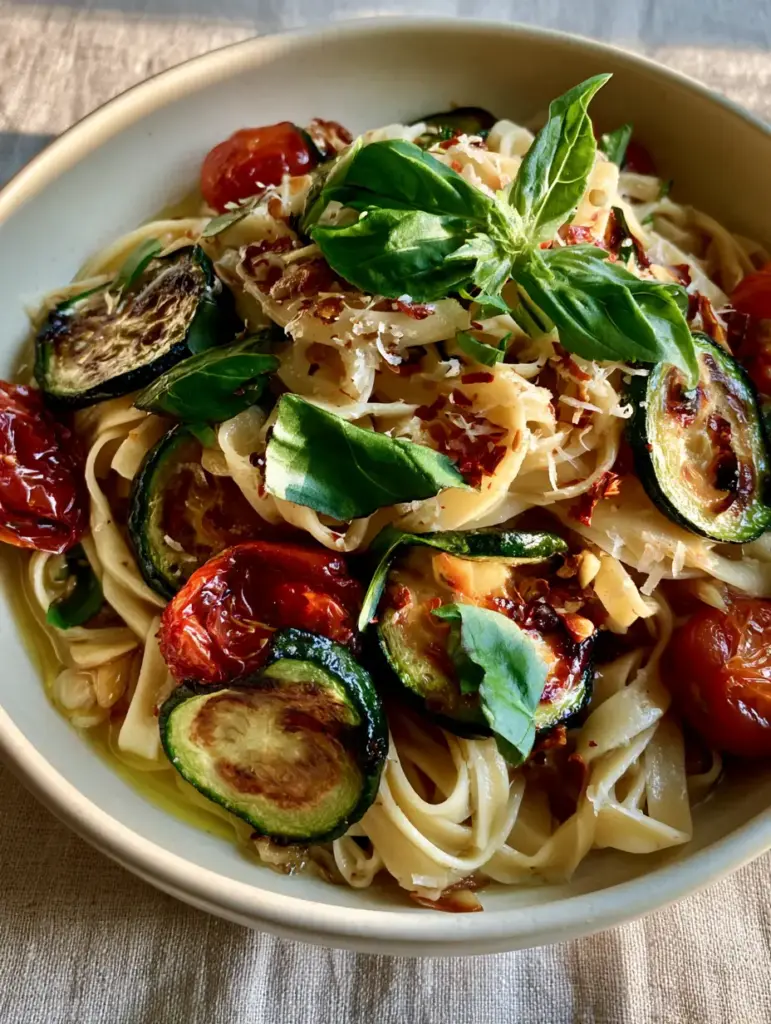
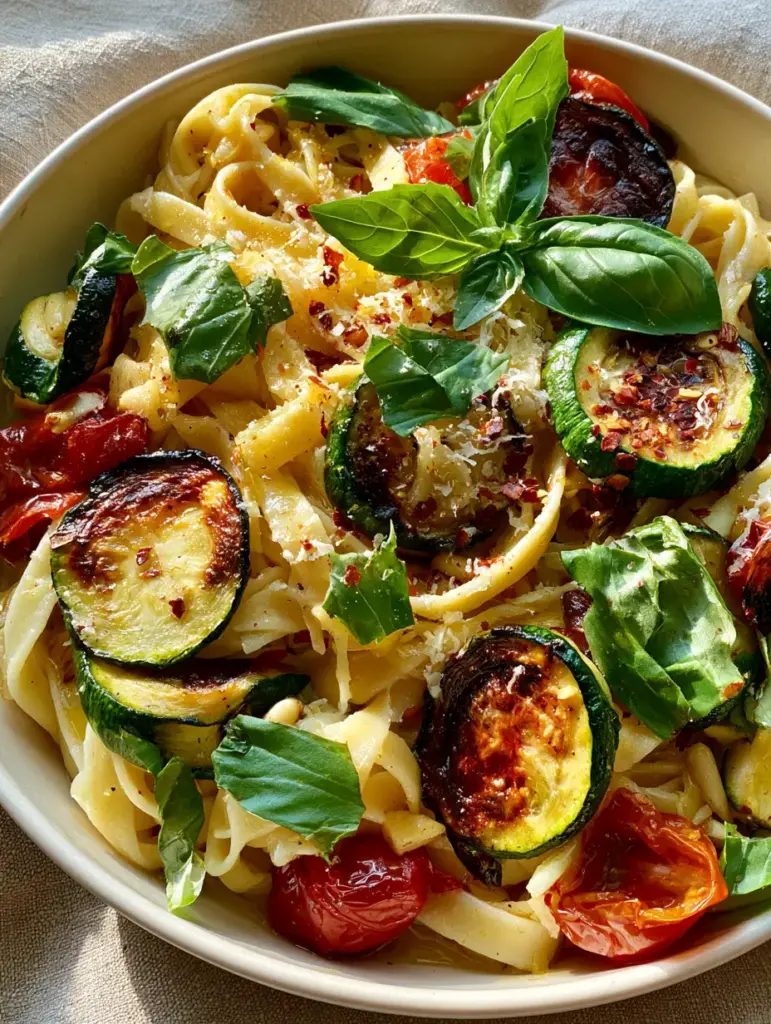
This Tomato zucchini pasta is a masterclass in texture and seasonal simplicity. Imagine thick, al dente fettuccine ribbons clinging to a light, glistening emulsion of extra virgin olive oil and garlic. The star of the show isn’t just the vegetable—it’s the technique used to transform them into flavor bombs.
By dry-searing the zucchini, we achieve deep, caramelized edges that provide a smoky contrast to the sweet, blistered cherry tomatoes. This isn’t a mushy vegetable pasta; it is a vibrant, restaurant-quality meal that highlights the “culinary forensics” of high-heat cooking and fresh ingredients.
Whether you are looking for a quick weeknight dinner or a sophisticated vegetarian main for a weekend gathering, this recipe delivers visual drama and professional-grade flavor. It captures the essence of late-summer harvests in every bite.
Why This Charred Summer Pasta Works Every Single Time
- The Dry-Sear Technique: Unlike traditional sautéing, dry-searing the zucchini rounds ensures they stay firm and develop a “bark” of flavor rather than steaming in their own moisture.
- Burst Tomato Sauce: We use high heat to blister the red cherry tomatoes until they pop, releasing their natural sugars to create a built-in pan sauce.
- Al Dente Texture: The use of fettuccine provides a sturdy base that stands up to the chunky, seared vegetables, ensuring a satisfying mouthfeel in every forkful.
- Visual Contrast: The bright green of the torn basil and the deep gold of the toasted garlic slivers create a handheld smartphone-worthy aesthetic.
The Anatomy of a Perfect Tomato Zucchini Pasta
To achieve the “handheld smartphone photo” quality seen in our visuals, each ingredient serves a specific structural and flavor-driven purpose. Do not skip the foundational elements that build the emulsion.
Fettuccine: 12 oz (340g) of high-quality pasta. The wide surface area of the fettuccine is essential for catching the garlic-infused olive oil and tomato juices.
Zucchini: 2 medium (approx. 450g), sliced into 1/4 inch (6mm) rounds. Dry-searing these creates that “deep golden-brown charred edge” mentioned in our visual blueprint.
Cherry Tomatoes: 2 cups (300g) of vibrant red tomatoes. These provide the acidity and “burst” juice that forms the base of our light glaze.
Garlic Slivers: 4 large cloves, thinly sliced. Slicing rather than mincing allows the garlic to toast into golden chips without burning, adding a nutty complexity.
Extra Virgin Olive Oil: 1/3 cup (80ml) for the final emulsion. Use a high-quality oil as it is the primary fat and flavor carrier for the dish.
Fresh Basil: 1/2 cup (15g) of hand-torn leaves. Tearing the basil rather than chopping it preserves the essential oils and provides a rustic, vibrant look.
Parmesan Cheese: 1/4 cup (25g), micro-planed. A delicate dusting of finely grated cheese adds a salty umami finish that melts instantly into the pasta.
Red Pepper Flakes: 1/2 tsp (1g), for a gentle heat that cuts through the richness of the olive oil glaze.
Foundational Seasoning: Kosher salt and freshly cracked black pepper. These are “invisible” essentials required to draw out the sweetness of the seared vegetables.
Essential Tools for High-Heat Vegetable Searing
To get those “caramelized edges” and “blistered skins,” you need the right conductivity. A heavy-bottomed stainless steel or cast-iron skillet is non-negotiable for dry-searing.
You will also need a microplane for that “delicate dusting” of parmesan and a large pot to boil your pasta in salted water. For those looking to expand their kitchen repertoire, this skillet technique is similar to what you’d use for a crispy seared chicken sandwich or a perfectly browned steak.
Mastering the Sear: Step-by-Step Instructions
1. Achieving the Perfect Pasta Foundation
Bring a large pot of heavily salted water to a rolling boil. Cook the 12 oz (340g) of fettuccine until it is about 1 minute shy of al dente.
Pro Tip: Reserve at least 1 cup (240ml) of starchy pasta water before draining. This liquid gold is the secret to the final glistening emulsion.
2. The Forensic Dry-Sear of the Zucchini
Heat your large skillet over medium-high heat. Do NOT add oil yet. Place the zucchini rounds in a single layer (you may need to work in batches).
Let them sit undisturbed for 2-3 minutes until you see “deep golden-brown charred edges.” Flip and sear the other side for 1 minute. Remove from the pan and season with salt.
3. Blistering the Tomatoes and Toasting Garlic
In the same hot pan, add 2 tbsp (30ml) of olive oil. Toss in the cherry tomatoes. Shake the pan occasionally until the skins are blackened in spots and some begin to burst.
Push the tomatoes to the side and add the garlic slivers. Watch for the sensory cue: the garlic should turn a light golden-brown and smell fragrant, not acrid.
4. Creating the Glistening Emulsion
Lower the heat to medium. Add the cooked fettuccine, the seared zucchini, and the remaining olive oil to the skillet. Pour in 1/2 cup (120ml) of the reserved pasta water.
Toss vigorously with tongs. The pasta water and oil will emulsify with the burst tomato juices, creating a light glaze that coats every strand of pasta.
5. The Finishing Flourish
Turn off the heat. Fold in the hand-torn basil and red pepper flakes. Season with more salt and pepper to taste.
Transfer to a matte cream ceramic bowl. Finish with a generous “delicate dusting” of micro-planed parmesan cheese and a final drizzle of EVOO for that handheld photo glow.
Expert Tips for Visual and Flavor Success
- Don’t Crowd the Pan: When dry-searing the zucchini, space is your friend. If the pan is too full, the zucchini will steam and become soft rather than charred.
- Salt Late: Salt draws out moisture. To get that firm, seared texture, only salt the zucchini *after* they have developed their crust.
- The “Gloss” Factor: If the pasta looks dry, add more pasta water 1 tablespoon at a time. The goal is a glistening coat, not a puddle of liquid.
- Acid Balance: If your tomatoes are very sweet, a tiny squeeze of lemon juice can brighten the entire dish, much like the balance found in a chimichurri dressing.
How to Store and Reheat Your Leftovers
This Tomato zucchini pasta is best served fresh to maintain the texture of the seared vegetables. However, leftovers can be stored in an airtight container in the refrigerator for up to 3 days.
To reheat, place the pasta in a skillet over medium heat with a splash of water or olive oil. Avoid the microwave if possible, as it can make the zucchini rubbery and the garlic bitter.
What to Pair with This Summer Pasta
This light yet filling meal pairs beautifully with a crisp green salad or a side of crusty sourdough bread to soak up the garlic-oil glaze. If you are planning a larger menu, it serves as a fantastic side for grilled steak or even alongside some salmon cakes.
For dessert, consider something light and seasonal from our list of celebration-worthy treats to end the meal on a high note.
Common Questions About Tomato Zucchini Pasta
Yes, while fettuccine is ideal for the emulsion, linguine or pappardelle also work well. Short shapes like penne can be used but won’t hold the light oil glaze as effectively.
I do not recommend frozen zucchini for this specific recipe, as it contains too much moisture to achieve the signature dry-seared charred edges.
Add the garlic only after the tomatoes have started to blister. The moisture from the tomatoes helps regulate the pan temperature, and the garlic only needs about 60 seconds to toast.
It is very easy to make vegan! Simply omit the parmesan cheese or replace it with a sprinkle of nutritional yeast or a vegan cheese alternative.
Dry-searing allows the zucchini to reach a higher surface temperature quickly, creating a caramelized crust without the vegetable absorbing excess oil and becoming soggy.
The Ultimate Tomato Zucchini Pasta Recipe
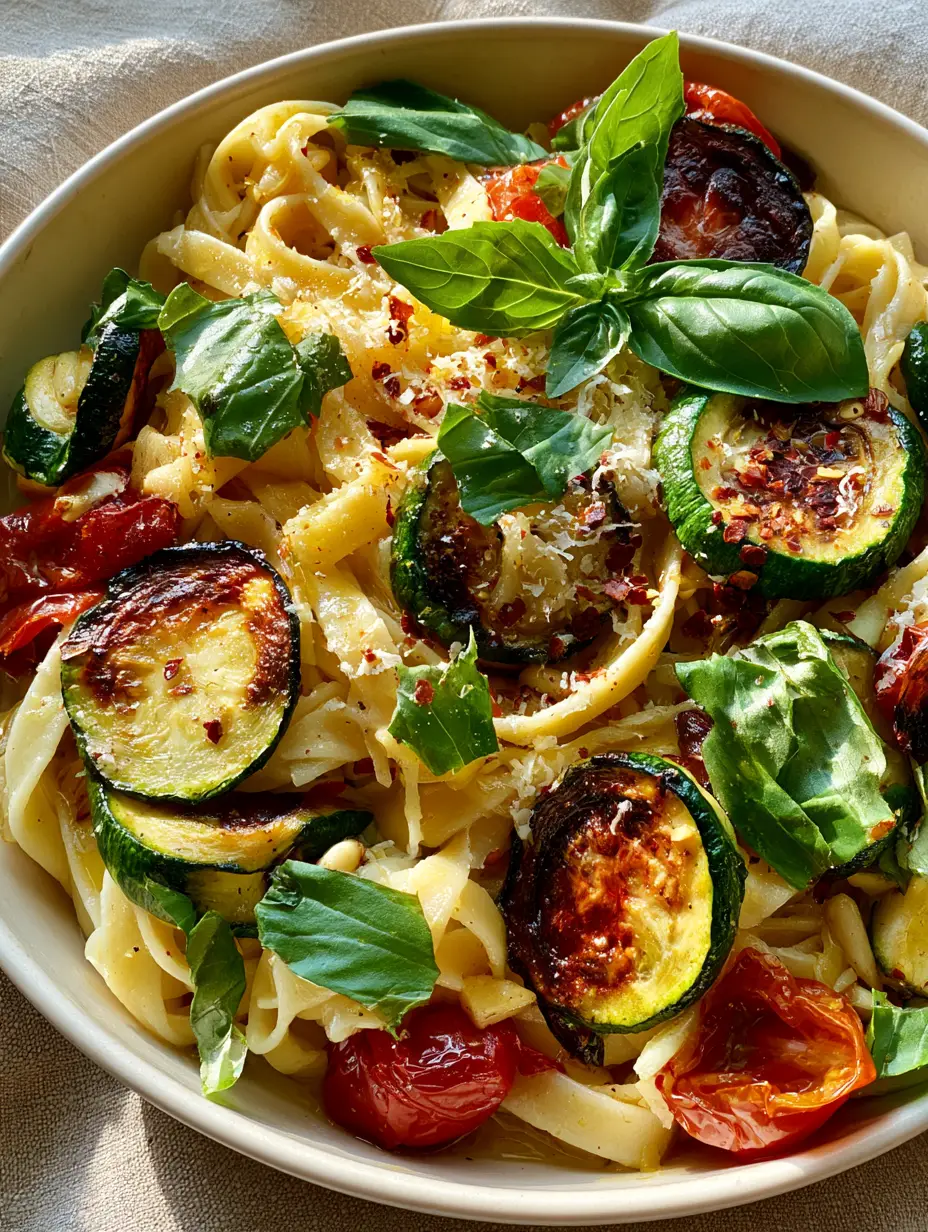
Tomato zucchini pasta with Dry-Seared Zucchini and Blistered Tomatoes
Ingredients
Equipment
Method
- Cook fettuccine in salted water until 1 minute before al dente. Reserve 1 cup (240ml) of pasta water.
- Place zucchini in a hot, dry skillet. Sear for 2-3 minutes per side until deep golden-brown charred edges form. Remove and set aside.
- Add 2 tbsp olive oil and tomatoes to the skillet. Cook until skins blister and some tomatoes burst. Add garlic slivers and toast until golden.
- Add pasta, zucchini, remaining oil, and 1/2 cup pasta water to the pan. Toss over medium heat until a glistening emulsion forms.
- Stir in basil and red pepper flakes. Serve with a dusting of micro-planed parmesan.
Notes
Reserve more pasta water than you think you need to adjust the sauce consistency.
Bring the Flavors of Summer to Your Table
This Tomato zucchini pasta is more than just a meal; it is a celebration of simple techniques yielding extraordinary results. The contrast between the smoky, dry-seared zucchini and the sweet, acidic burst of cherry tomatoes creates a profile that is both comforting and sophisticated.
If you made this recipe and love how it looked in your ceramic bowl, we want to hear about it! Leave a comment below, share your photos, and be sure to follow us on Pinterest for more culinary inspiration.