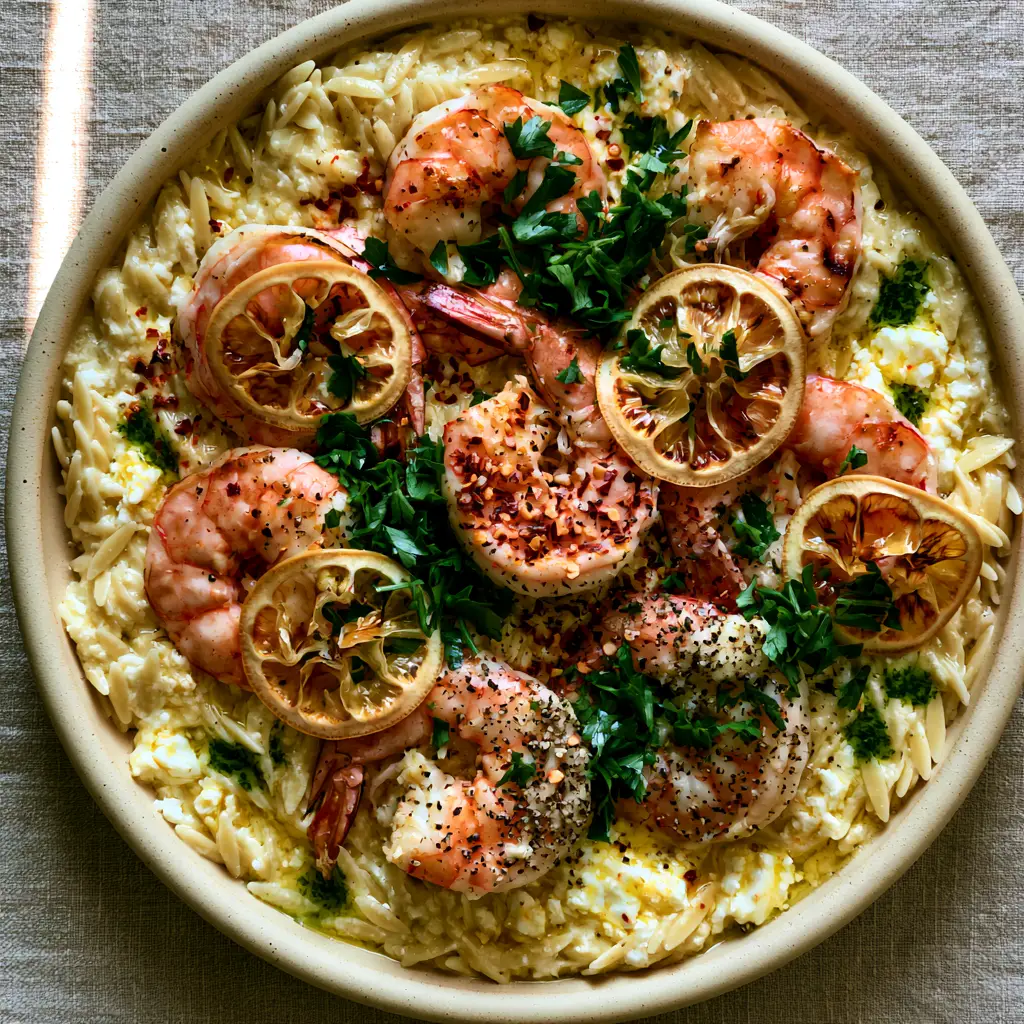
There is a specific kind of magic that happens when high-quality seafood meets the bright, briny essence of the Mediterranean. This Lemon Feta Orzo Shrimp isn’t just a meal; it is a sensory experience designed to mimic the effortless elegance of a seaside taverna. Imagine succulent, jumbo shrimp with charred edges resting on a bed of velvet-smooth, citrus-infused pasta.
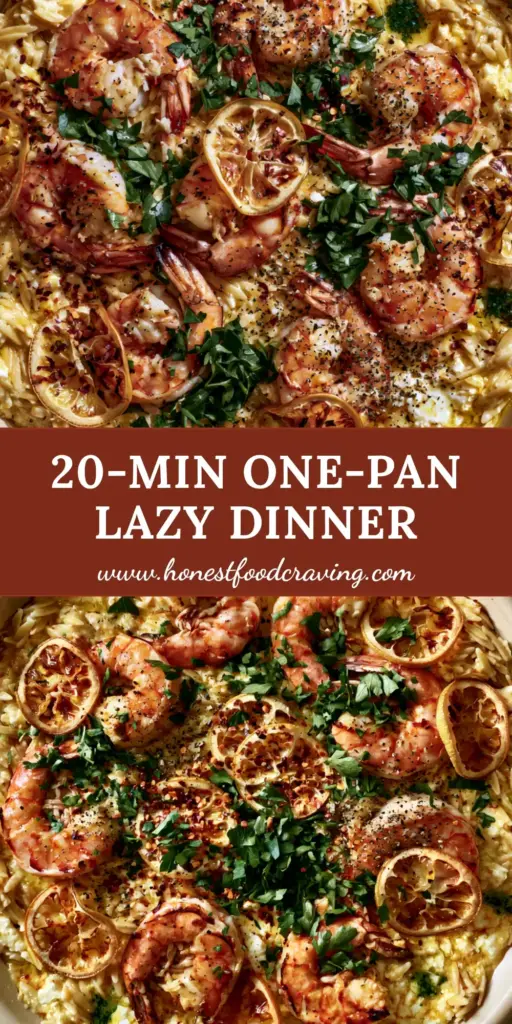
When you first lay eyes on this dish, the visual contrast is striking. The pink-orange hues of the perfectly seared shrimp pop against the creamy, golden lemon-garlic sauce. Small pockets of melted white feta cheese peek through the grains of al dente orzo, while caramelized lemon wheels add a sophisticated, rustic charm. It’s a dish that looks like it belongs on a professional food photographer’s feed, yet it comes together in a single ceramic pan.
Whether you are hosting an intimate dinner party or simply looking to elevate your Tuesday night, this Lemon Feta Orzo Shrimp delivers on every promise. We’ve meticulously crafted this recipe to ensure the textures are balanced—from the snap of the shrimp to the tender bite of the pasta. Let’s dive into why this specific combination of ingredients creates such a harmonious flavor profile.
Why This One-Pan Mediterranean Shrimp and Orzo Works
- Perfectly Seared Textures: By searing the jumbo shrimp separately, we achieve those coveted charred edges and succulent, snappy interiors without overcooking them in the sauce.
- Layered Citrus Profile: We don’t just use juice; we use zest for aromatic depth and caramelized lemon half-moons for a concentrated, jammy sweetness that cuts through the rich feta.
- Creamy Without Heavy Flour: The starch from the orzo naturally thickens the chicken broth and cream, creating a glossy, golden lemon-garlic sauce that clings to every grain.
- Visual Gourmet Appeal: Finished with a scatter of vibrant flat-leaf parsley and emerald green herb oil, this dish is a masterclass in “authentic food blogger aesthetic.”
The Anatomy of Flavor: Ingredients for Lemon Feta Orzo Shrimp
Jumbo Shrimp (16/20 count): We recommend 1 lb (454g) of deveined shrimp. Their size ensures they stay juicy during the high-heat sear required for those beautiful pink-orange hues.
Orzo Pasta: You’ll need 1.5 cups (300g) of dried orzo. This rice-shaped pasta is the ideal vessel for the creamy sauce, providing a satisfying “al dente” mouthfeel.
Feta Cheese: Use 4 oz (113g) of high-quality sheep’s milk feta. Crumbed by hand, it creates visible bits of melted white cheese that provide a tangy, salty punch throughout the dish.
Fresh Lemons: You will need 2 large lemons. One is sliced into thin half-moons for caramelizing, while the other provides the fresh zest and juice needed for the golden sauce.
Garlic Cloves: 4 large cloves, minced. Garlic is the backbone of the aromatic base, infusing the olive oil and subsequent sauce with a savory depth.
Chicken or Vegetable Broth: 3 cups (720ml) of low-sodium broth. This is our primary cooking liquid, providing the “invisible” foundation for the pasta to absorb.
Heavy Cream: 1/4 cup (60ml) of heavy cream. This small amount transforms the starch-infused broth into a luxurious, creamy lemon-garlic sauce.
Fresh Flat-Leaf Parsley: A generous handful, finely chopped. This provides the vibrant green contrast and a refreshing herbal finish to the rich flavors.
Crushed Red Chili Flakes: 1/2 tsp (1g). A delicate dusting provides just enough heat to balance the acidity of the lemon and the creaminess of the cheese.
Extra Virgin Olive Oil: 3 tbsp (45ml). Used for searing the shrimp and lemons, and as a final “emerald green herb oil” drizzle to make the surface glisten.
Foundational Seasonings: Fine sea salt and freshly cracked black pepper. These are essential for layering flavor at every stage of the cooking process.
Essential Kitchen Tools for Professional Results
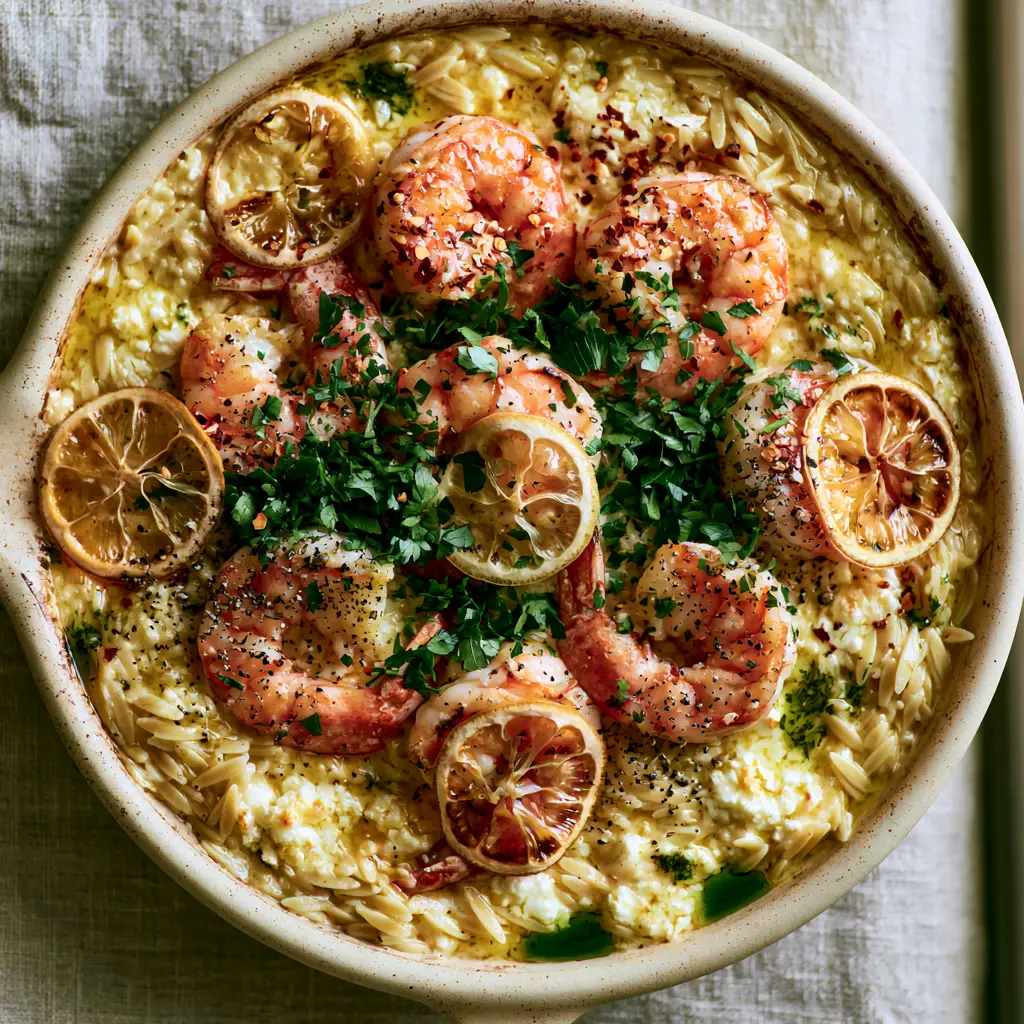
To achieve the look of our visual blueprint, you should use a rustic, matte cream ceramic shallow pan or a large cast-iron skillet. The wide surface area is crucial for evaporating moisture quickly, which helps in “blistering” the lemons and getting a hard sear on the shrimp.
You will also need a sharp chef’s knife for precisely chopping the parsley and slicing the lemons into thin, uniform half-moons. A microplane is recommended for zesting the lemon to ensure the citrus oils are fully released into the sauce without the bitter white pith.
The Master Method: Step-by-Step Lemon Feta Orzo Shrimp
Step 1: Caramelizing the Lemon Wheels
Heat 1 tbsp (15ml) of olive oil in your ceramic pan over medium-high heat. Place the thin lemon half-moons in a single layer. Sear them for 2-3 minutes per side until they develop dark, caramelized edges and a softened texture. Remove them from the pan and set aside; these will be your primary garnish.
Step 2: Searing the Succulent Jumbo Shrimp
Pat the shrimp completely dry with paper towels—this is the secret to a good sear. Season them with salt and cracked black pepper. In the same pan, add another tablespoon of oil. Arrange the shrimp in the pan, ensuring they don’t crowd each other. Look for the sensory cue: a loud sizzle. Sear for 2 minutes per side until they exhibit pink-orange hues and light charred edges. Remove and set aside.
Step 3: Building the Aromatic Orzo Base
Reduce heat to medium. Add the remaining oil and the minced garlic. Sauté for 30 seconds until fragrant but not browned. Pour in the 1.5 cups (300g) of orzo and toast it slightly in the garlic oil for 1 minute. This adds a nutty dimension to the final Lemon Feta Orzo Shrimp.
Step 4: The Simmer and Emulsion
Pour in the 3 cups (720ml) of broth and the lemon zest. Bring to a gentle boil, then reduce heat to a simmer. Stir occasionally to prevent the orzo from sticking. Once the pasta is al dente (about 8-10 minutes) and most of the liquid is absorbed, stir in the heavy cream and lemon juice. This creates that signature creamy, golden lemon-garlic sauce.
Step 5: The Feta Fold and Final Garnish
Gently fold in half of the crumbled feta cheese, allowing it to create visible melted pockets. Return the seared shrimp and caramelized lemons to the top of the pan. Garnish heavily with the chopped parsley, crushed red pepper flakes, and a final generous dusting of cracked black pepper. Drizzle with a little extra olive oil to create those glistening emerald pockets on the surface.
Expert Tips for the Perfect Mediterranean Orzo
- Dry the Shrimp: Moisture is the enemy of the sear. If the shrimp are wet, they will steam rather than develop those beautiful charred edges.
- Don’t Overcook the Orzo: The pasta will continue to soften slightly after you add the cream and feta. Pull it off the heat when it still has a slight “tooth” to it.
- Use Block Feta: Pre-crumbled feta is often coated in anti-caking agents (like cellulose), which prevents it from melting into the sauce properly. Crumble it yourself for the best texture.
- Control the Heat: If the sauce becomes too thick before the orzo is cooked, add an extra splash of broth 1/4 cup (60ml) at a time.
Storage and Reheating Advice
This Lemon Feta Orzo Shrimp is best enjoyed immediately while the shrimp are snappy and the sauce is fluid. However, leftovers can be stored in an airtight container in the refrigerator for up to 2 days. To reheat, add a splash of water or broth to the pan to loosen the sauce, as the orzo will continue to absorb moisture as it sits.
We do not recommend freezing this dish, as the texture of the cream-based sauce and the delicate orzo can become grainy and mushy upon thawing.
What to Serve with This Vibrant Pasta
Since this is a rich and flavorful one-pot meal, keep your sides light and crisp. A simple cucumber and tomato salad provides a refreshing crunch that balances the creamy pasta. If you want to lean further into the Greek inspiration, serving this alongside some shrimp saganaki as an appetizer makes for a stunning Mediterranean feast.
For those who love a variety of textures, a cucumber dill salad or even a light garlic lemon pasta variation can complement the meal if you are serving a larger crowd. For a vegetable-heavy side, our spinach and tomato orzo is a fantastic companion.
Frequently Asked Questions
While orzo is traditional for this texture, you can use pearl couscous or a small pasta like ditalini. Adjust cooking times according to the package instructions, as liquid absorption rates vary.
Yes, but ensure they are completely thawed and patted extremely dry with paper towels. Excess moisture will prevent the shrimp from getting the charred, pink-orange edges shown in the photos.
Use medium-high heat and a small amount of oil. Don’t move the lemons for at least 2 minutes; they need direct contact with the pan to develop the dark, jammy sugars.
You can substitute the heavy cream with full-fat coconut milk or a dairy-free heavy cream alternative, and use a vegan feta. However, the flavor profile will shift slightly toward a more tropical note.
Stir the orzo frequently while it simmers in the broth. The constant movement helps release the starches that create the creamy sauce while ensuring the grains don’t clump at the bottom of the pan.
The Definitive Lemon Feta Orzo Shrimp Recipe
Lemon Feta Orzo Shrimp: The Ultimate One-Pan Mediterranean Masterpiece
Ingredients
Equipment
Method
- Heat 1 tbsp olive oil in a pan over medium-high heat. Sear lemon half-moons for 2-3 minutes per side until charred and soft. Remove and set aside.
- Pat shrimp dry and season with salt and pepper. Add 1 tbsp oil to the pan. Sear shrimp for 2 minutes per side until pink-orange and charred on the edges. Remove and set aside.
- Sauté minced garlic in remaining oil. Add orzo and toast for 1 minute. Pour in broth and lemon zest. Simmer for 8-10 minutes until orzo is al dente.
- Stir in heavy cream and lemon juice once the broth is mostly absorbed. Fold in half of the feta cheese until pockets of white appear.
- Top with seared shrimp, caramelized lemons, parsley, red pepper flakes, and cracked black pepper. Finish with an emerald olive oil drizzle.
Notes
Use high-quality block feta in brine for the creamiest melting pockets.
Bring the Mediterranean to Your Kitchen
This Lemon Feta Orzo Shrimp is a testament to the fact that simple, high-quality ingredients can produce restaurant-quality results at home. The combination of the zesty lemon, the salty feta, and the perfectly seared shrimp creates a profile that is both comforting and sophisticated. We hope this becomes a new staple in your recipe rotation!
If you enjoyed this recipe, please leave a comment below and let us know how it turned out! Don’t forget to follow us and pin this recipe to your favorite boards on Pinterest so you never lose track of this one-pan wonder.