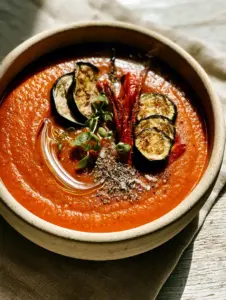
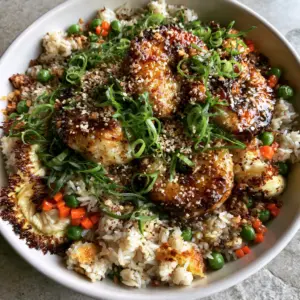
Greek Shrimp Saganaki is the ultimate Mediterranean masterpiece, blending succulent seafood with a robust, chunky tomato sauce that bubbles with intensity. This dish isn’t just a meal; it’s a sensory experience that brings the vibrant flavors of a seaside taverna directly into your home kitchen.
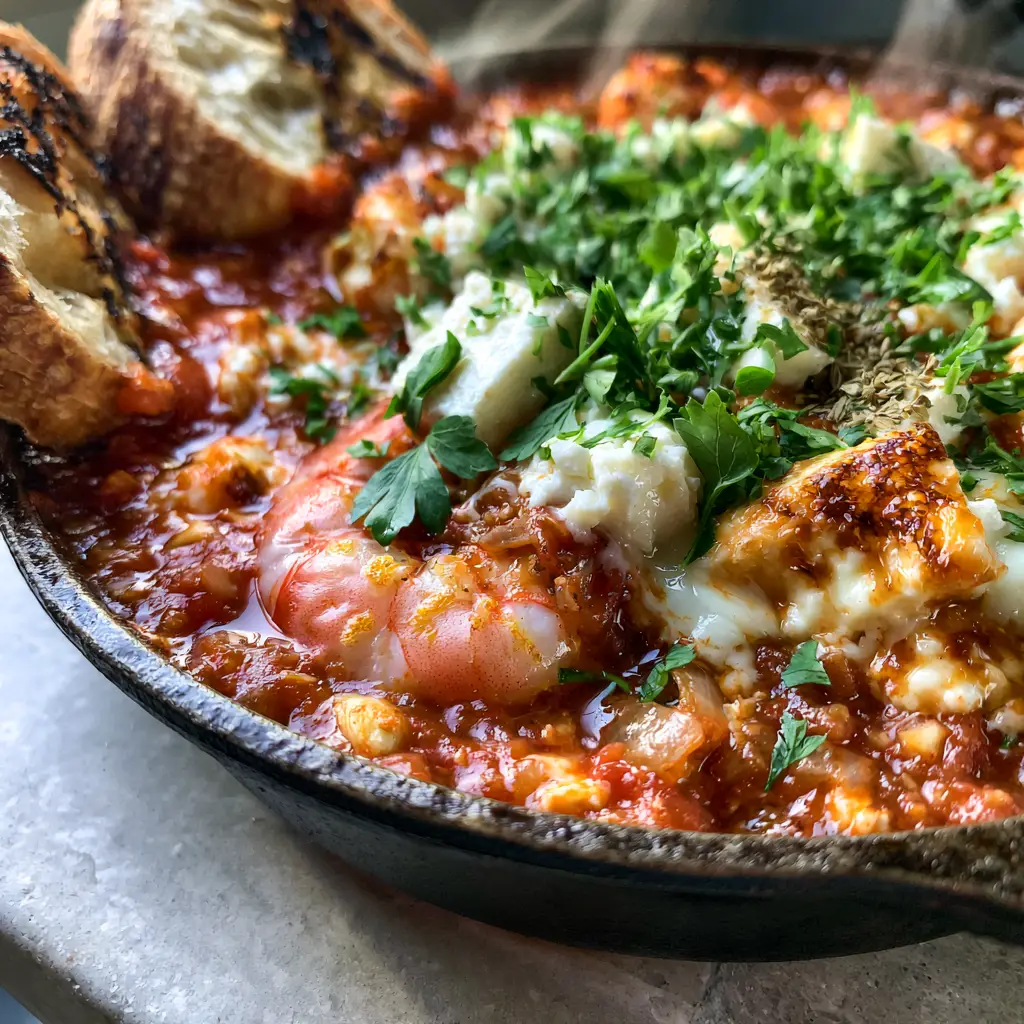
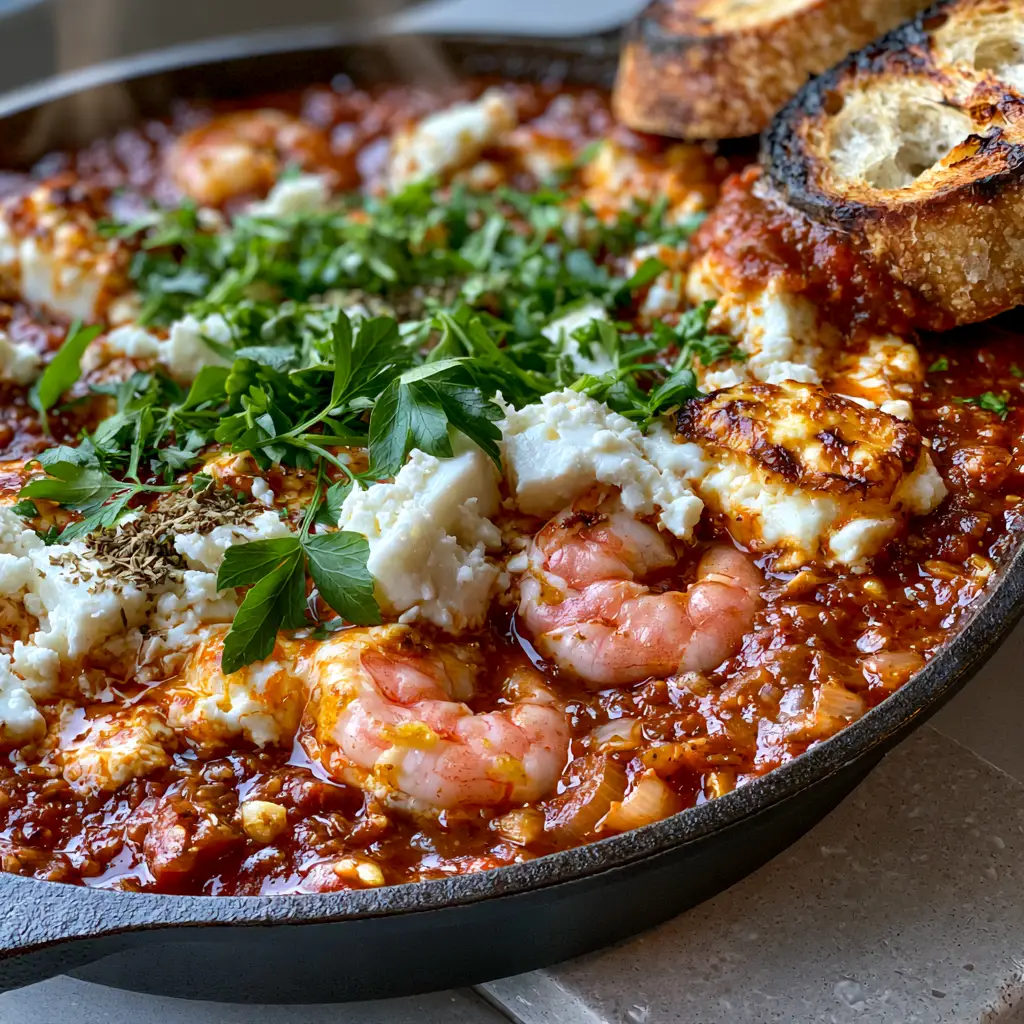
The magic of this recipe lies in the contrast of textures—plump, pink seared jumbo shrimp nestled against salty chunks of feta cheese that have been broiled until their edges achieve a perfect golden-brown toast. Every bite is accented by the aromatic hum of dried oregano and the bright, fresh bite of flat-leaf parsley.
Served in a rustic black cast iron skillet, this dish is designed for communal dipping. When you press a piece of charred, crusty sourdough baguette into the rich red sauce, you’re not just eating; you’re participating in a timeless Greek tradition of bold flavors and simple, high-quality ingredients.
The Visual Allure of Authentic Garides Saganaki
- Succulent Texture: Large, jumbo shrimp seared to a golden char while remaining tender and juicy on the inside.
- Bubbling Foundation: A thick, chunky tomato base infused with sautéed onions and garlic, providing a savory depth that clings to the seafood.
- The Feta Factor: Thick blocks of high-quality sheep’s milk feta that partially melt into the sauce, creating creamy pockets of saltiness.
- Aromatic Garnish: A heavy scattering of vibrant green parsley and a pinch of earthy dried oregano to cut through the richness of the cheese.
- The Perfect Vessel: Charred sourdough baguette slices, essential for capturing every last drop of the garlic-infused tomato nectar.
Essential Components for a Robust Mediterranean Skillet
Jumbo Shrimp (1 lb / 450g): Selecting “jumbo” (16-20 count) ensures the shrimp remain juicy and don’t overcook during the final broiling stage. Clean and devein them, but leave the tails on for a more professional, rustic presentation.
Extra Virgin Olive Oil (3 tbsp / 45ml): High-quality Greek olive oil is foundational for searing the shrimp and sautéing the aromatics. It provides a fruity, peppery backnote that ties the sauce together.
Yellow Onion and Fresh Garlic: One medium onion (150g) and four cloves of garlic (20g) create the aromatic base. Sautéing them until translucent ensures a sweetness that balances the acidity of the tomatoes.
Chunky Crushed Tomatoes (28 oz / 800g): For the specific texture seen in the visual blueprint, use high-quality crushed tomatoes or hand-crushed whole peeled tomatoes. This creates a “saucy but chunky” consistency rather than a smooth purée.
Ouzo or Dry White Wine (1/4 cup / 60ml): This is the secret to an authentic Greek flavor profile. Ouzo adds a subtle anise note, while a dry Assyrtiko or Sauvignon Blanc provides a bright acidity that lifts the seafood.
Block Feta Cheese (7 oz / 200g): Never use pre-crumbled feta; it contains anti-caking agents that prevent proper melting. Use a block of Greek feta in brine and break it into large, 1-inch (2.5cm) chunks manually.
Fresh Flat-Leaf Parsley and Dried Oregano: These herbs provide the visual and flavor “pop” required for the finishing touch. Parsley adds freshness, while oregano adds that classic Mediterranean earthiness.
Sourdough Baguette: A thick-crusted sourdough provides the structural integrity needed to soak up the sauce without falling apart. Charring it on the skillet or over an open flame adds a smoky complexity.
Precision Tools for Skillet Excellence
To achieve the “handheld smartphone photo” aesthetic of professional food styling, you need a 10-inch or 12-inch (25cm-30cm) black cast iron skillet. Cast iron is superior for this dish because it retains heat exceptionally well, allowing the sauce to bubble vigorously even after it leaves the oven.
Additionally, you will need a high-heat silicone spatula for deglazing the pan and a set of kitchen tongs for flipping the jumbo shrimp. If you are looking for other quick skillet inspirations, you might enjoy this spicy cajun sausage pasta for a different flavor profile.
Tactical Steps to Achieve the Perfect Feta Crust
Phase 1: The High-Heat Shrimp Sear
Pat your shrimp completely dry with paper towels; moisture is the enemy of a good sear. Heat 1 tablespoon (15ml) of olive oil in your cast iron skillet over medium-high heat until it just begins to shimmer.
Place the shrimp in the pan in a single layer, ensuring they aren’t crowded. Sear for 60-90 seconds per side until they develop golden char marks and turn a vibrant pink, then immediately remove them from the pan and set aside on a plate.
Phase 2: Building the Chunky Tomato Base
In the same skillet, add the remaining oil and lower the heat to medium. Toss in your finely diced onion and sauté until softened and translucent, roughly 5 minutes. Add the minced garlic and cook for 1 minute until fragrant but not browned.
Deglaze the pan with the Ouzo or white wine, scraping up any browned bits (fond) from the bottom. Pour in the crushed tomatoes and a pinch of sugar to balance the acidity. Simmer for 10-12 minutes until the sauce has thickened and the flavors have melded into a rich, bubbling base.
Phase 3: The Assembly and Broil
Nestle the seared shrimp back into the bubbling sauce, pushing them down slightly so they are half-submerged. Scatter the large chunks of feta cheese over the top, focusing on placing some near the edges of the skillet where the heat is most intense.
Switch your oven to the broiler setting. Place the skillet on the top rack for 3-4 minutes. Watch closely: you are looking for the feta to soften and the edges to turn a deep, toasted golden brown, matching the visual prompt’s description.
Professional Secrets for Plump, Never-Rubber Shrimp
- Don’t Overcook Early: The shrimp only need a partial cook during the initial sear because they will finish cooking in the residual heat of the sauce and under the broiler.
- Temperature Control: Ensure your sauce is simmering before adding the shrimp back in. If the sauce is cold, the shrimp will spend too much time in the heat and turn rubbery.
- The “C” Shape: Perfectly cooked shrimp form a “C” shape. If they have curled into a tight “O,” they are likely overcooked.
- Quality Feta: Look for “DOP” Greek Feta made from sheep’s milk. It has a higher fat content which leads to that beautiful toasted exterior while remaining creamy inside.
Mediterranean Pairings for a Complete Table
While this Greek Shrimp Saganaki is a showstopper on its own, it pairs beautifully with other bright, acidic dishes. For a light side, a refreshing cucumber and tomato salad provides a cool crunch that balances the hot, savory sauce.
If you want to turn this into a larger feast, consider serving it alongside shrimp with lemon and orzo to double down on the citrus and feta notes. For those who prefer a varied seafood spread, these quick air fryer tacos offer a fun, modern twist to a Mediterranean-themed dinner party.
Practical Advice for Storage and Reheating
Seafood is best enjoyed fresh, but if you have leftovers, they can be stored in an airtight container in the refrigerator for up to 2 days. To reheat, place the mixture back in a skillet over low heat. Add a splash of water or broth to loosen the sauce and heat until the shrimp are just warmed through.
Avoid using the microwave for reheating, as this will quickly turn the tender shrimp into a rubbery texture. This dish does not freeze well, as the texture of the feta and the shrimp will degrade significantly upon thawing.
Common Questions About This Classic Meze
Yes! While Ouzo provides an authentic anise flavor, you can easily substitute it with a dry white wine like Sauvignon Blanc or Pinot Grigio. If you want to avoid alcohol entirely, use a splash of seafood stock and a pinch of ground fennel seeds.
Absolutely. Just ensure they are fully thawed and patted very dry before searing. Any excess moisture will prevent the shrimp from getting those beautiful golden char marks seen in the photos.
In Greece, it is traditionally served as a ‘meze’ (appetizer) meant for sharing. However, because it is so rich and hearty, it is frequently served as a light main course alongside a salad and plenty of crusty bread.
High-quality canned crushed tomatoes or hand-crushed whole peeled tomatoes are actually preferred for Saganaki. They provide a consistent texture and acidity that holds up well during the high-heat broiling process.
This usually happens if the feta is too wet or if the broiler isn’t hot enough. Make sure to pat your feta block dry before breaking it into chunks and ensure your oven rack is in the top position, about 3-4 inches from the broiler element.
The Ultimate Greek Shrimp Saganaki Recipe
Greek Shrimp Saganaki with Blistered Feta and Charred Sourdough
Ingredients
Equipment
Method
- Heat 1 tbsp (15ml) olive oil in a cast iron skillet over medium-high heat. Sear jumbo shrimp for 1 minute per side until golden char marks appear. Remove and set aside.
- Add remaining oil and sauté onions until translucent. Add garlic for 1 minute. Deglaze with Ouzo or wine, then stir in crushed tomatoes. Simmer for 12 minutes until chunky and bubbling.
- Nestle shrimp into the sauce and top with large feta chunks. Broil on the top rack for 3-4 minutes until the feta edges are toasted golden brown. Garnish with parsley and oregano and serve with charred sourdough.
Notes
Pat the shrimp dry before searing to ensure a golden crust rather than steaming.
Join the Honest Food Craving Community!
If you fell in love with the bubbling sauce and toasted feta of this Greek Shrimp Saganaki, we want to hear about it! This dish is a favorite for entertaining, and we’d love to see your skillet recreations. Leave a comment below with your favorite sourdough pairing or tag us in your photos.
For more restaurant-quality recipes and culinary deep-dives, be sure to sign up for our newsletter and follow us on Pinterest. Sharing this recipe with your friends helps us continue to bring you expert-level kitchen guides!