Imagine the sun-drenched flavors of a French summer distilled into a single, velvety bowl of ratatouille soup. This isn’t your average vegetable broth; it is a sophisticated, multi-textured experience that honors the traditional Provencal stew while elevating it through modern roasting techniques.
Every spoonful offers a journey through the Mediterranean, starting with a base of smoke-kissed roasted tomatoes and finishing with the satisfying bite of perfectly charred eggplant and caramelized zucchini. It is a dish that proves comfort food can be both rustic and incredibly refined.
Whether you are looking for a vibrant centerpiece for a dinner party or a nutrient-dense meal to meal-prep for the week, this ratatouille soup delivers a professional-grade culinary result right in your home kitchen. Let’s dive into the science of roasting and the art of the perfect garnish.
Why This Roasted Ratatouille Soup Redefines Vegetable Comfort
- Deep Flavor Extraction: Unlike boiled soups, we roast the tomato base to caramelize the natural sugars and deepen the umami profile.
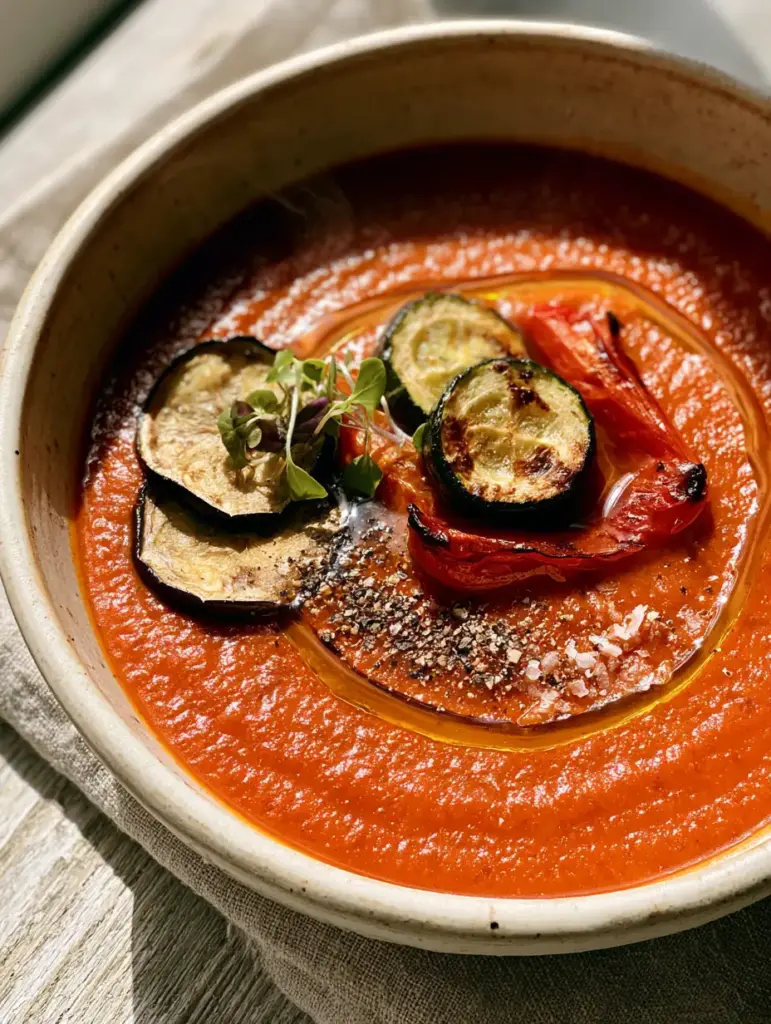
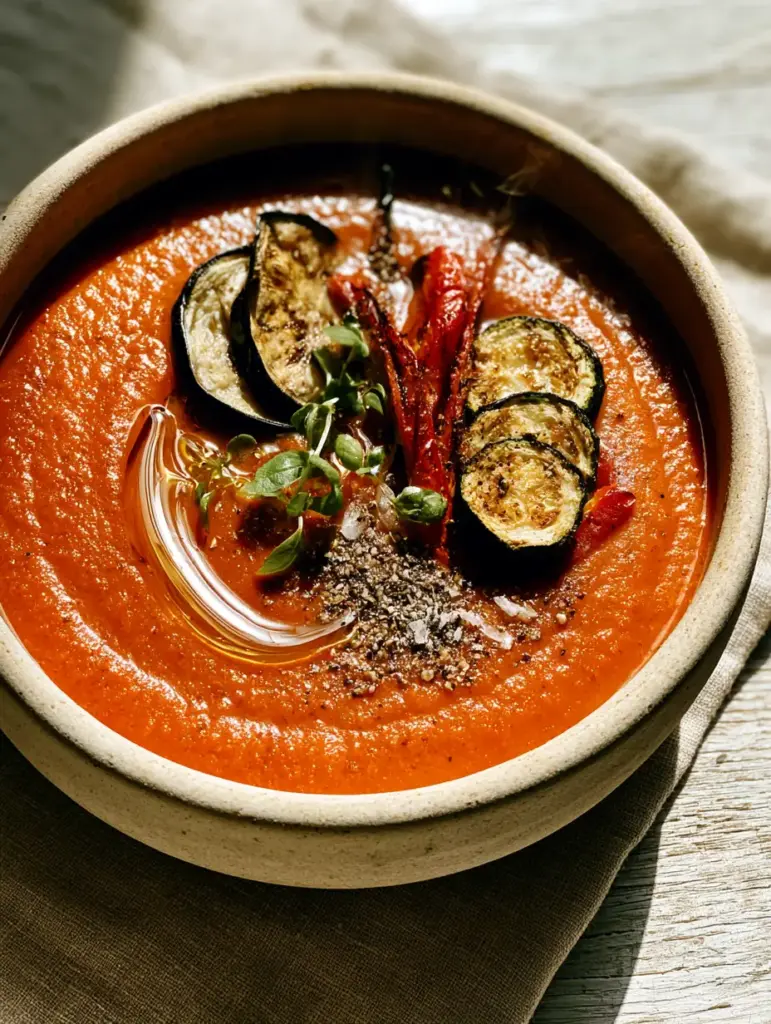
- Visual Contrast: The vibrant deep-orange and red pureed base provides a stunning backdrop for the dark charred edges of the eggplant and golden-brown zucchini.
- Textural Complexity: You get the silky smoothness of a velvet puree combined with the meaty texture of blistered red peppers and seared squash.
- Aromatic Excellence: The final drizzle of extra virgin olive oil and fresh micro-basil releases a floral, herbaceous scent the moment the bowl hits the table.
The Essential Elements for a Rich Roasted Base
To achieve the specific deep-orange hue and velvety texture described in our visual blueprint, we must select ingredients that provide both body and acidity. The foundation of this ratatouille soup relies on high-quality produce and a few “invisible” scientific essentials.
Roma Tomatoes: 3 lbs (1.36kg) of ripe tomatoes act as the structural heart of the soup. Roasting them whole allows the skins to char, adding a subtle smoky note to the eventual puree.
Red Bell Peppers: 2 large (300g) peppers provide the necessary sweetness to balance the tomato acidity. We will reserve some strips for the blistered garnish and puree the rest into the soup for that vibrant red-orange color.
Eggplant (Italian or Globe): 1 medium (400g) eggplant provides the “meaty” element. We use the center for pureeing and the outer discs for that iconic charred garnish seen in the visual prompt.
Zucchini: 2 medium (300g) zucchini rounds add a fresh, earthy tone. By caramelizing them separately, we ensure they don’t become mushy, maintaining their golden-brown sear marks.
Extra Virgin Olive Oil: 1/2 cup (120ml) total is required for both roasting and the final glistening spiral garnish. Use a high-quality, cold-pressed oil to ensure a peppery finish.
Foundational Seasonings: 1 tbsp (18g) sea salt flakes and 2 tsp (5g) coarse-cracked black pepper are non-negotiable for highlighting the roasted notes. We also use 4 cloves of garlic and 1 large yellow onion (200g) to build the aromatic base.
Vegetable Stock: 3 cups (720ml) of high-quality stock are used to thin the puree to the perfect consistency without diluting the roasted flavors. If you prefer a lighter meal, you might pair this with a Cucumber and Tomato Salad for a double dose of garden freshness.
Professional Tools for the Perfect Puree
Achieving the “textured and velvety” surface described in the Midjourney prompt requires a few specific kitchen tools. You cannot achieve this level of aeration and smoothness with a simple potato masher.
First, you will need a Heavy-Duty Rimmed Baking Sheet. This ensures even heat distribution so the tomatoes and peppers blister rather than steam.
Second, a High-Speed Immersion Blender or a Vitamix-style upright blender is crucial. This is what transforms roasted chunks into a vibrant, deep-orange liquid gold.
Finally, a Cast Iron Skillet is the secret to those “golden-brown sear marks” on the zucchini and eggplant. The high thermal mass of cast iron creates the perfect Maillard reaction that a standard non-stick pan simply cannot replicate.
Chef-Level Techniques for Perfect Vegetable Charring
Step 1: The Foundation Roast
Preheat your oven to 425°F (220°C). Arrange your halved tomatoes, onions, garlic cloves (in their skins), and one of the red bell peppers on the baking sheet.
Drizzle with 2 tbsp (30ml) of olive oil and a pinch of salt. Roast for 35-40 minutes until the tomato skins are shriveled and the pepper skin is blackened in spots.
The sensory cue you are looking for is the smell of caramelizing onions and the audible “pop” of tomato skins. Once roasted, let them cool slightly before slipping the skins off the garlic and peppers.
Step 2: Creating the Velvety Puree
Place the roasted tomatoes, onions, garlic, and the peeled roasted pepper into a large pot. Add the vegetable stock and bring to a gentle simmer for 10 minutes to marry the flavors.
Use your immersion blender to process the mixture until it is completely smooth. You want to see a thick, vibrant deep-orange and red liquid that coats the back of a spoon.
If the soup is too thick, add stock 1/4 cup (60ml) at a time. The goal is a “velvety” texture that isn’t watery, providing a stable surface for our garnishes.
Step 3: The Art of the Garnish Sear
While the soup simmers, prepare the visual stars of the dish. Slice your eggplant into thin discs and your zucchini into rounds about 1/4 inch (6mm) thick.
Heat 1 tbsp (15ml) of oil in your cast iron skillet over medium-high heat. Place the eggplant discs in the pan and sear for 3 minutes per side until they have charred edges and a tender center.
Repeat this process with the zucchini, looking for those specific golden-brown sear marks. Finally, sear thin strips of the remaining red bell pepper until they are blistered and soft.
Expert Tips for Success
- Salt Management: Always season your eggplant discs with a tiny pinch of salt 10 minutes before searing. This draws out excess moisture, ensuring they char rather than turn gray.
- The Oil Spiral: For the perfect “glistening spiral” garnish, use a squeeze bottle or pour the oil over the back of a spoon to break the fall and keep it on the surface.
- Acidity Balance: If your tomatoes are particularly acidic, add 1 tsp (5g) of sugar to the puree to round out the flavor profile.
- Herb Preservation: Only add the fresh micro-basil at the very last second. The residual steam from the soup will wilt the leaves quickly, so serve immediately to maintain the vibrant green color.
Storage, Reheating, and Make-Ahead Advice
This ratatouille soup actually tastes better the next day as the roasted aromatics continue to meld. You can store the pureed base in an airtight container in the refrigerator for up to 5 days.
However, for the best visual result, do not store the garnishes in the soup. Keep the charred eggplant and caramelized zucchini in a separate container and give them a quick flash in a hot pan before serving.
This soup freezes beautifully for up to 3 months. If you are planning a larger French-inspired dinner, this makes a wonderful starter before a main course like Maple Glazed Salmon.
What to Serve With This Provencal Classic
To turn this soup into a full meal, consider the textures of your side dishes. A crusty baguette is traditional for dipping into the thick tomato base.
For a lighter lunch, a scoop of this soup pairs perfectly with a scoop of Chicken Salad Chick Classic Carol on a bed of greens. The creaminess of the salad balances the acidity of the roasted vegetables.
If you are craving more spice, follow this up with a bowl of Creamy Cajun Sausage Pasta for a dinner that hits every corner of the palate. The smoky notes of the ratatouille transition beautifully into the bold Cajun spices.
Frequently Asked Questions
While you can, you will lose the ‘roasted’ and ‘charred’ elements that define this recipe’s flavor. If using a slow cooker, we recommend still searing the eggplant and zucchini separately for the best texture.
No, you don’t need to peel them beforehand. Roasting them with the skins on adds a lovely smoky depth. Once roasted, the skins will often slip off easily, or you can blend them right into the soup for added fiber and color.
The key is roasting the vegetables first to evaporate excess moisture. Additionally, only add your vegetable stock gradually after pureeing the roasted vegetables to reach your desired thickness.
Traditional Provencal ratatouille is a chunky stew. However, the pureed version (often called a ‘velouté’) is a popular modern variation that offers a more refined, elegant presentation while keeping the same flavor profile.
Reheat the soup base on the stovetop over medium heat. For the charred eggplant and zucchini, give them a quick 1-minute sear in a hot dry pan to restore their crisp edges before placing them back on top.
The Ultimate Roasted Ratatouille Soup Recipe
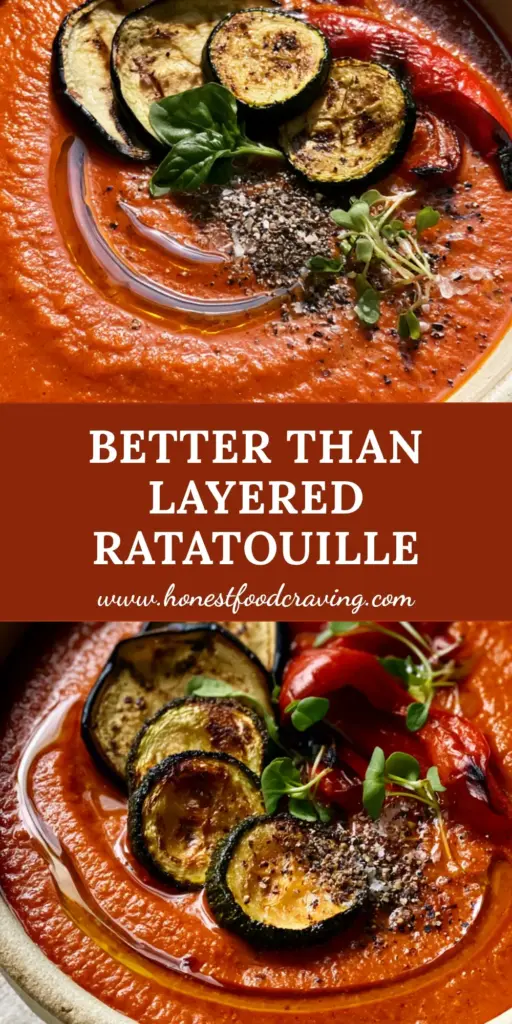
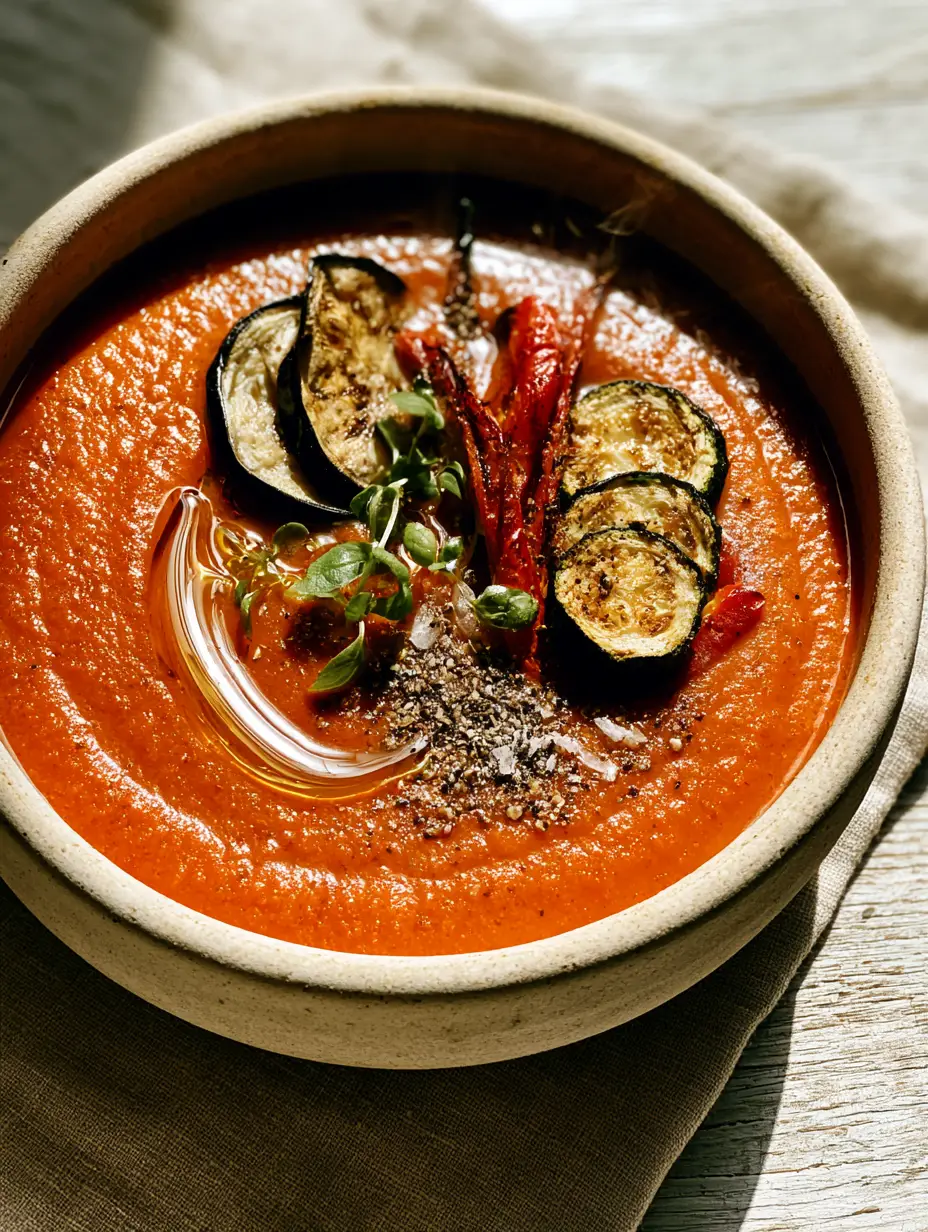
Ratatouille Soup: A Roasted Provencal Masterpiece in a Bowl
Ingredients
Equipment
Method
- Preheat oven to 425°F (220°C). Place tomatoes, 1.5 peppers, onion, and garlic on a baking sheet. Drizzle with oil and roast for 35-40 minutes until blistered.
- Remove skins from roasted peppers and garlic. Place all roasted vegetables and their juices into a large pot.
- Add vegetable stock to the pot and simmer for 10 minutes.
- Use an immersion blender to process until a thick, vibrant deep-orange velvety texture is achieved.
- In a cast iron skillet over high heat, sear eggplant discs until edges are charred and centers are soft.
- Sear zucchini rounds until golden-brown sear marks appear. Blister the remaining red pepper strips in the same pan.
Notes
For the best visual, drizzle the olive oil in a slow spiral starting from the center.
The Final Drizzle: Why We Love This Dish
This ratatouille soup is more than just a meal; it’s a celebration of seasonal produce and the transformative power of high-heat cooking. The combination of the velvety roasted base and the artfully arranged charred garnishes creates a restaurant-quality experience in your own home.
We invite you to try this recipe and tag us in your beautiful bowl shots! The play of light on the extra virgin olive oil and the contrast of the coarse sea salt flakes make this one of the most photogenic dishes you’ll ever cook.
For more culinary inspiration and daily recipe updates, be sure to follow us on Pinterest and leave a comment below telling us your favorite way to garnish a summer soup!