When you look at a steaming plate of authentic Filipino Pancit, you aren’t just looking at a meal; you are looking at a celebration of Filipino culture and culinary history. This specific rendition, a glistening nest of translucent golden-brown rice noodles, is the heart of every birthday, holiday, and family gathering in the Philippines.
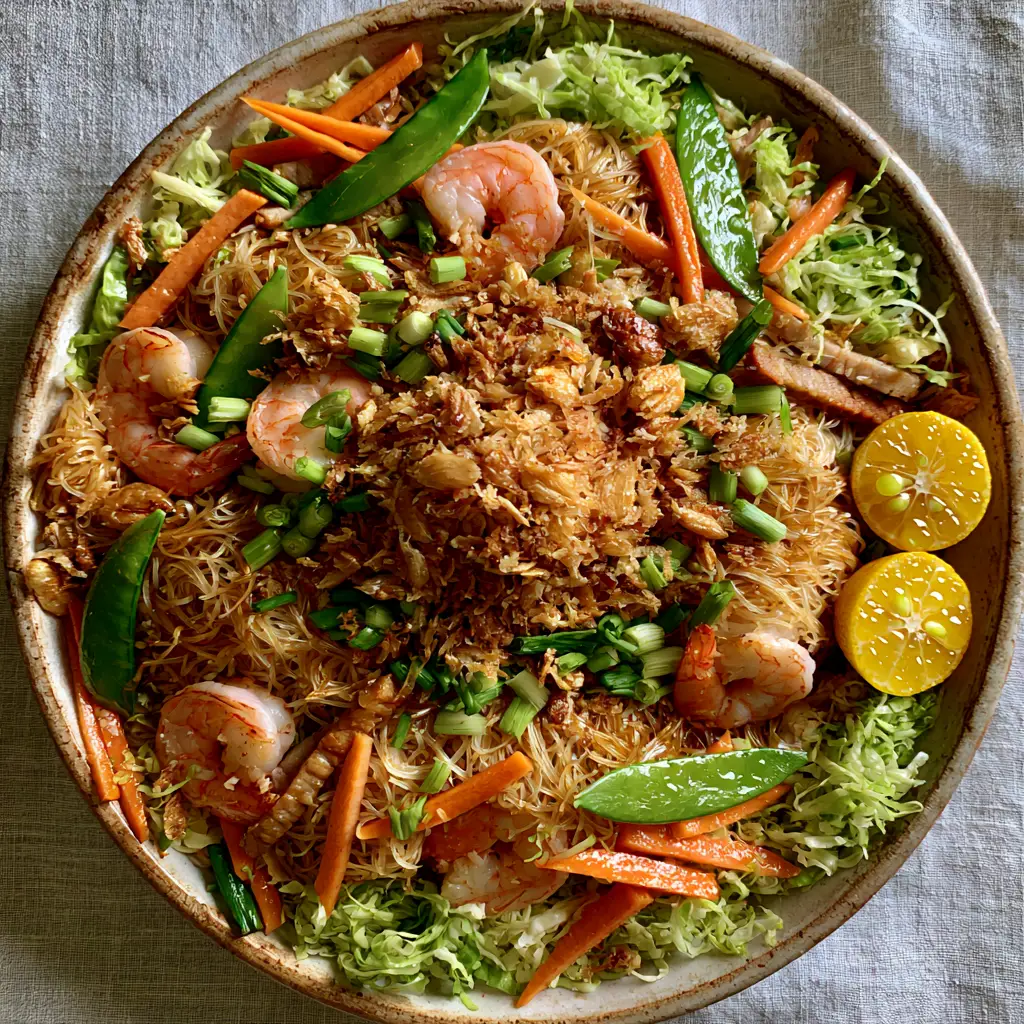
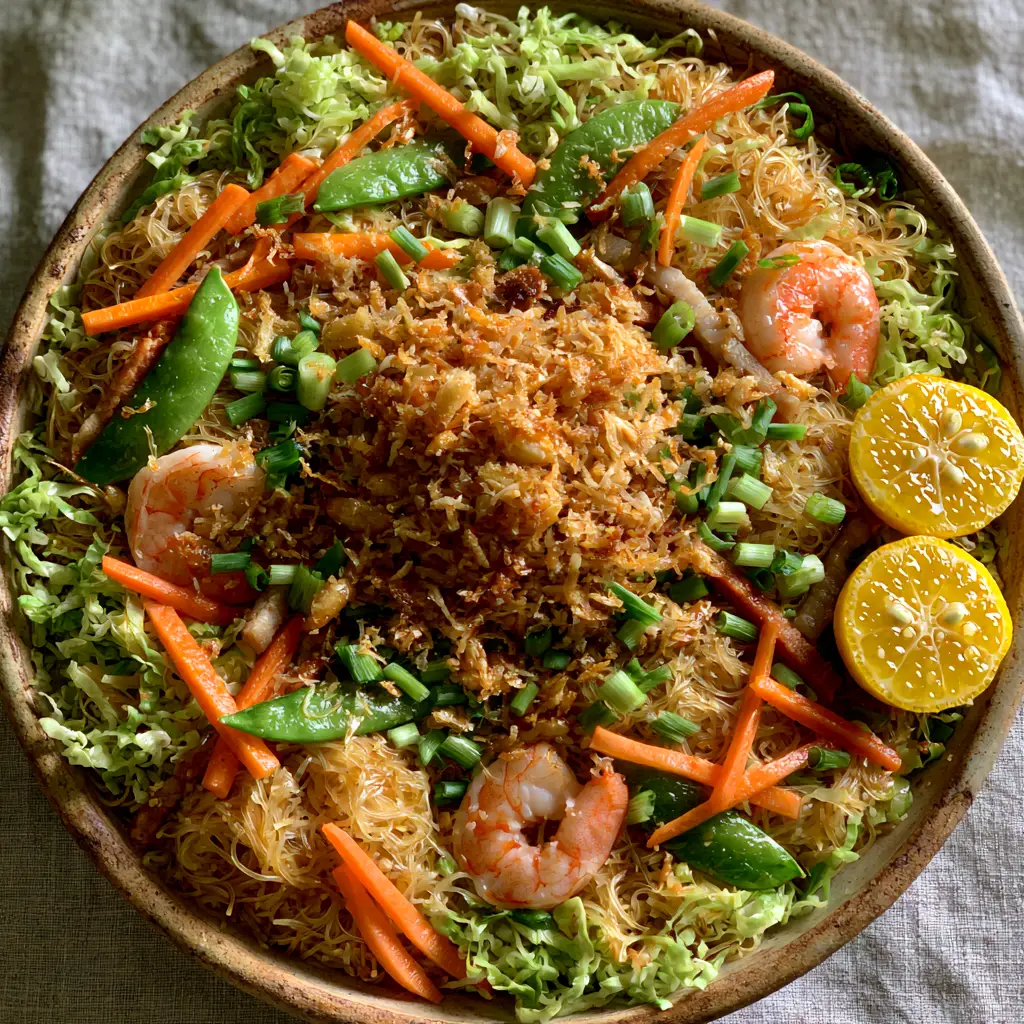
The visual appeal of this dish is undeniable, as captured in our latest kitchen session. Imagine vibrant orange julienned carrots and bright green snap peas popping against a backdrop of savory, soy-glazed noodles. Every bite offers a textural symphony, from the snap of the vegetables to the succulent sear on the shrimp and the tender chew of the pork.
What truly sets this Filipino Pancit apart is the aromatic “mountain” of crispy fried garlic and fresh scallions that crown the dish. Served with bright yellow calamansi halves on the side, ready to release their citrusy zing, this recipe is designed to bring that authentic, sun-drenched Filipino kitchen feel directly to your dining table.
Why This Savory Noodle Stir-Fry is a Kitchen Game-Changer
- The Perfect Texture Balance: We achieve a “tender-crisp” vegetable profile that ensures every forkful has a satisfying crunch.
- Umami-Rich Glaze: Our specific soy-citrus glaze formula coats every strand of rice noodle without making them soggy or greasy.
- Visual Masterpiece: With the contrast of pink seared shrimp, green scallions, and golden garlic, this dish is as beautiful as it is delicious.
- Weeknight Efficiency: Despite its complex appearance, this dish comes together rapidly once your prep (mise en place) is complete.
The Anatomy of an Authentic Pancit: Key Ingredients
To achieve the exact result seen in our professional photography, you need high-quality ingredients. Each component plays a specific role in the structural and flavor profile of the Filipino Pancit.
Thin Rice Noodles (Bihon): 8 oz (227g). These translucent noodles are the foundation; they absorb the savory broth while maintaining a delicate, slightly elastic bite.
Large Shrimp: 1/2 lb (225g). Look for fresh or high-quality frozen shrimp that turn a vibrant, opaque pink when seared, providing a sweet contrast to the salty soy glaze.
Pork Shoulder: 1/2 lb (225g), sliced into thin strips. The fat content in the shoulder provides essential moisture and a savory depth that leaner cuts lack.
Fresh Snap Peas: 1 cup (150g). These provide a bright green visual pop and a distinct sweetness that balances the savory pork and shrimp.
Julienned Carrots: 1 medium (100g). Thinly sliced carrots add both a structural crunch and a vibrant orange hue that defines the classic Pancit look.
Shredded Green Cabbage: 2 cups (150g). Cabbage acts as a flavor sponge, soaking up the citrus-soy glaze while adding bulk and texture to the dish.
Fried Garlic Bits: 1/4 cup (40g). This is the “mountaintop” of the dish, providing a nutty, bitter-sweet crunch that is the hallmark of authentic Filipino cooking.
Calamansi Fruits: 4-6 halves. This Filipino citrus is essential; if unavailable, you can substitute with lime, but the unique floral aroma of calamansi is what creates the true soy-citrus glaze experience.
Foundational Liquid (The “Invisible” Ingredient): 2 cups (480ml) Chicken Broth. You cannot cook dry rice noodles in a pan without a hydrating liquid; this broth infuses the noodles with flavor from the inside out.
Essential Culinary Tools for Stir-Fry Success
Achieving the “glistening” look of the Filipino Pancit requires high-heat cooking and rapid movement. A large carbon steel wok is ideal, but a wide, deep cast-iron skillet or a heavy-bottomed non-stick pan will also work beautifully.
You will also need a sharp Chef’s knife for the precise julienning of carrots and cabbage. Consistency in vegetable size ensures that everything cooks evenly and maintains that “tender-crisp” profile we are aiming for. A spider strainer or long tongs are also recommended for tossing the noodles without breaking them.
If you enjoy seafood-forward dishes like this one, you might also find success using these tools for a shrimp saganaki, which requires similar attention to shrimp texture and heat management.
Mastering the Sizzle: Preparing Your Components
The Secret to Golden Crispy Garlic
Heat 3 tbsp (45ml) of neutral oil in your pan over medium-low heat. Add 6 cloves of minced garlic and stir constantly. Watch for the transformation: the garlic will bubble, turn pale yellow, and eventually reach a deep, sandy golden-brown. Remove immediately and drain on paper towels; the residual heat will continue to cook them.
Searing the Proteins for Maximum Flavor
Turn the heat up to medium-high. Add the pork strips, seasoned with a pinch of salt and pepper. Sear until the edges are golden-brown and crispy. Remove the pork, then add the shrimp. Cook the shrimp for only 1-2 minutes per side until they turn that vibrant pink color mentioned in our visual prompt. Set aside to prevent overcooking.
Creating the “Tender-Crisp” Vegetable Medley
In the same pan, toss in your carrots, snap peas, and cabbage. Sauté for 3-4 minutes. You are looking for “visual vibrancy”—the colors should intensify. The carrots should still have a slight snap when bitten. Remove the vegetables from the pan and set them aside with the proteins.
Hydrating the Foundation: The Noodle Infusion
Pour the 2 cups (480ml) of chicken broth into the pan, along with 3 tbsp (45ml) of soy sauce and 1 tbsp (15ml) of oyster sauce. Bring this to a boil. This liquid is the base for our savory soy-citrus glaze.
Add the dry rice noodles directly into the boiling liquid. Use tongs to submerge them. As the noodles soak up the broth, they will transform from white and brittle to translucent and golden-brown. Keep tossing until the liquid is almost entirely absorbed, leaving the noodles glistening but not swimming in sauce.
This method is similar to how you might manage moisture in a creamy cajun sausage pasta, where the sauce must perfectly coat the starch without becoming watery.
The Final Assembly: Marrying Flavors and Textures
Return the cooked pork, shrimp, and vegetables to the pan with the noodles. Toss everything together over medium heat for 2 minutes. This “marries” the flavors, allowing the soy-citrus glaze to coat every ingredient evenly.
Turn off the heat and fold in half of your chopped scallions. The residual heat will soften them just enough to release their aroma without losing their bright green color.
Expert Tips for the Perfect Filipino Pancit
- Don’t Over-Soak: Some recipes suggest soaking bihon noodles in water first. For this recipe, we cook them directly in the broth. This ensures the noodles are infused with flavor, not just water.
- The Calamansi Squeeze: Always serve the calamansi on the side. The citrus juice should be added at the very last second to keep the flavors bright and sharp.
- Wok Hei (Breath of the Wok): If using a gas stove, let the pan get smoking hot before adding the oil. This creates a slightly smoky charred flavor that mimics professional street food.
- Avoid Mushy Veggies: Always remove the vegetables from the pan after the initial sauté. If you leave them in while the noodles boil, they will become limp and gray.
Preserving Quality: Storage and Reheating
Filipino Pancit is a robust dish that keeps well. Store leftovers in an airtight container in the refrigerator for up to 3 days. To reheat, avoid the microwave if possible, as it can make the rice noodles rubbery.
Instead, add a splash of water or broth to a skillet over medium heat, add the pancit, and toss until heated through. This restores the “glistening” texture of the soy glaze. Freezing is not recommended, as the rice noodles can become brittle and break apart upon thawing.
Complementary Pairings for a Filipino Feast
While this Filipino Pancit is a complete meal on its own, it shines when served alongside other textures. For a refreshing contrast, try a chilled cucumber and tomato salad, which provides a cooling acidity to balance the savory noodles.
If you are hosting a larger gathering, consider adding a maple-glazed salmon to the spread. The sweetness of the maple glaze complements the salty-citrus notes of the pancit perfectly. For dessert, nothing beats the icy, tropical refreshment of a mango bingsu to cleanse the palate after the garlic-rich noodles.
Common Questions About Pancit Bihon
In this recipe, we do not soak them. Cooking the dry noodles directly in the flavorful broth ensures they absorb maximum taste and achieve the perfect glistening texture.
The key is to avoid over-soaking and to ensure you remove the vegetables from the pan while the noodles hydrate in the boiling broth.
Rice bihon noodles are naturally gluten-free. To make the entire dish gluten-free, simply ensure you use a certified gluten-free soy sauce or tamari.
The best substitute for calamansi is a 1:1 mixture of lemon and lime juice, though you will miss the specific floral notes unique to the Filipino fruit.
Pancit Bihon uses thin, translucent rice stick noodles, while Pancit Canton uses thick, yellow egg noodles. Bihon is lighter and absorbs broth more readily, while Canton is heartier.
The Authentic Filipino Pancit Recipe Card
Ready to bring the flavors of Manila to your kitchen? Follow this precise blueprint to achieve the visually stunning and culinarily perfect Pancit Bihon shown in our guide.
Filipino Pancit: The Ultimate Guide to Perfect Pancit Bihon Guisado
Ingredients
Equipment
Method
- Heat oil in a wok and fry minced garlic until it reaches a deep, sandy golden-brown. Remove and set aside.
- In the same oil, sear pork strips until edges are crispy, followed by shrimp until they are vibrant pink and opaque.
- Stir-fry carrots, snap peas, and cabbage for 3-4 minutes until tender-crisp. Remove from pan.
- Boil chicken broth and soy sauce. Add dry noodles and toss until translucent and liquid is absorbed.
- Return meat and vegetables to the pan. Toss with scallions and serve with calamansi halves.
Notes
Always cook noodles directly in the broth for maximum flavor absorption.
Sharing the Love for Filipino Flavors
Crafting the perfect Filipino Pancit is an act of love and a celebration of vibrant, fresh ingredients. Whether you are making this for a special birthday or a simple Tuesday night dinner, the result is always rewarding. The combination of savory pork, succulent shrimp, and that signature garlic crunch is a flavor profile that stays with you.
Did you make this recipe? We would love to see your results! Leave a comment below or tag us in your photos. Don’t forget to save this recipe to your “Asian Favorites” board on Pinterest so you can find it whenever the craving hits!