There is a specific culinary magic that happens when high-grade maple syrup meets a screaming hot cast-iron skillet. This Maple Glazed Salmon isn’t just a meal; it is a study in texture and contrast, designed to mirror the glistening, dark amber perfection seen in professional food photography.
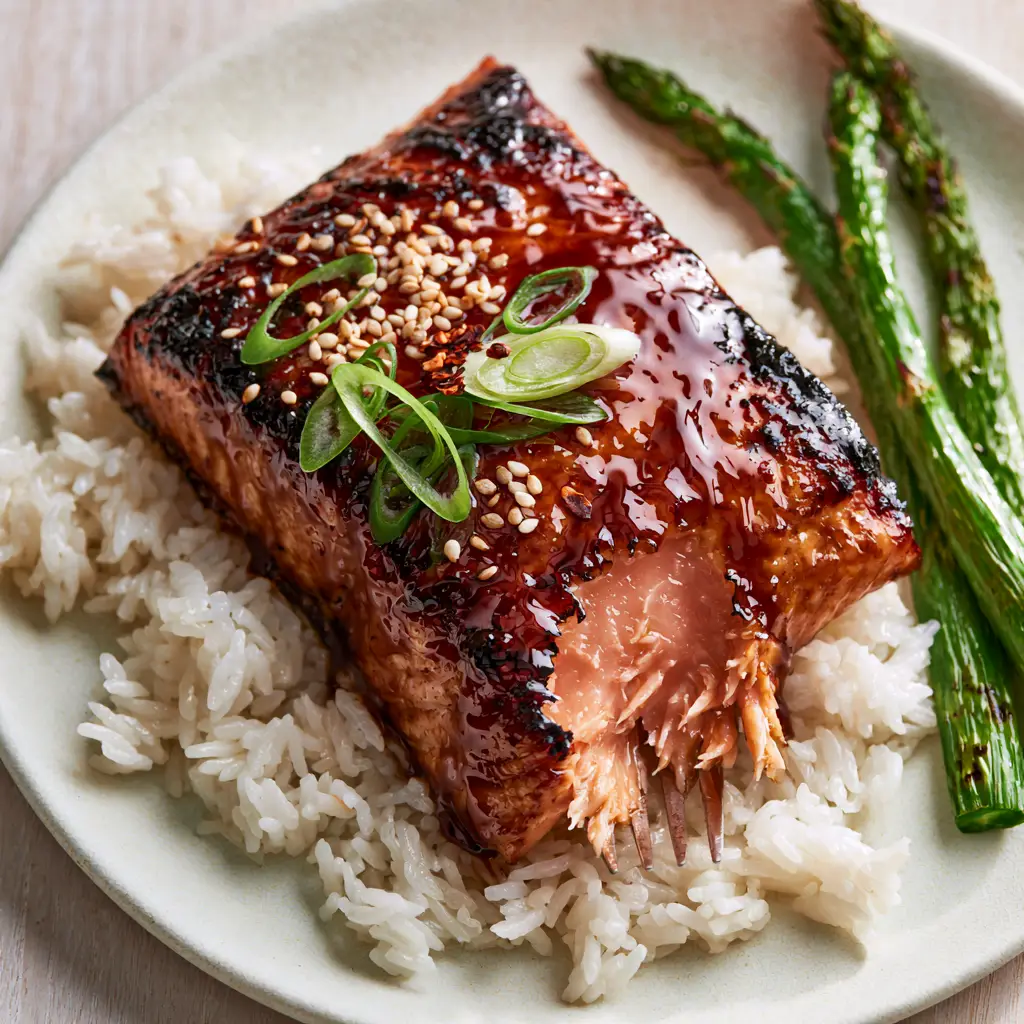
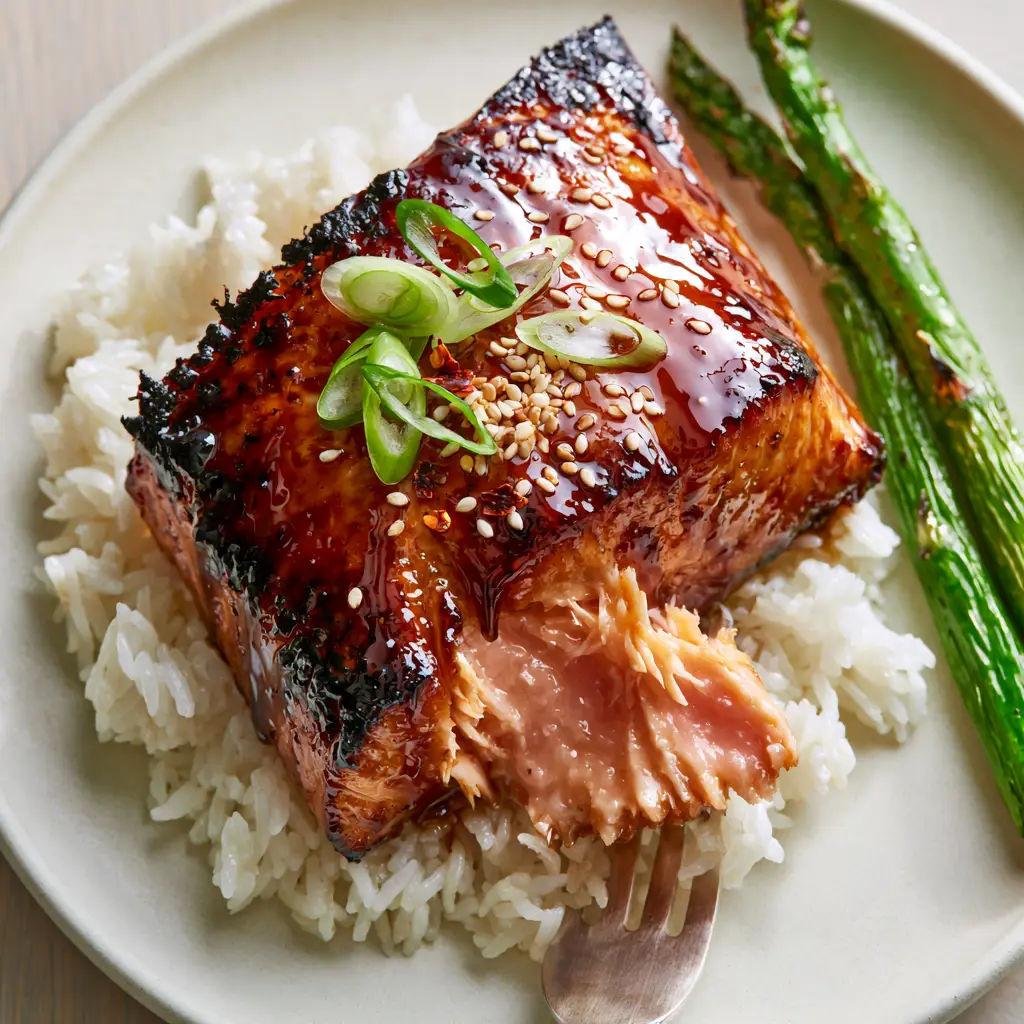
Imagine a thick, center-cut salmon fillet with a heavy, reflective glaze that catches the light like liquid gold. The edges are intentionally charred and crispy, providing a smoky counterpoint to the buttery, flaky pink interior that practically melts at the touch of a fork.
Served over a bed of fluffy, aromatic jasmine rice and flanked by vibrant, roasted green asparagus, this dish hits every sensory note. We are going to achieve that high-end restaurant “macro shot” look right in your home kitchen using simple, science-backed techniques.
Why This Pan-Seared Masterpiece Works Every Single Time
- The Maillard Magic: By balancing the natural sugars in the maple glaze with high-heat searing, we create a complex, caramelized crust that seals in moisture.
- Visual Contrast: The bright green scallions and toasted white sesame seeds aren’t just for flavor; they provide the essential color pop against the dark amber salmon.
- Textural Harmony: You get the crunch of the charred edges, the snap of roasted asparagus, and the pillowy softness of steamed jasmine rice in every bite.
- The Heat Element: A tiny pinch of red chili flakes cuts through the sweetness of the maple, creating a sophisticated profile that lingers on the palate.
If you enjoy this flavor profile, you might also want to explore our maple bourbon glazed salmon for a deeper, oak-aged twist on this classic. For those who prefer a more traditional sweetness, our brown sugar glazed salmon is a perennial favorite.
The Pantry Staples for a Glistening Amber Finish
Center-Cut Salmon Fillets: Look for fillets that are at least 1.5 inches (3.8cm) thick. This thickness allows the exterior to develop those signature charred edges without overcooking the delicate, opaque pink center.
Pure Dark Amber Maple Syrup: Use Grade A Dark Color syrup for the most intense flavor. This variety has a higher mineral content and a more robust taste that stands up to the heat of the pan.
Low-Sodium Soy Sauce: This provides the “umami” backbone and the deep pigment for our glaze. It reacts with the maple syrup to create that thick, reflective coating seen in the visual blueprint.
Fresh Garlic and Ginger: These aromatics infuse the oil and the glaze. They should be finely minced so they integrate into the sauce rather than burning in the pan.
Avocado Oil: You need a high smoke point oil for this recipe. Avocado oil allows us to sear at the high temperatures required for caramelization without the oil breaking down or smoking excessively.
Jasmine Rice: This long-grain rice offers a subtle floral aroma. When steamed correctly, it provides the perfect neutral, fluffy base to soak up the extra maple glaze.
Fresh Asparagus: Select medium-sized spears. They roast at the same speed the salmon sears, making this a perfectly timed 30-minute meal.
Garnish Trio: Toasted white sesame seeds, paper-thin scallion rounds, and dried red chili flakes. These are the “jewelry” of the dish, providing the final professional touch.
Essential Tools for Professional Searing
To achieve the visual result described—specifically those crispy, caramelized edges—a 12-inch (30cm) cast-iron skillet is the gold standard. Cast iron retains heat more efficiently than stainless steel, ensuring the temperature doesn’t drop when the cold fish hits the pan.
You will also need a fish spatula. Its thin, flexible metal design allows you to get underneath the salmon without breaking the delicate flakes. A high-quality rice cooker or a heavy-bottomed saucepan with a tight-fitting lid is essential for the jasmine rice.
Mastering the Perfect Pan-Sear: Step-By-Step
Preparing the Aromatic Jasmine Base
Start by rinsing 1 cup (185g) of jasmine rice under cold water until the water runs clear. This removes excess starch, ensuring the rice is fluffy rather than sticky.
Combine the rice with 1.5 cups (350ml) of water and a pinch of salt. Bring to a boil, then reduce to a low simmer, cover, and cook for 15 minutes. Let it sit, covered, for 5 minutes before fluffing with a fork.
Roasting the Vibrant Asparagus spears
Preheat your oven to 400°F (200°C). Toss the asparagus with 1 tbsp (15ml) of olive oil, salt, and pepper on a baking sheet.
Roast for 10-12 minutes. You are looking for a vibrant green color with light char marks on the tips, matching the roasted aesthetic in our visual guide.
Whisking the Heavy Maple Glaze
In a small bowl, whisk together 1/3 cup (80ml) maple syrup, 2 tbsp (30ml) soy sauce, 1 tsp (5g) minced garlic, and 1 tsp (5g) grated ginger. This mixture will seem thin now, but it will reduce into a thick, reflective coating in the pan.
Executing the Forensic Pan-Sear
Pat the salmon fillets extremely dry with paper towels. Any moisture on the surface will create steam, preventing the formation of those charred, crispy edges.
Heat 2 tbsp (30ml) of avocado oil in your skillet over medium-high heat. Once the oil is shimmering and just starting to whisps of smoke, place the salmon in the pan, flesh-side down.
Press down lightly with your spatula to ensure even contact. Sear for 3-4 minutes without moving the fish. You will hear a vigorous sizzling sound—this is the sound of the Maillard reaction in progress.
Glazing for the Glistening Finish
Flip the salmon carefully. Pour the maple mixture into the pan. The glaze will immediately bubble and begin to reduce.
Use a spoon to continuously baste the salmon with the thickening glaze for the final 2-3 minutes of cooking. The glaze should become dark amber and cling to the fish, creating that heavy, reflective surface.
Expert Tips for Success
- The “Cold Fish” Rule: Never put ice-cold salmon into a hot pan. Let the fillets sit at room temperature for 15 minutes to ensure the pink interior stays moist and opaque while the outside chars.
- Glaze Consistency: If the glaze thickens too quickly, add 1 tsp (5ml) of water to loosen it. It should look like warm honey.
- Carry-over Cooking: Remove the salmon when it reaches an internal temperature of 130°F (54°C). It will rise to the perfect 135°F (57°C) while resting, maintaining that moist texture.
- Don’t Crowd the Pan: If you are making multiple fillets, ensure there is at least an inch of space between them to allow steam to escape.
Looking for a lighter pairing? Try serving the leftover salmon over a cucumber and tomato salad the next day for a refreshing lunch. If you prefer more heat, our cajun sausage pasta techniques for searing protein apply beautifully here as well.
Optimal Storage and Reheating Methods
Maple Glazed Salmon is best enjoyed immediately to appreciate the contrast between the hot glaze and the flaky interior. However, leftovers can be stored in an airtight container in the refrigerator for up to 2 days.
To reheat, avoid the microwave, which will turn the salmon rubbery. Instead, place the salmon in a skillet over low heat with a splash of water, covered, until just warmed through. This preserves the moisture of the pink interior.
Perfect Pairings for Your Salmon Dinner
While jasmine rice and asparagus are the classic choice, this salmon is incredibly versatile. It pairs beautifully with a bright fruit-forward salad or even folded into a creamy spinach salmon pasta.
If you have extra salmon, it makes an incredible base for elevated salmon cakes, substituting the canned meat for your freshly seared, maple-crusted flakes.
Frequently Asked Questions
You can, but it must be completely thawed and patted extremely dry. Any excess moisture will prevent the salmon from forming those signature charred, caramelized edges.
The key is the reduction. By adding the glaze to the hot skillet after flipping the salmon, the sugars in the maple syrup boil and concentrate quickly, creating that heavy, reflective coating.
Press the top of the fillet gently with a fork. If the flesh flakes easily along the white lines (the fat), it is done. It should still be slightly opaque in the very center.
Yes, leaving the skin on helps hold the fillet together during the searing process and provides a barrier against overcooking. You can remove it easily after cooking if preferred.
Use Pure Grade A Dark Amber maple syrup. It has a deeper flavor and higher sugar concentration than ‘Light’ or ‘Amber’ syrups, which results in a better char.
The Signature Maple Glazed Salmon Recipe Card
Maple Glazed Salmon: The Ultimate Pan-Seared Fillet with Charred Edges
Ingredients
Equipment
Method
- Combine rinsed jasmine rice with 1.5 cups (350ml) water. Bring to boil, simmer covered for 15 mins. Let rest.
- Toss asparagus with oil and salt. Roast at 400°F (200°C) for 10-12 minutes until charred at the tips.
- Pat salmon fillets extremely dry with paper towels to ensure a crispy crust.
- Heat oil in cast iron skillet. Place salmon flesh-side down. Sear for 4 minutes until charred edges appear.
- Flip salmon. Add glaze mixture. Baste for 2-3 minutes until the glaze is thick and reflective.
- Serve salmon over rice. Top with sesame seeds, scallions, and chili flakes.
Notes
Use Grade A Dark maple syrup for maximum color.
Join the Honest Food Craving Community
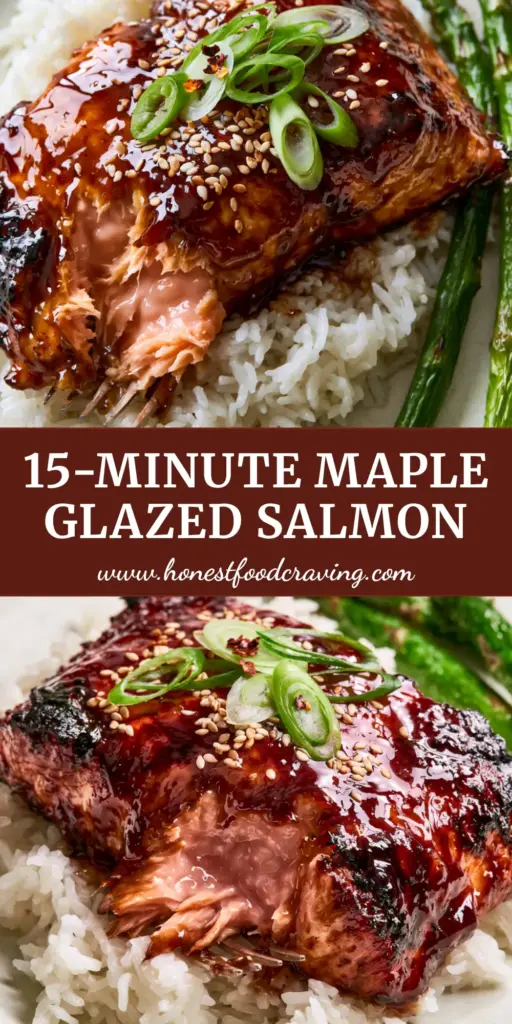
This Maple Glazed Salmon is a testament to how simple ingredients, when treated with the right culinary techniques, can create a visual and flavorful masterpiece. The combination of the dark amber glaze and the charred, crispy edges makes this a dish you’ll want to photograph before you even take a bite.
If you made this recipe, please leave a comment below and let us know how your sear turned out! Don’t forget to snap a photo and share it with us by pinning this recipe to your favorite board on Pinterest.
For more weekly recipe inspiration and professional kitchen secrets, sign up for our newsletter below. Happy cooking!