There is a specific, intoxicating aroma that defines the streets of Tokyo at dusk—the scent of rendering chicken fat hitting glowing coals and the sweet, savory caramelization of soy sauce. Chicken Yakitori, specifically the negima style featuring alternating bites of thigh and scallion, is more than just a snack; it is a masterclass in balance and texture.
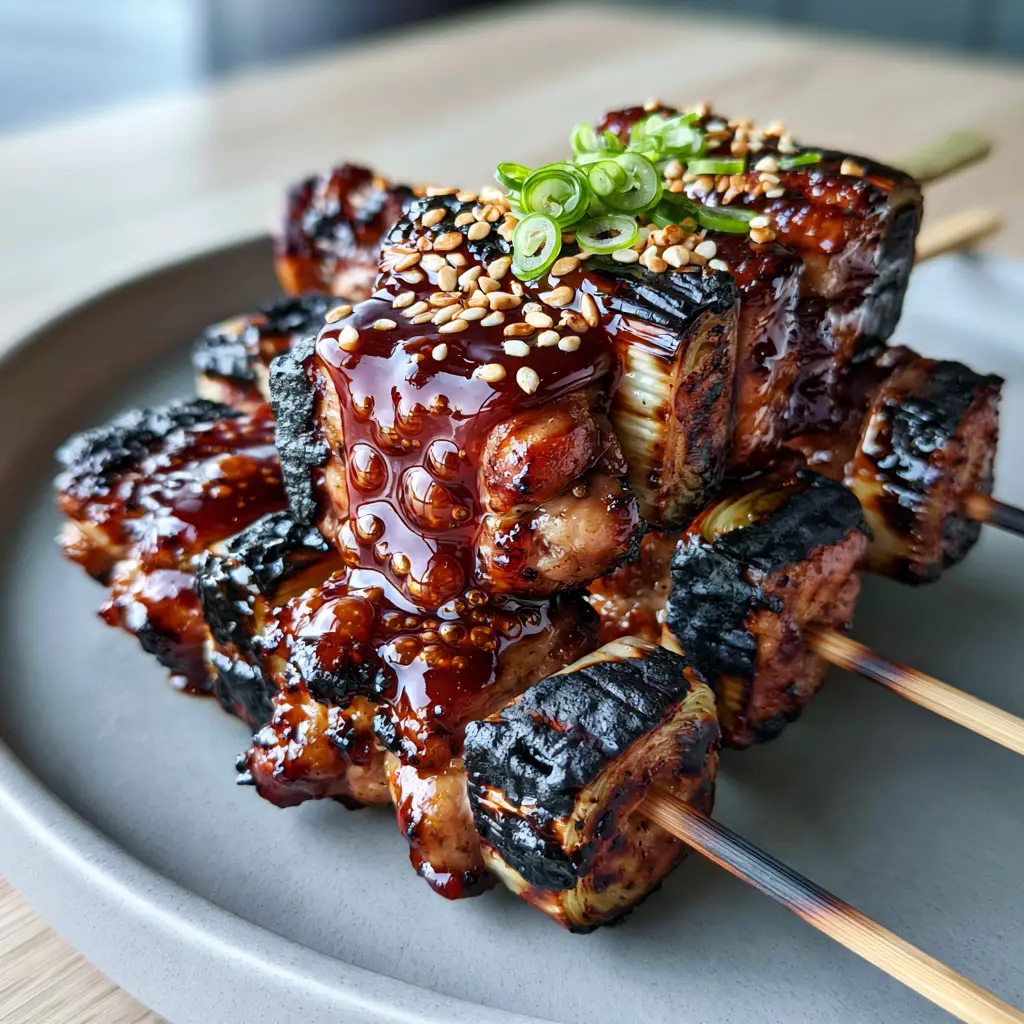
When you look at a perfectly executed skewer, the visual cues tell the story of the flavor. You are looking for those deep black char marks on the edges of the meat, contrasting against a thick, mahogany-colored glaze that is so glossy it reflects the light, still showing tiny visible bubbles from the intense heat of the grill.
In this guide, we are going to replicate that restaurant-quality experience in your own kitchen. Whether you are using an indoor grill pan or an outdoor charcoal setup, we will ensure your Chicken Yakitori achieves that succulent sear and sticky finish that makes this dish a global favorite.
Why This Authentic Negima Skewer Recipe Works
- The Mahogany Glaze: By reducing our tare sauce until it reaches a syrupy consistency, we achieve a dark mahogany hue that clings to the meat without dripping off.
- Textural Contrast: We use juicy chicken thighs rather than breast meat to ensure every bite remains succulent, even when subjected to the high heat required for those signature char marks.
- Aromatics and Char: The 1-inch (2.5cm) scallion segments provide a sharp, sweet bite that cuts through the richness of the glaze, especially when charred to a slight crisp.
- Sensory Perfection: From the crunch of toasted white sesame seeds to the fresh bite of finely sliced green onion rounds, every topping serves a functional and aesthetic purpose.
Essential Ingredients for the Perfect Mahogany Tare
To achieve the visual and flavor profile of authentic Chicken Yakitori, we need a mix of high-quality base ingredients and foundational elements that facilitate the Maillard reaction.
Boneless Skinless Chicken Thighs: 1.5 lbs (680g). Thighs are essential because their higher fat content prevents them from drying out during the intense searing process required for those deep char marks.
Large Scallions (Green Onions): 2 bunches. We will use the white and light green parts cut into 1-inch (2.5cm) segments for the skewers and the dark green tops for a fresh, finely sliced garnish.
Soy Sauce: 1/2 cup (120ml). This provides the salty backbone and the dark pigments necessary for that signature mahogany color in our glaze.
Mirin: 1/2 cup (120ml). This Japanese sweet rice wine adds a distinct luster and a subtle sweetness that balances the salt of the soy sauce.
Sake: 1/4 cup (60ml). Sake helps tenderize the chicken proteins and adds a depth of umami that water or broth simply cannot replicate.
Brown Sugar: 2 tbsp (25g). While mirin provides sweetness, the molasses in brown sugar aids in the rapid caramelization and “bubbling” effect of the sauce under heat.
Fresh Ginger and Garlic: 1 tsp (5g) each, grated. These foundational aromatics infuse the tare with a subtle warmth that lingers behind the sweetness.
Neutral Oil: 1 tbsp (15ml). A high-smoke point oil like grapeseed or canola is necessary to coat the grill grates, ensuring the chicken sears rather than sticks.
Toasted White Sesame Seeds: 1 tsp (3g). These provide a delicate crunch and a visual pop against the dark, sticky sauce.
The Best Tools for High-Heat Japanese Grilling
To replicate the sharp focus on the sticky texture and succulent sear seen in professional photography, you need the right equipment. While a Binchotan charcoal grill is traditional, home cooks can achieve incredible results with a heavy-weight cast iron grill pan or a standard outdoor grill.
You will also need 6-inch (15cm) bamboo skewers. A critical tip is to soak these in water for at least 30 minutes before threading to prevent them from splintering or catching fire. A high-quality silicone pastry brush is also vital for dabbing the tare onto the meat during the final stages of cooking to build those glossy layers.
Mastering the Art of the Chicken Yakitori Skewer
Cooking Chicken Yakitori is a fast-paced process that requires your full attention. You aren’t just cooking the meat; you are lacquering it in real-time as the heat transforms the sauce from a liquid to a sticky coating.
Simmering the Thick, Glossy Tare Glaze
In a small saucepan, combine the soy sauce, mirin, sake, brown sugar, grated ginger, and garlic. Bring the mixture to a gentle boil over medium heat, then reduce to a simmer.
Let the sauce reduce by nearly half. You are looking for a consistency that coats the back of a spoon—it should look like a dark, translucent syrup. Set aside half of this sauce for dipping later to avoid cross-contamination with raw chicken.
Prepping the Juicy Chicken and Scallions
Cut your chicken thighs into uniform 1-inch (2.5cm) chunks. Uniformity is key for even cooking; if some pieces are too small, they will overcook before the larger ones develop those deep black char marks.
Cut the white and light green parts of the scallions into segments of the same length. Thread the chicken and scallions onto the soaked bamboo skewers, alternating between the two. Aim for about four pieces of chicken and three scallion segments per skewer.
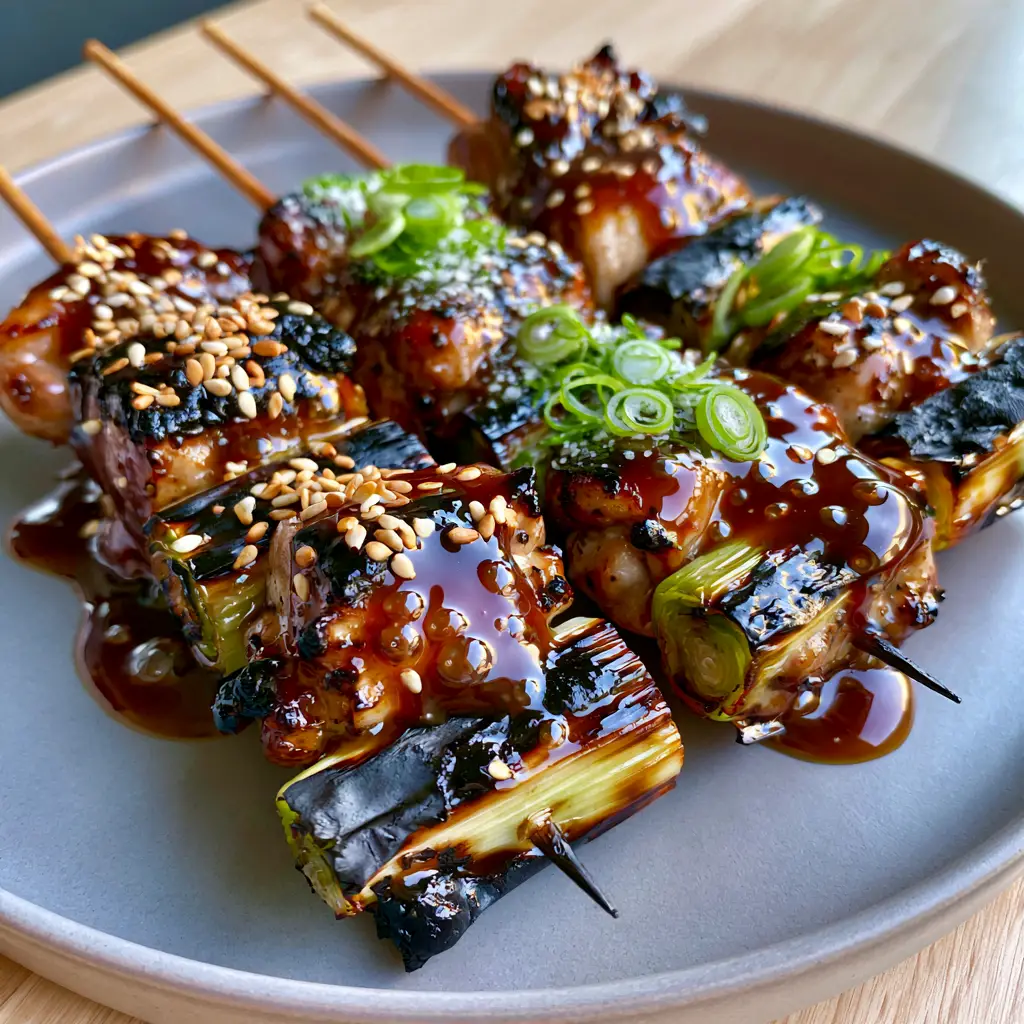
Threading and Searing for Maximum Char
Heat your grill or grill pan over medium-high heat and lightly grease with neutral oil. Place the skewers down; you should hear an immediate, aggressive sizzle. This sound indicates the heat is high enough to sear the exterior while keeping the inside juicy.
Grill the skewers for 3-4 minutes per side. Once the chicken is mostly cooked and you see those beautiful char marks, begin brushing the tare onto the meat. As the sauce hits the hot chicken, it should start to bubble and thicken instantly, turning a deep mahogany color.
Pro Tips for Restaurant-Quality Chicken Yakitori
- The Soak is Secret: If using bamboo skewers, soak them fully submerged. This prevents the exposed ends from turning to ash while the chicken sears.
- Don’t Rush the Reduction: The tare must be thick before it hits the grill. If it’s too thin, it will simply run off the meat and won’t create that “bubbling” visual effect.
- High Heat is Non-Negotiable: To get char without drying out the chicken, the grill must be hot. If the heat is too low, the chicken will steam rather than sear.
- The Double Dip: For the ultimate glossy finish, brush the skewers once, let the sauce set for 30 seconds, then brush a second time just before removing from the heat.
How to Store and Reheat Your Leftover Skewers
Chicken Yakitori is best enjoyed fresh off the grill, but leftovers can be stored in an airtight container in the refrigerator for up to 3 days. To maintain the texture of the glaze, avoid the microwave if possible.
To reheat, place the skewers in a 350°F (175°C) oven or toaster oven for 5-7 minutes. This helps the sugars in the glaze soften and become sticky again without making the chicken rubbery. You can also serve the cold chicken chunks over a bowl of crispy yaki onigiri for a fantastic lunch.
Perfect Pairings to Round Out Your Japanese Feast
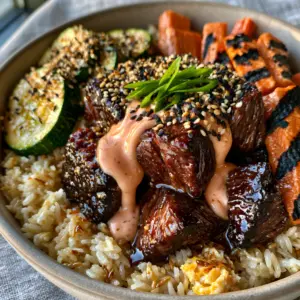
Chicken Yakitori is a versatile protein that pairs beautifully with a variety of textures. For a complete meal, consider serving these skewers alongside hibachi steak bowls for a surf-and-turf style experience.
If you prefer a lighter side, the acidity in a chimichurri-style dressing can provide a refreshing contrast to the sweet tare. For those who enjoy a fusion twist, these skewers also work surprisingly well next to a light tomato zucchini pasta during the summer months.
Common Questions About Making Yakitori at Home
While you can use breast, chicken thighs are highly recommended. Thighs contain more fat, which allows them to withstand the high heat required for charring without becoming dry or rubbery.
No special grill is required. While charcoal (Binchotan) is traditional, a heavy cast-iron grill pan or a standard gas grill can produce excellent results if kept at a high heat.
Soak the bamboo skewers in water for at least 30-60 minutes before threading the meat. This hydrates the wood and prevents it from catching fire during the searing process.
The deep mahogany color comes from the combination of soy sauce and the caramelization of mirin and brown sugar as they reduce into a thick syrup over heat.
If the sauce isn’t sticking, it likely hasn’t been reduced enough. Simmer the tare until it reaches a syrupy consistency that coats the back of a spoon before brushing it onto the meat.
The Complete Chicken Yakitori Recipe Card
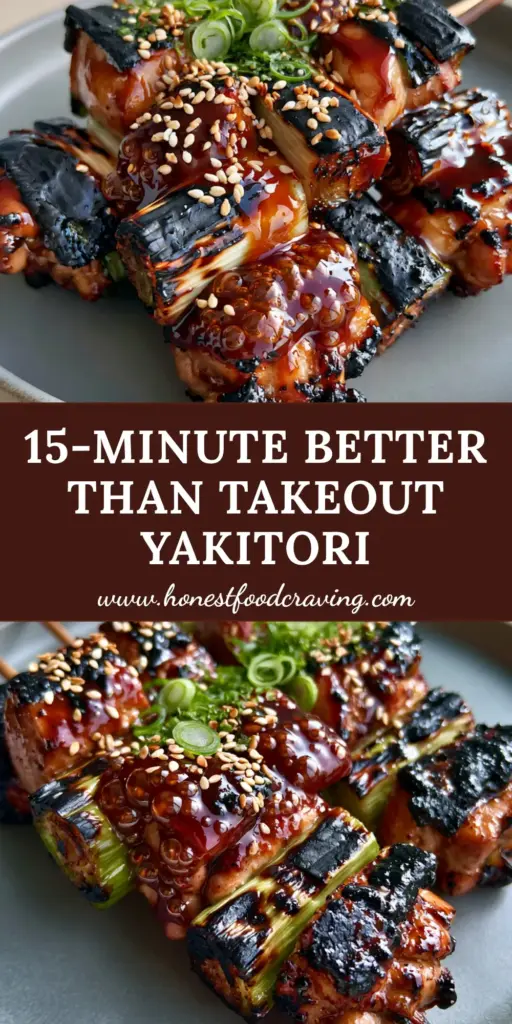
Chicken Yakitori: The Ultimate Glossy Negima Recipe with Mahogany Tare
Ingredients
Equipment
Method
- Combine soy sauce, mirin, sake, brown sugar, ginger, and garlic in a saucepan. Simmer until reduced by half into a thick, syrupy mahogany glaze.
- Thread chicken chunks and scallion segments onto soaked bamboo skewers, alternating pieces and leaving space at the bottom for handling.
- Place skewers on a high-heat oiled grill. Cook for 3-4 minutes per side until deep black char marks appear and chicken is opaque.
- Brush the thick tare sauce generously over the chicken. Watch for visible bubbles as the sauce caramelizes into a glossy finish.
- Remove from heat. Sprinkle with toasted white sesame seeds and finely sliced green onion rounds before serving on a clean plate.
Notes
Always reserve half the sauce before brushing to use as a clean dipping sauce.
Bring the Izakaya Home Tonight
Mastering Chicken Yakitori is a rewarding culinary milestone. The combination of high-heat searing and the patient reduction of a mahogany tare results in a dish that is as visually stunning as it is delicious. By following these steps, you’ve captured the essence of Japanese street food in your own kitchen.
Did you achieve those perfect char marks? We want to see your results! Leave a comment below, sign up for our newsletter for more elite recipes, and be sure to share your glossy skewer photos with us on Pinterest.