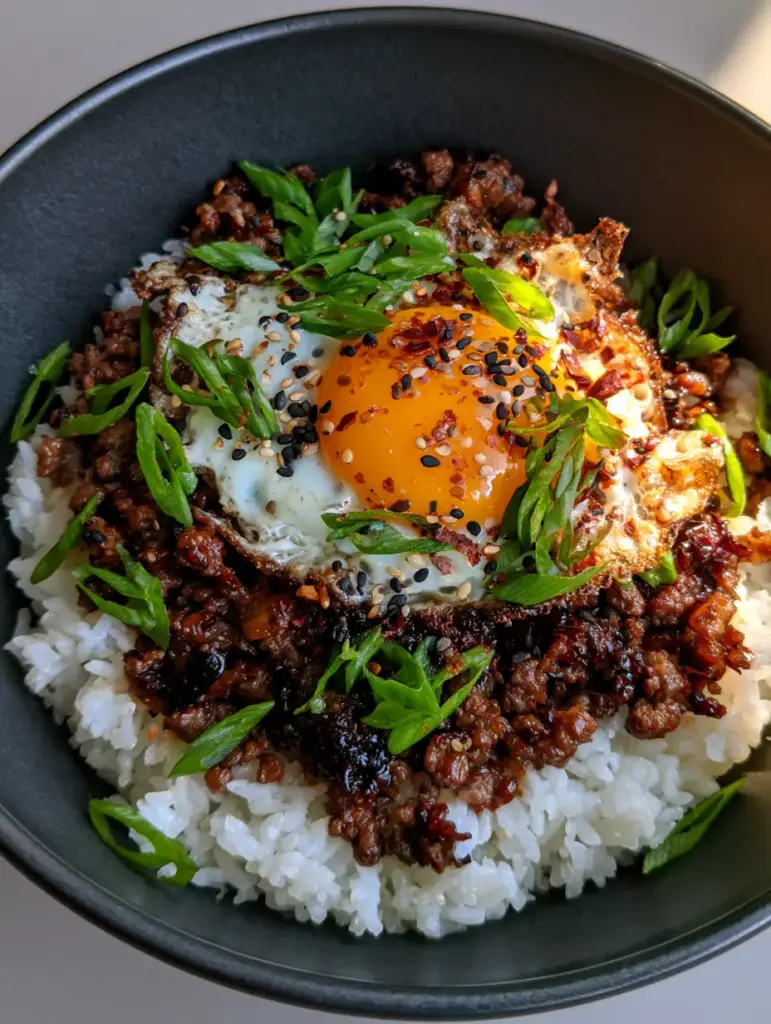
Experience the ultimate weeknight luxury with this Korean beef bowl, a dish that balances explosive savory flavor with professional-grade textures. This isn’t just a quick meal; it is a sensory journey featuring deeply seared beef crumbles enveloped in a glossy, mahogany-hued soy reduction.
Every element in this bowl is designed for visual and culinary impact, from the lacy, golden-brown edges of a perfectly fried egg to the vibrant orange of a runny yolk. The contrast between the steaming, fluffy jasmine rice and the crunch of toasted sesame seeds makes every bite a masterpiece of authentic home cooking.
Why This 20-Minute Korean Ground Beef Recipe Wins Every Time
- The Mahogany Glaze: A thick, dark, and glistening sauce that clings to every beef crumble, providing a deep umami punch.
- Texture Contrast: Silky, steaming jasmine rice meets the “lacy” crispy edges of a high-heat fried egg.
- Visually Stunning: The pop of bright green scallions against dark glazed beef and toasted black and white sesame seeds creates a restaurant-quality presentation.
- Efficiency: This entire feast comes together in under 25 minutes, making it a staple for busy weeknights.
Essential Components for Your Glazed Beef Masterpiece
To achieve the specific visual and flavor profile of this Korean beef bowl, every ingredient serves a structural and aesthetic purpose. We focus on high-quality aromatics and the right fats to ensure a professional sear.
Lean Ground Beef: Use a 90/10 or 85/15 lean-to-fat ratio to ensure the beef sears into distinct crumbles rather than swimming in excess grease. This allows the mahogany glaze to adhere perfectly to the meat surface.
Jasmine Rice: 2 cups (370g) of dry jasmine rice provides the aromatic, floral base that stays fluffy under the weight of the glazed beef. Its starch profile is ideal for absorbing the stray soy reduction.
The Glaze Base: A combination of low-sodium soy sauce, dark brown sugar, and toasted sesame oil creates that signature dark, glossy mahogany finish. The sugar is vital for the “gloss” described in our visual blueprint.
Fresh Aromatics: Freshly grated ginger and minced garlic are foundational, providing the sharp, spicy undercurrent that cuts through the richness of the beef and egg yolk.
The Garnish Trio: Diagonally sliced green scallions, toasted black and white sesame seeds, and dried red chili flakes are not just for show. They provide the final layer of texture and a gentle heat that lingers.
Tools to Achieve Professional Seared Textures
Achieving the lacy edges on the egg and the deep sear on the beef requires the right heat conductivity. A well-seasoned cast-iron skillet or a heavy-bottomed stainless steel pan is highly recommended for this Korean beef bowl.
You will also need a fine-mesh grater for the ginger to ensure it melts into the sauce without leaving woody chunks. A sharp chef’s knife is essential for those clean, diagonal scallion cuts that define the dish’s aesthetic.
Step-by-Step: From Raw Beef to Glistening Mahogany Glaze
Searing the Beef for Maximum Maillard Reaction
Heat 1 tbsp (15ml) of high-smoke point oil in your skillet over medium-high heat until it shimmers. Add 1 lb (450g) of ground beef, breaking it into large chunks with a wooden spoon.
Let the beef sit undisturbed for 3-4 minutes to develop a deep, dark brown crust. Once seared, crumble the beef into smaller pieces and drain any excess fat, leaving just enough to keep the meat glistening.
Crafting the Thick Mahogany Soy Reduction
Whisk together 1/3 cup (80ml) soy sauce, 1/4 cup (50g) brown sugar, 1 tbsp (15ml) sesame oil, and your grated aromatics. Pour this mixture directly over the seared beef.
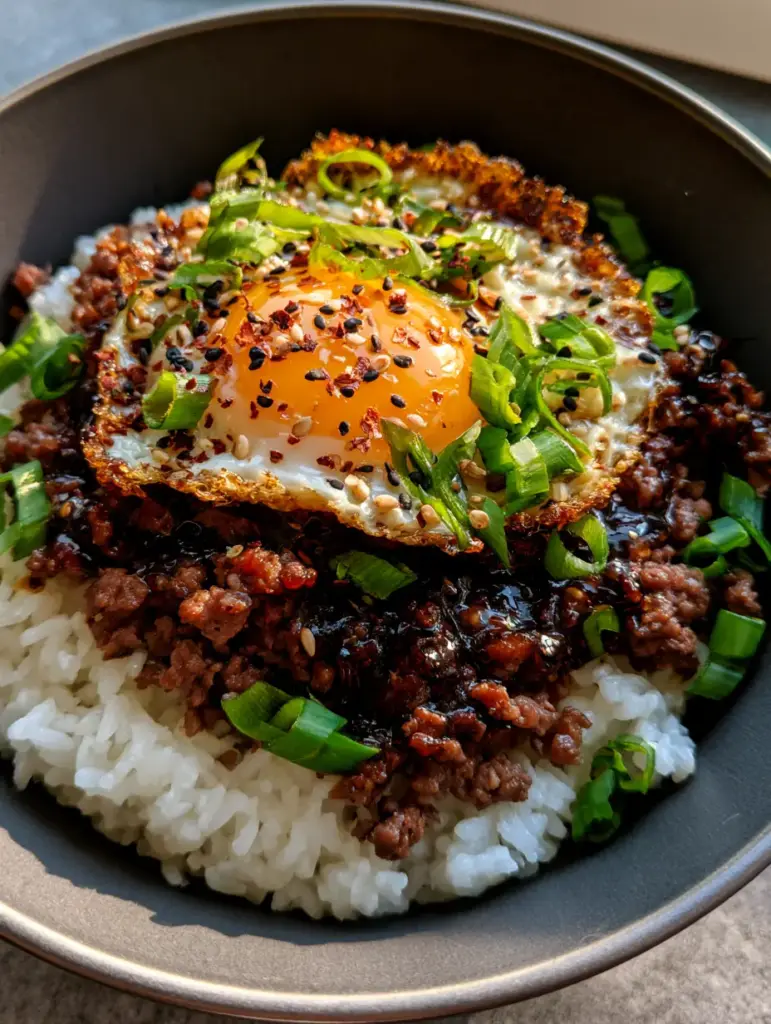
Reduce the heat to medium and simmer for 5-7 minutes. You are looking for a visual cue: the sauce should transform from a thin liquid into a “thick, dark, glossy mahogany-colored” glaze that coats every cranny of the beef.
The Science of the Perfect Lacy-Edge Fried Egg
In a separate small non-stick skillet, heat 2 tbsp (30ml) of neutral oil over medium-high heat. Carefully crack the egg into the hot oil; it should sizzle immediately upon contact.
Do not baste the yolk; instead, let the whites bubble and crisp until they develop “lacy, golden-brown crispy edges.” The yolk must remain a vibrant, liquid orange to act as a secondary sauce for the bowl.
Pro Tips for Restaurant-Quality Results
- Rinse Your Rice: Always wash your jasmine rice until the water runs clear to ensure the grains stay separate and fluffy, rather than gummy.
- The Sugar Factor: Don’t skip the brown sugar; it is the chemical agent responsible for the “glistening” look and the mahogany color of the glaze.
- Diagonal Cuts: Slice your scallions at a sharp 45-degree angle. This exposes more surface area for flavor and provides the elegant look seen in high-end food photography.
- Toast the Seeds: If your sesame seeds aren’t pre-toasted, toss them in a dry pan for 2 minutes until fragrant to unlock their nutty oils.
What to Serve With This Korean Beef Bowl
This bowl is a complete meal, but it pairs beautifully with refreshing, high-acid side dishes to balance the savory beef. A crisp Asian cucumber salad provides a cooling crunch that works perfectly with the warm glaze.
If you are looking for more variety in your meal prep rotation, consider alternating this recipe with a Greek beef bowl for a Mediterranean twist. For those who love the format of these meals, exploring more beef dinner recipes can help you master different flavor profiles using similar techniques.
Frequently Asked Questions
Yes, ground turkey or chicken works well, though they are leaner. You may need to add an extra teaspoon of oil during the searing phase to achieve the same deep brown crust required for the visual appeal.
Use a generous amount of neutral oil (about 2 tablespoons) and heat it until it shimmers. Crack the egg into the hot oil; the high heat causes the whites to bubble and crisp rapidly, creating that ‘lacy’ golden-brown texture.
The recipe has a very mild heat from the dried red chili flakes. You can adjust the spiciness by increasing the chili flakes or adding a teaspoon of Gochujang (Korean chili paste) to the glaze base.
Jasmine rice is ideal because it is fragrant and stays fluffy. However, short-grain Korean rice (sushi rice) also works if you prefer a stickier texture that holds the mahogany glaze differently.
The mahogany color and glossy texture come from the caramelization of dark brown sugar mixed with soy sauce and toasted sesame oil. Simmering the sauce until it reduces ensures it clings to the beef crumbles.
The Ultimate Korean Beef Bowl Recipe Card
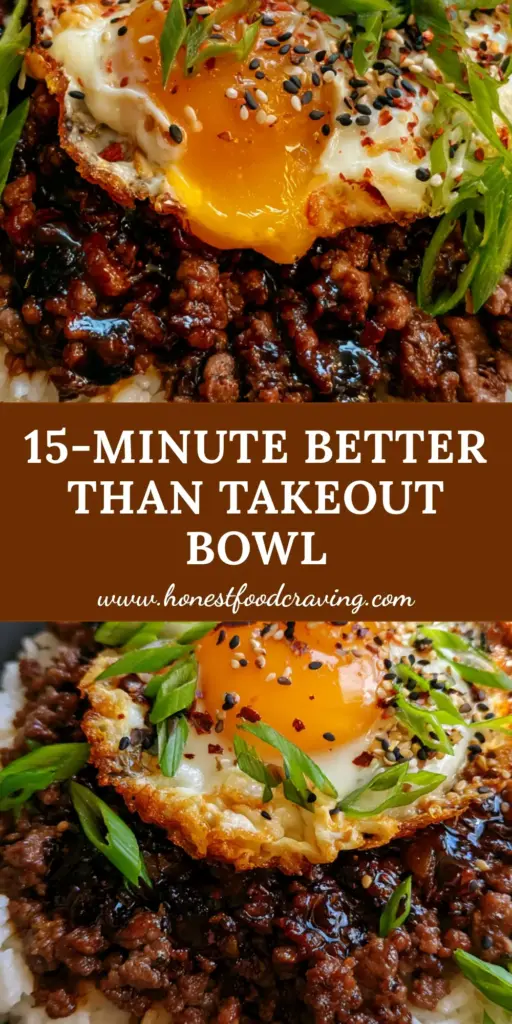
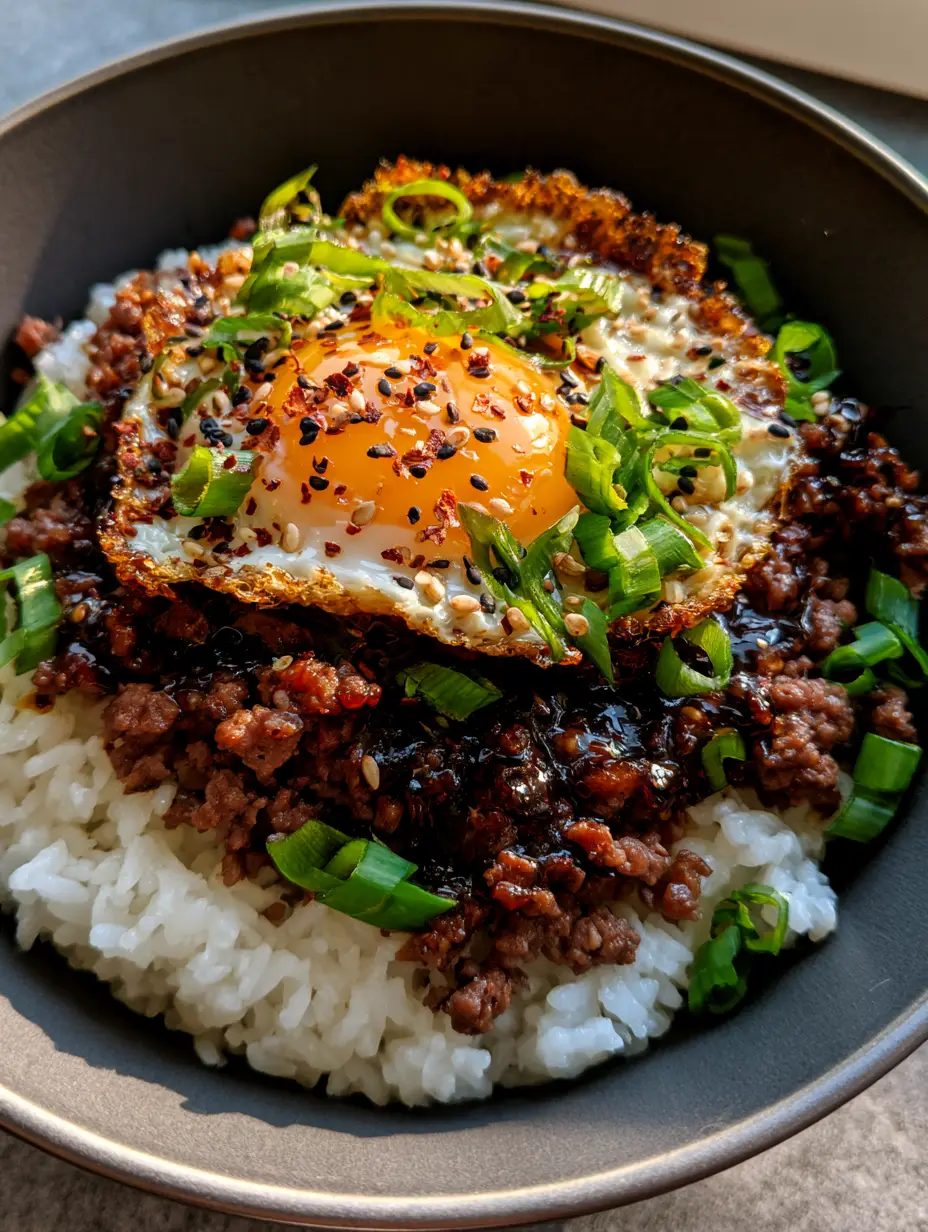
Korean Beef Bowl with Crispy Fried Egg and Mahogany Soy Glaze
Ingredients
Equipment
Method
- Heat 1 tbsp oil in a skillet over medium-high. Add ground beef and let sear undisturbed for 4 minutes until a deep brown crust forms. Break into crumbles.
- Stir in soy sauce, brown sugar, ginger, garlic, and sesame oil. Simmer for 5-7 minutes until the sauce becomes a thick, glossy mahogany glaze.
- Heat 2 tbsp oil in a pan over medium-high. Fry eggs until the whites have crispy, lacy golden edges and the yolk is orange and runny.
- Spoon fluffy jasmine rice into bowls. Top with the glazed beef, a fried egg, scallions, sesame seeds, and chili flakes.
Notes
If the glaze becomes too thick, add a splash of water to loosen it back to a glossy consistency.
Closing & Call to Action
This Korean beef bowl is a testament to how simple ingredients can create a luxurious, multi-textured experience in your own kitchen. Whether it’s the mahogany glaze or the lacy fried egg, this recipe is designed to impress both the palate and the eyes.
If you enjoyed making this, please leave a comment below and share your results! Don’t forget to follow us on Pinterest for more culinary inspiration and visual recipe guides.