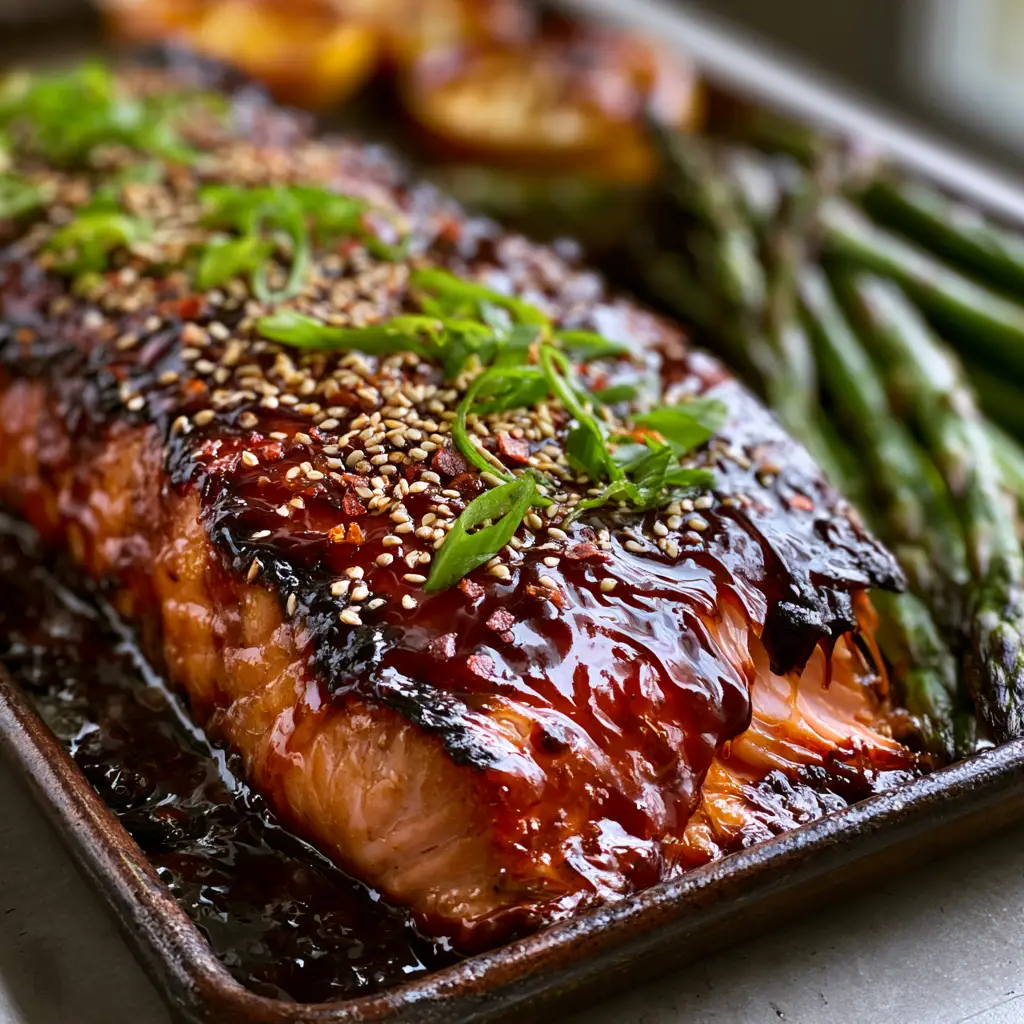
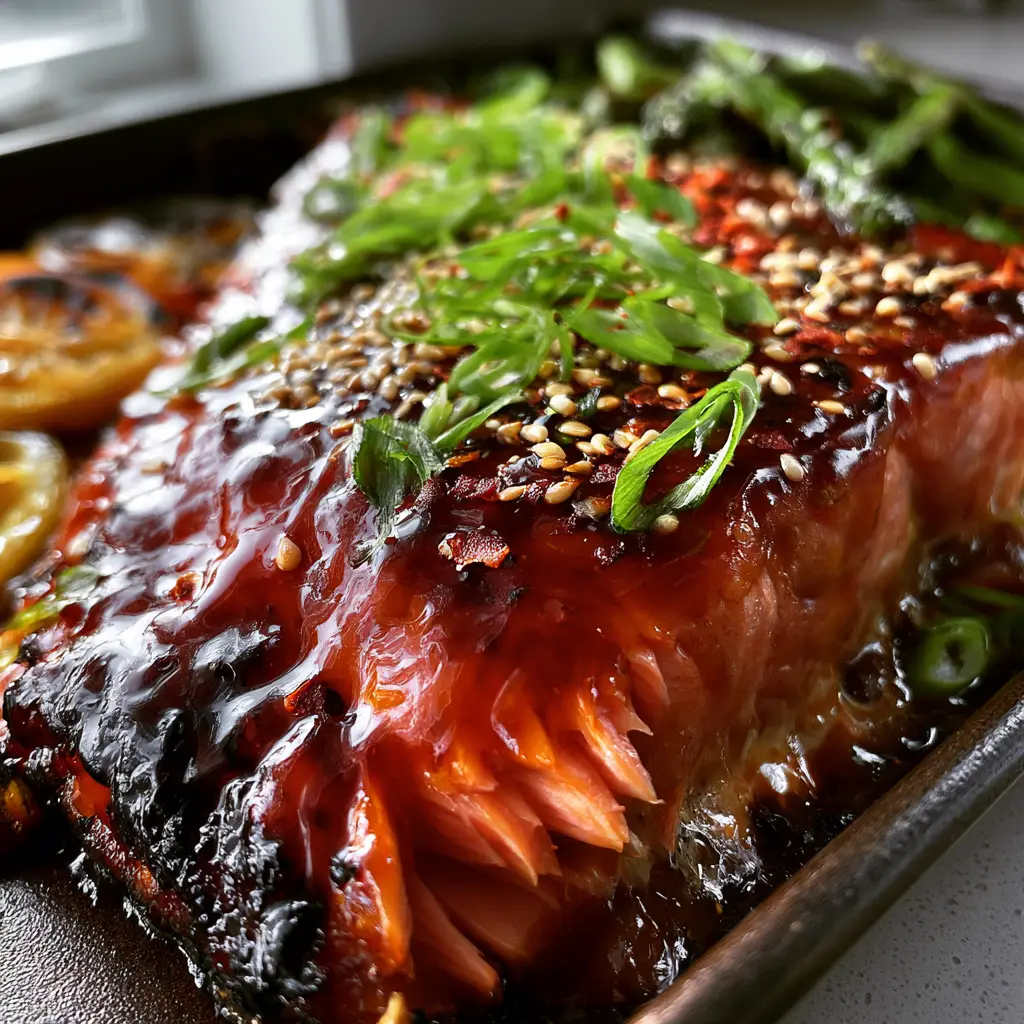
There is something undeniably magnetic about a maple bourbon glazed salmon that hits the table with a bubbling, mahogany-hued coating. It is the kind of dish that stops the conversation—the high-gloss glisten of the glaze catching the light while the aroma of charred oak and sweet maple fills the air. If you have been searching for that restaurant-quality finish with sticky, caramelized edges and a moist, steaming interior, you have found your new favorite weeknight luxury.
This recipe isn’t just about throwing ingredients in a pan; it is about the culinary chemistry between the sugars in the maple and the complex tannins in the bourbon. When reduced properly, these two ingredients transform into a tacky, translucent lacquer that clings to the buttery flakes of Atlantic salmon. Accompanied by charred lemon wheels and blistered asparagus, this is a complete visual and sensory masterpiece that looks just as good as it tastes.
Whether you are a seasoned home cook or just starting your journey, this guide will walk you through the nuances of achieving that perfect sear and the ultimate glaze consistency. We are moving beyond basic maple glazed salmon techniques to embrace a deeper, more sophisticated flavor profile that rivals any high-end steakhouse offering.
Why This Sticky Bourbon Glaze Works Every Single Time
- The Perfect Mahogany Lacquer: By reducing the bourbon and maple together, we create a thick, bubbling glaze that creates an incredible mouthfeel and a “tacky” texture that stays on the fish rather than sliding off.
- Textural Contrast: We pair the soft, moist pink interior of the salmon with charred, caramelized edges and the crunch of toasted white sesame seeds and fresh scallions.
- One-Pan Visual Appeal: Roasting the lemons and blistering the asparagus alongside the salmon not only saves time but allows the juices to mingle, creating a cohesive flavor story.
- Scientifically Balanced: The acidity of the roasted lemon cuts through the richness of the Atlantic salmon, while red sea salt flakes provide a sharp, mineral finish that enhances the sweet bourbon notes.
Essential Components for the Ultimate Maple Bourbon Glazed Salmon
To achieve the visual and flavor profile described, each ingredient serves a specific structural or aesthetic purpose. Do not skip the foundational elements that build the “bridge” between the sweet glaze and the savory fish.
The Salmon and Produce
Center-Cut Atlantic Salmon Fillets: You want thick fillets, approximately 1.5 to 2 inches (4-5cm) thick. The thickness allows the exterior to char and caramelize under the broiler while the interior remains steaming and moist. If you are used to canned salmon recipes, the transition to fresh, thick-cut fillets will be a revelation in texture.
Fresh Asparagus: Look for medium-thickness stalks. They need enough structure to withstand the high heat required to achieve those characteristic blistered spots without turning to mush.
Lemon Wheels: Slicing the lemons into 1/4 inch (6mm) rounds and roasting them concentrates their natural sugars, turning a sharp acid into a mellow, caramelized garnish that is actually edible.
The Mahogany Glaze Foundations
Real Maple Syrup: Use Grade A Dark Color for the most robust flavor. This provides the sugar base necessary for that high-gloss glisten and sticky finish. This is a step up from a standard brown sugar glazed salmon because of the floral complexity maple provides.
Kentucky Bourbon: A mid-shelf bourbon works best. The alcohol burns off, leaving behind notes of vanilla, oak, and caramel that pair perfectly with the fat in the salmon.
Soy Sauce (or Tamari): This provides the salt and the deep mahogany pigment. It acts as the savory anchor to the sweet maple.
Dijon Mustard: An “invisible” emulsifier. It helps the maple and bourbon bind together into a smooth, cohesive glaze rather than separating during the reduction process.
Must-Have Tools for Professional Results
To replicate the rustic, charred look of our maple bourbon glazed salmon, your equipment choice matters just as much as your ingredients.
Dark Rustic Sheet Pan: A dark metal pan absorbs more heat, which is essential for getting those blistered bottoms on the asparagus and the charred edges on the salmon. If you only have shiny aluminum, your cooking times may need to increase by 2-3 minutes.
Small Heavy-Bottomed Saucepan: For reducing the glaze. A heavy bottom ensures the sugars in the maple don’t scorch before the bourbon has had time to reduce.
Silicone Basting Brush: This allows you to “drench” the salmon in the glaze, ensuring every nook and cranny of the flaked fish is coated in mahogany goodness.
The Culinary Blueprint: Step-by-Step Instructions
Phase 1: Preparing the Mahogany Reduction
In your small saucepan, combine 1/2 cup (120ml) maple syrup, 1/4 cup (60ml) bourbon, 2 tbsp (30ml) soy sauce, and 1 tbsp (15g) Dijon mustard. Whisk these together over medium heat until the mixture begins to simmer.
Allow the glaze to bubble gently for 8-10 minutes. You are looking for it to reduce by nearly half. The sensory cue here is the bubbles: they will transition from thin and watery to large, slow-popping, “tacky” bubbles. Set this aside to thicken further as it cools slightly.
Phase 2: Searing and Prepping the Sheet Pan
Preheat your oven to 400°F (200°C). Lightly coat your rustic sheet pan with 1 tbsp (15ml) of neutral oil (like avocado or grapeseed oil) to prevent sticking. Pat your salmon fillets bone-dry with paper towels—this is the secret to getting a sear rather than a steam.
Arrange the salmon fillets in the center of the pan. Toss 1 lb (450g) of trimmed asparagus and 1 sliced lemon in 1 tbsp (15ml) of oil and a pinch of salt, then nestle them around the fish. This creates the “background” visual of blistered greens and charred citrus.
Phase 3: The Glazing Ritual and The Char
Generously brush the salmon with the thickened maple bourbon reduction. Use about half of the glaze now. Place the pan in the oven for 8 minutes. The salmon will begin to cook through, and the asparagus will start to soften.
Switch your oven to the Broil setting (High). Pull the pan out and drench the salmon with the remaining glaze. Broil for an additional 3-4 minutes. Watch closely! You want to see the glaze bubbling violently and the edges of the salmon developing dark, caramelized charred spots. The lemon wheels should show dark brown edges.
Phase 4: The Final Flourish
Remove the pan from the oven. The salmon should be slightly flaked open naturally, revealing a steaming pink interior. Immediately sprinkle with 1 tsp (5g) toasted white sesame seeds and a handful of very thinly sliced green scallions. Finish with a few tiny flakes of red sea salt to provide that vibrant color contrast against the mahogany glaze.
Expert Tips for Success
- The Dryness Factor: Never put wet salmon in the oven. Moisture is the enemy of caramelization. Pat the fish dry until the paper towel comes away clean.
- Bourbon Safety: When reducing the glaze, keep a lid nearby. While unlikely at low simmers, bourbon is flammable. If you are cooking on a gas range, be mindful of the flame.
- Carry-over Cooking: Salmon continues to cook after it leaves the oven. Pull it out when the internal temperature hits 130°F (54°C) for a perfect medium result after resting.
- The “Tacky” Test: Dip a spoon into your reduced glaze. It should coat the back of the spoon thickly. If it runs off like water, reduce it for another 2 minutes.
Maximizing Your Meal: What to Serve Alongside
While the blistered asparagus makes this a nearly complete meal, you might want additional textures to round out the plate. A light, crisp cucumber and tomato salad offers a refreshing temperature contrast to the hot, sticky salmon.
If you have leftover salmon (though it’s rare!), the charred flakes work beautifully tucked into air fryer tacos the next day with a hit of lime and cabbage slaw. For a heartier pairing, serve this salmon over a bed of jasmine rice to soak up every drop of that mahogany bourbon reduction.
Frequently Asked Questions
Yes, but ensure it is completely thawed and, most importantly, patted extremely dry. Frozen salmon often releases more moisture, which can dilute your glaze if not dried thoroughly.
The secret is the reduction time. You must simmer the maple and bourbon until large, heavy bubbles form. If it’s too thin, it will slide off the salmon; it needs to reach a syrupy consistency in the saucepan before it hits the fish.
Most of the alcohol content in the bourbon evaporates during the 10-minute reduction process and the subsequent roasting/broiling. You are left with the flavor profile of the bourbon without the alcoholic kick.
If you prefer not to use bourbon, you can substitute with apple juice or additional maple syrup combined with a teaspoon of liquid smoke for that woody depth, though the flavor profile will be significantly sweeter.
Dark metal pans absorb and radiate heat more efficiently than light, shiny pans. This extra heat is what creates the ‘blistered’ effect on the asparagus and the charred caramelization on the salmon edges.
The Perfect Maple Bourbon Glazed Salmon Recipe
Maple Bourbon Glazed Salmon with Blistered Asparagus and Roasted Lemon
Ingredients
Equipment
Method
- Combine maple syrup, bourbon, soy sauce, and Dijon mustard in a saucepan. Simmer over medium heat for 8-10 minutes until thick and tacky.
- Arrange salmon, asparagus, and lemon wheels on a greased sheet pan. Season with oil and salt.
- Brush salmon with half the glaze and bake at 400°F (200°C) for 8 minutes.
- Apply remaining glaze. Broil on high for 3-4 minutes until glaze is bubbling and edges are charred.
- Top with sesame seeds, scallions, and red sea salt flakes before serving.
Notes
Watch the broiler closely as the maple syrup can burn quickly once it reaches the caramelization point.
Closing & Call to Action
The beauty of this maple bourbon glazed salmon lies in its balance—the sophisticated smoke of the bourbon, the earthy sweetness of the maple, and the vibrant freshness of the scallions. It is a dish designed to impress both the palate and the eyes. If you enjoyed this recipe, please leave a comment below and let us know how your glaze turned out! Don’t forget to share your creations and follow us on Pinterest for more culinary inspiration.