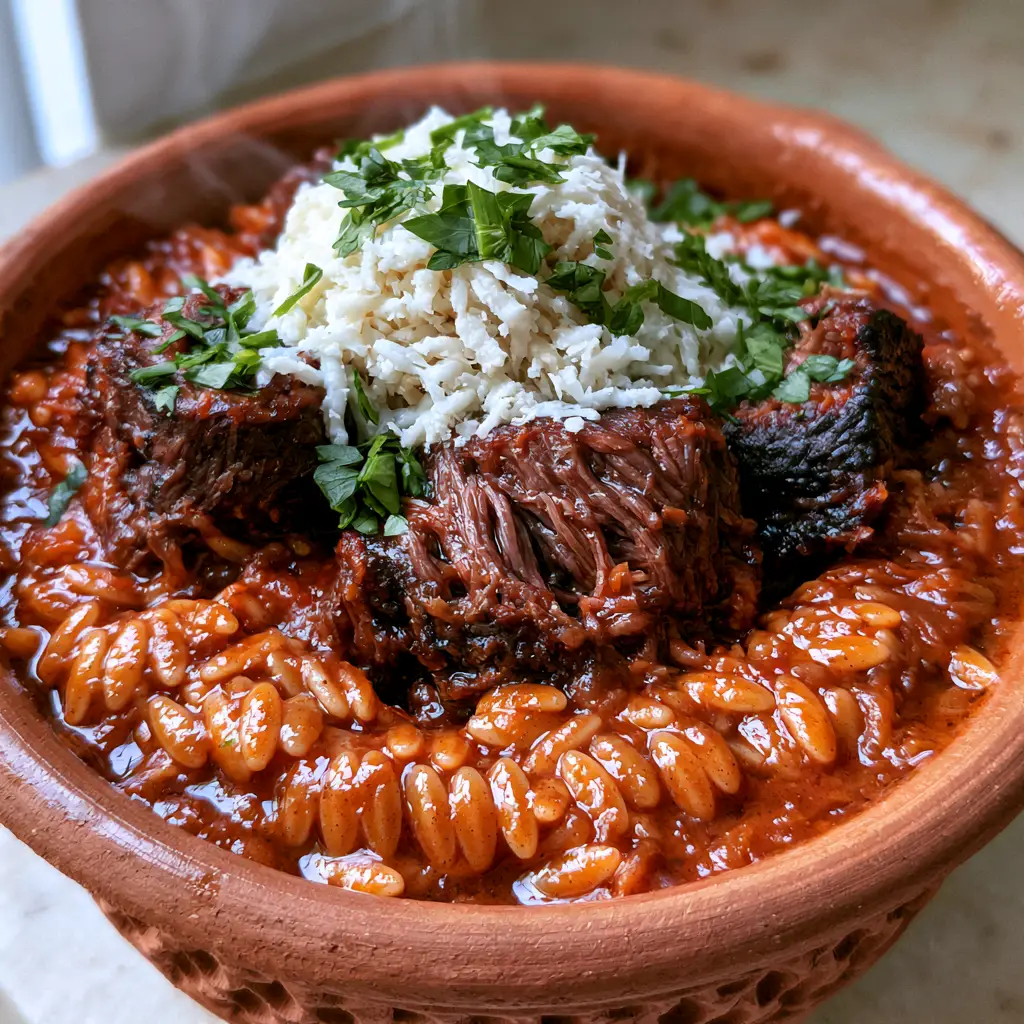
When you walk into a Greek home on a Sunday afternoon, one scent dominates the air: the warm, woody aroma of cinnamon mingling with slow-simmered beef and rich tomato sauce. This is the essence of giouvetsi, a legendary Greek comfort dish that marries melt-in-your-mouth beef chunks with plump, glistening orzo pasta gems.
Our version stays true to the rustic roots of the Aegean, specifically designed to achieve that high-contrast visual of caramelized meat fibers nestled against a “messy mountain” of finely grated white kefalotyri cheese. Every bite offers a texture profile that ranges from the seared, dark-brown edges of the beef to the velvety, separate grains of pasta saturated in a cinnamon-infused reduction.
Whether you are a seasoned home cook or a newcomer to Hellenic cuisine, this guide provides the culinary forensic details needed to master the iconic terracotta-baked finish. Let’s dive into the science of the sear and the secret to orzo that never turns mushy.
The Visual Allure of Traditional Greek Giouvetsi
- Searing for Success: We focus on deep Maillard browning to ensure your beef chunks have those signature caramelized, dark-brown edges that stand out against the red sauce.
- The Orzo Architecture: By toasting the pasta grains in oil before baking, each grain remains a “glistening gem,” perfectly separate rather than a clumped mass.
- The Spice Foundation: A thick, deep-red sauce infused with whole cinnamon sticks provides both the color and the olfactory “steam” that defines authenticity.
- The Rustic Finish: Utilizing a traditional terracotta baking dish allows for even heat distribution, resulting in those irresistible seared edges on the pasta.
The Foundation: Ingredients for an Authentic Braise
To recreate the exact visual and flavor profile of a Mediterranean taverna, selecting high-quality fats and proteins is non-negotiable. Each component plays a specific role in the dish’s final structure.
Beef Chuck or Shank: 3 lbs (1.36kg) of beef, cut into large 2-inch (5cm) cubes. You want meat with visible marbling; as the collagen breaks down during the slow braise, it creates those tender fibers that pull apart with a fork.
Orzo (Manestra): 1.5 cups (300g) of oval orzo pasta. In Greece, this is often called “manestra,” and it acts as a sponge for the cinnamon-tomato braising liquid without losing its oval shape.
Kefalotyri Cheese: 1 cup (100g) finely grated. This salty, hard sheep’s milk cheese provides the “messy mountain” topping that cuts through the richness of the beef.
The Aromatic Trinity: 2 large yellow onions, finely diced, and 4 cloves of garlic, smashed. These dissolve into the sauce, providing a thick, savory body that clings to the pasta.
Cinnamon and Allspice: 1 whole cinnamon stick and 1/2 tsp (2g) ground allspice. This is what differentiates giouvetsi from a standard Italian ragu; it adds a warm, sweet undertone to the savory beef.
Tomato Reduction: 1 cup (240ml) crushed tomatoes and 2 tbsp (30g) tomato paste. The paste is essential for achieving that “deep-red” color described in our visual blueprint.
Foundational Liquids: 4 cups (950ml) high-quality beef stock and 1/2 cup (120ml) dry red wine. The wine deglazes the pot, lifting the seared beef bits into the sauce for maximum flavor depth.
Fresh Herbs: 1/2 cup (15g) fresh flat-leaf parsley, finely chopped. This provides a bright green contrast to the deep red and white palette of the finished dish.
Essential Equipment for the Perfect Clay Pot Bake
To achieve the “rustic terracotta” look, the vessel is as important as the ingredients. A traditional clay pot (called a ‘youvetsi’ or ‘gastra’) is ideal because its porous nature creates a unique crust on the pasta.
If you don’t have terracotta, a heavy Dutch oven or a deep ceramic baking dish will suffice. You will also need a heavy-bottomed stainless steel skillet for the initial sear, as this is where those “dark-brown seared edges” are born.
The Culinary Blueprint: Step-by-Step Instructions
Step 1: Achieving the Forensic Sear
Heat 3 tbsp (45ml) of extra virgin olive oil in a large skillet over medium-high heat. Pat the beef chunks completely dry with paper towels; moisture is the enemy of the crust.
Working in batches, sear the beef for 3-4 minutes per side. Look for a deep, caramelized brown crust—this is a visual cue that the Maillard reaction is complete, ensuring the meat won’t look “boiled” later.
Step 2: Building the Cinnamon-Infused Base
In the same skillet, sauté the onions and garlic until translucent. Stir in the tomato paste and cook for 2 minutes until it turns a shade darker, then deglaze with the red wine, scraping up all the flavorful brown bits from the bottom.
Add the crushed tomatoes, cinnamon stick, and allspice. Return the beef to the pot and cover with the beef stock, simmering on low for 90 minutes until the meat fibers are tender but the cubes still hold their shape.
Step 3: Preparing the Orzo Gems
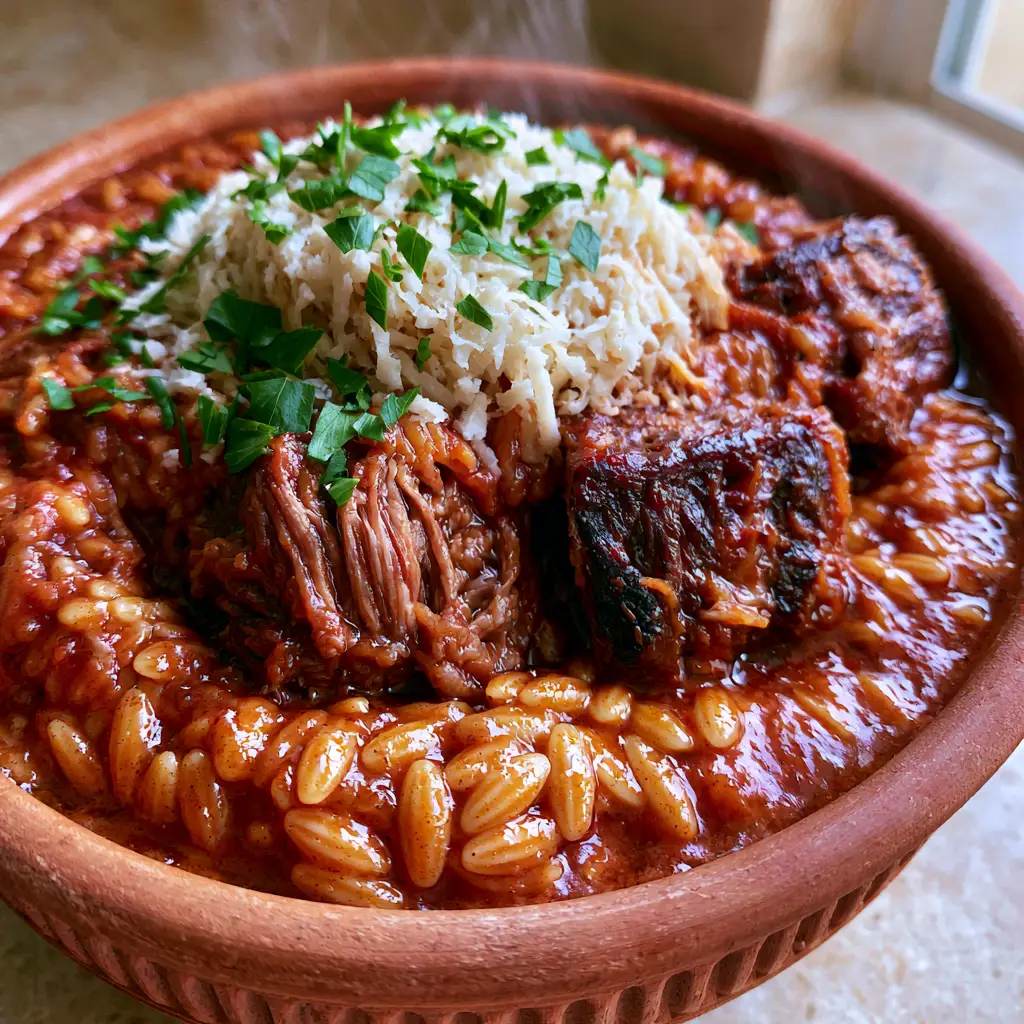
Preheat your oven to 350°F (175°C). While the beef finishes simmering, lightly toast the dry orzo in a separate pan with 1 tbsp (15ml) of oil for 2 minutes. This coats each grain, ensuring they stay “perfectly separate” and “glistening” in the final dish.
Step 4: The Terracotta Assembly
Transfer the braised beef and its thick sauce into your rustic terracotta dish. Stir in the toasted orzo and ensure the pasta is fully submerged in the liquid.
Bake uncovered for 20-30 minutes. Watch for the orzo to swell and absorb the deep-red sauce. The steam should be rising faintly as the edges of the pasta near the ceramic walls start to slightly crisp.
Step 5: The “Messy Mountain” Garnish
Remove the dish from the oven while it is still slightly saucy—the orzo will continue to absorb liquid as it rests. Immediately top with a generous, messy mountain of finely grated kefalotyri cheese.
The residual heat will soften the cheese without melting it into a puddle, maintaining that “white mountain” visual. Finish with a scattered garnish of bright green chopped flat-leaf parsley.
Expert Tips for Success
- Don’t Overcook the Orzo: The pasta should be al dente when you pull it from the oven; it will reach the perfect “plump” texture during the 10-minute resting period.
- The Stock Ratio: Always keep an extra cup of warm beef stock nearby. If the giouvetsi looks too dry before the orzo is tender, add a splash to maintain that “thick sauce” consistency.
- Cheese Substitutions: If you cannot find kefalotyri, use Pecorino Romano or a very dry Mizithra. Avoid mozzarella, as it lacks the necessary saltiness and texture.
- The Resting Phase: Allow the dish to sit for 10 minutes before serving. This allows the fibers of the beef to relax and the sauce to thicken into a velvet glaze.
Storage, Reheating, and Freezing Advice
Giouvetsi is even better the next day as the cinnamon and beef flavors further meld. Store leftovers in an airtight container in the refrigerator for up to 3 days.
When reheating, add a tablespoon of water or broth to the bowl before microwaving or heating on the stovetop. This restores the “glistening” texture to the orzo, which tends to soak up all available moisture while chilled.
We do not recommend freezing the completed dish, as the orzo can become mushy upon thawing. However, you can freeze the braised beef and sauce base separately, then simply add fresh orzo and bake when ready to serve.
What to Serve With Authentic Giouvetsi
This dish is incredibly rich, so it pairs best with bright, acidic sides. A crisp cucumber and tomato salad is the traditional choice to cut through the savory beef fat.
For a full Greek spread, start your meal with Greek shrimp saganaki as an appetizer. If you are looking for other Mediterranean-inspired pasta dishes, our creamy Cajun sausage pasta offers a different but equally comforting flavor profile.
To finish the evening on a sweet note, these mango strawberry sunset cupcakes provide a fruity contrast to the deep spices of the beef.
Frequently Asked Questions
Yes, lamb shoulder is a very traditional alternative to beef and works perfectly with the cinnamon and tomato flavor profile.
While not strictly required, a clay pot provides more even, gentle heat which helps the orzo cook perfectly without sticking to the bottom.
Toasting the dry orzo in a bit of olive oil before adding it to the liquid creates a barrier that helps each grain stay separate and plump.
Pecorino Romano is the closest widely available substitute due to its salty, sharp flavor and hard texture.
Beef chuck roast or beef shank are best. These cuts contain enough fat and connective tissue to break down into tender fibers during the long braising process.
The Master Giouvetsi Recipe Card
Giouvetsi: The Ultimate Authentic Greek Braised Beef and Orzo Recipe
Ingredients
Equipment
Method
- In a skillet with olive oil, sear beef cubes in batches until dark-brown edges form. Remove meat.
- Cook onions and garlic in the same pan, then stir in tomato paste and deglaze with red wine.
- Add beef, stock, cinnamon, and allspice. Cover and simmer for 90 minutes until fibers are tender.
- Lightly toast orzo in a pan with oil for 2 minutes until glistening.
- Transfer beef and sauce to terracotta dish, stir in orzo, and bake at 350°F (175°C) for 20-30 minutes.
- Top with a mountain of grated kefalotyri and fresh parsley before serving.
Notes
Use a terracotta dish for the most authentic heat distribution and crispy edges.
Join the Honest Food Craving Community
Giouvetsi is more than just a meal; it’s a centerpiece for gathering. We hope this recipe brings the warmth of a Greek Sunday to your kitchen. Did you achieve those perfect seared edges? Let us know in the comments below!
If you loved this visual guide, please share your recreations on social media and follow us on Pinterest for more culinary forensics. Don’t forget to sign up for our newsletter to get elite recipes delivered straight to your inbox.