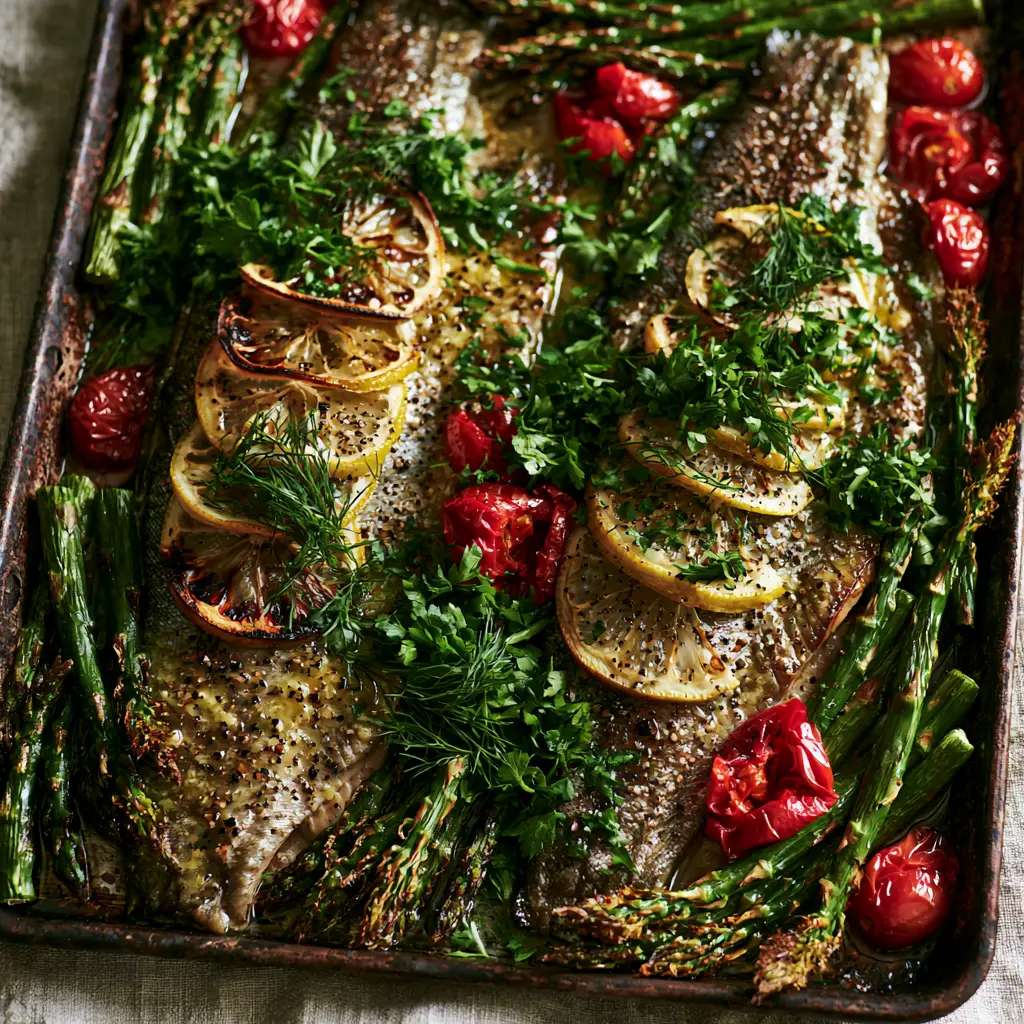
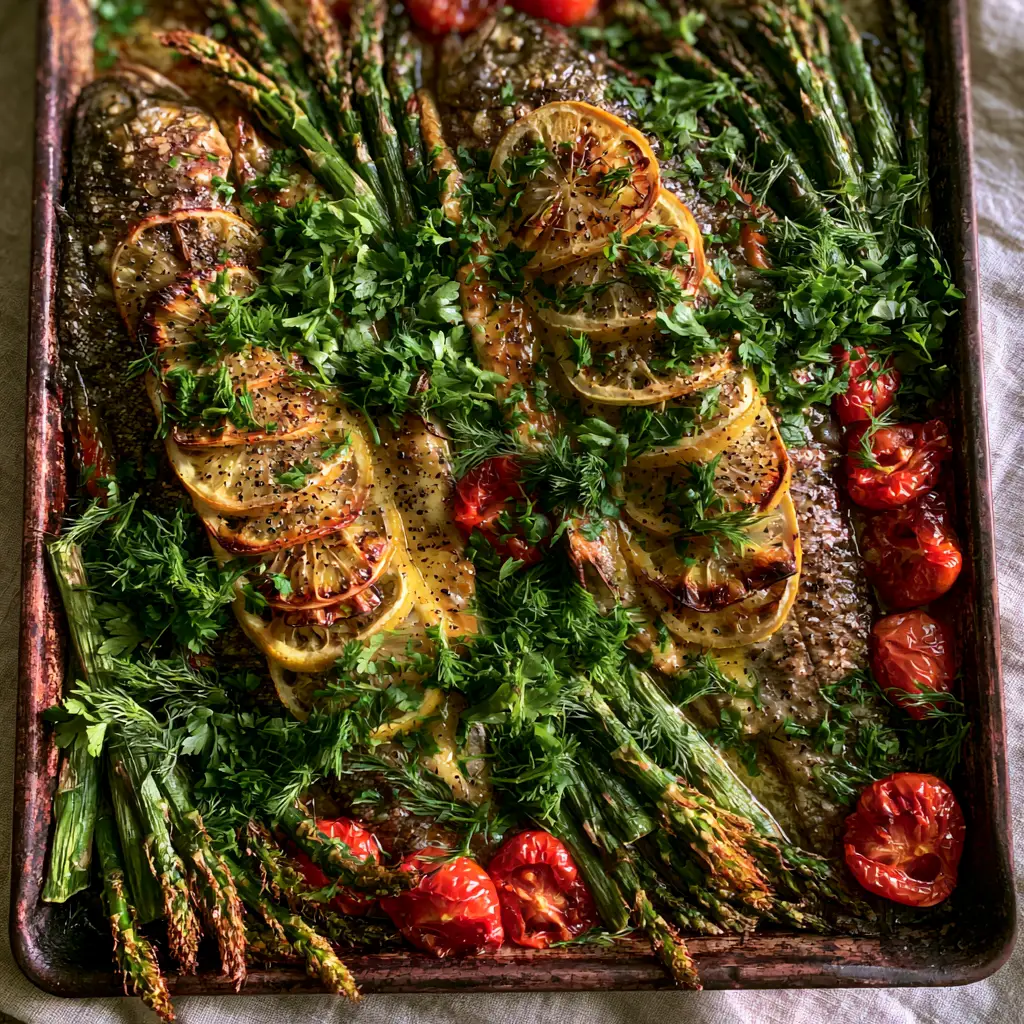
When you pull this rustic dark baking sheet from the oven, the first thing you notice isn’t just the aroma—it is the stunning visual mosaic of vibrant colors. This baked rainbow trout is designed to look as good on your dinner table as it does in a handheld smartphone photo, capturing that “effortless gourmet” aesthetic that defines modern home cooking. With glistening fillets and charred citrus, it is a masterpiece of simple, high-quality ingredients.
The beauty of the baked rainbow trout lies in its delicate, flaky texture and the way it absorbs the rich, melted garlic herb butter. Unlike heavier proteins, trout offers a light yet satisfying meal that feels incredibly elegant. By roasting the fish alongside seasonal greens and bursting tomatoes, we create a complete, one-pan meal that maximizes flavor with minimal cleanup.
Whether you are hosting a weekend dinner party or looking for a healthy weeknight upgrade, this recipe delivers on every front. The natural daylight hitting the shingled lemon rounds and the heavy garnish of fresh herbs makes this dish feel alive and fresh. Let’s dive into how you can achieve this professional-level result in your own kitchen.
Why This One-Pan Rainbow Trout Recipe Works
- Textural Contrast: You get the tender, buttery flake of the trout paired with the satisfying snap of roasted asparagus spears with crispy tips.
- Visual Vibrancy: The pop of bright red blistered cherry tomatoes against the deep green herbs creates a restaurant-quality presentation.
- Deep Flavor Profile: Charred lemon slices provide a smoky acidity that cuts through the richness of the garlic butter glaze.
- Nutrient Dense: High in Omega-3 fatty acids and packed with vitamins from the fresh vegetables, it is a meal that nourishes while it delights.
Achieving this look requires a balance of high heat and precise timing. We aren’t just baking; we are layering flavors and textures. If you enjoy this style of oven-prepared seafood, you might also want to explore our oven-baked fish recipes for another flavorful alternative.
The Essential Components for a Perfect Tray Bake
To recreate the exact look of our visual blueprint, you need specific ingredients that contribute both to the flavor and the final “glistening” appearance. Every element on this tray serves a purpose, from the cracked black pepper to the sea salt flakes.
Two Large Rainbow Trout Fillets: Choose fillets that are approximately 1 pound (450g) each. Look for skin-on fillets as they hold together better during the roasting process and provide a barrier against the high heat of the tray.
Melted Garlic Herb Butter: This is the “glue” that gives the fish its glistening sheen. By whisking minced garlic into 1/2 cup (115g) of melted unsalted butter, we create a fat-rich glaze that prevents the delicate trout from drying out.
Vibrant Green Asparagus: Select medium-thickness spears (approx 1 lb / 450g). These roast at the same rate as the fish, ensuring the tips get that signature “crispy” texture while the stalks remain tender-crisp.
Blistered Cherry Tomatoes: One cup (150g) of red cherry tomatoes adds a burst of sweetness. As they reach high temperatures, the skins “burst,” releasing juices that mingle with the garlic butter on the tray.
Thinly Sliced Lemon Rounds: You will need 1-2 large lemons. One will be sliced into thin rounds to be “shingled” across the fish, while the other provides fresh juice for the initial seasoning.
The Finishing Garnish: A heavy hand of 1/4 cup (10g) freshly minced parsley and 2 tbsp (5g) chopped dill is non-negotiable. These herbs provide the “bright green” contrast seen in the handheld photo.
The Seasoning Duo: Use 1 tsp (6g) sea salt flakes for a clean saltiness and 1/2 tsp (3g) cracked black pepper. The coarse grind of the pepper is essential for the visual “flecks” described in the prompt.
The Right Tools for the Job
While the ingredients are the stars, the equipment ensures they shine. To get that rustic, unedited look, the tray itself matters just as much as the technique.
A rustic dark baking sheet is preferred because dark metal absorbs and radiates heat more efficiently than light-colored pans. This helps the cherry tomatoes blister more quickly and encourages the lemon slices to char at the edges before the fish overcooks. If you don’t have a dark pan, a standard rimmed baking sheet will work, but you may need to move the tray to a higher rack during the final minutes.
You will also need a small saucepan to melt the butter and infuse it with garlic. A sharp chef’s knife is crucial for achieving those paper-thin lemon rounds and the finely minced herbs. For those who love efficient cooking methods, checking out our quick air fryer techniques can give you more ideas for fast, high-heat cooking.
Mastering the Sheet Pan Technique
Preparing the Vegetable Bed
Start by preheating your oven to 400°F (200°C). This high starting temperature is necessary to create the “blistered” and “crispy” effects we are looking for. On your dark baking sheet, toss the asparagus and cherry tomatoes with 2 tbsp (30ml) of extra virgin olive oil and a pinch of salt.
Push the vegetables to the outer edges of the tray. This creates a “nest” in the center where the trout fillets will sit. This arrangement ensures the vegetables get direct contact with the hot tray surface while the fish stays elevated and succulent.
Seasoning and Shingling the Trout
Pat the rainbow trout fillets completely dry with paper towels. Moisture is the enemy of a “glistening” glaze; if the fish is wet, the butter will slide off rather than coating it. Season both sides with a portion of the sea salt and cracked black pepper.
Lay the fillets in the center of the tray. Arrange the lemon slices so they are overlapping—this is the “shingled” look. This doesn’t just look beautiful; the lemons protect the thinnest parts of the trout from the direct heat, ensuring an even cook across the entire fillet.
The Butter Glaze Application
Whisk together your melted butter and minced garlic. Use a pastry brush or a spoon to generously coat the fish and the shingled lemons. Be sure to let some of that garlic butter drizzle over the asparagus and tomatoes; this creates a cohesive flavor profile across the entire tray.
If you enjoy these rich, buttery finishes, you might also love the savory depth found in our maple-glazed salmon recipe, which uses a similar glazing technique for a different flavor profile.
The Roasting Process and Visual Cues
Slide the tray into the oven. You are looking for several specific sensory cues. Around the 10-minute mark, you should hear the tomatoes start to “pop” or sizzle. By 12-15 minutes, the trout should look opaque and the edges of the lemon rounds should begin to show dark, charred edges.
To get those “crispy tips” on the asparagus, you can turn on the broiler for the final 60-90 seconds. Watch closely! The goal is a light char, not a burn. The trout is done when it reaches an internal temperature of 145°F (63°C), or when it flakes easily with a fork at its thickest part.
Chef’s Secrets for Visual Accuracy
- The “Handheld” Lighting: To capture the soft, natural daylight look of our blueprint, serve this dish near a window during midday. The shadows should be soft, highlighting the moisture on the fish.
- Herb Placement: Do not add the parsley and dill before baking. Heat will turn them dull and brown. Scatter them “heavily” immediately after the tray leaves the oven so they remain vibrant green.
- Trout vs. Salmon: Rainbow trout is thinner than most salmon fillets. This means it cooks faster. Always check for doneness 2-3 minutes earlier than you would with a thick salmon steak.
- The Salt Finish: Using sea salt flakes (like Maldon) at the very end adds a crystalline visual pop and a crunch that table salt cannot replicate.
Smart Storage and Reheating
Baked rainbow trout is best enjoyed fresh from the oven, as the “crispy tips” of the asparagus will soften over time. However, leftovers can be stored in an airtight container in the refrigerator for up to two days. To keep the fish from becoming rubbery, avoid the microwave.
Instead, reheat the trout in a 300°F (150°C) oven, covered loosely with foil, until just warmed through. This preserves the delicate flake. The roasted vegetables make a fantastic addition to a fresh cucumber and tomato salad the next day, providing a cold-and-hot contrast that is very refreshing.
What to Serve with Your Trout Tray Bake
This meal is largely self-contained, but a few additions can elevate the experience. A light, fluffy grain like quinoa or couscous is excellent for soaking up the extra garlic herb butter left on the tray. If you are looking for a more substantial side, consider a small portion of hearty pasta tossed in olive oil.
A crisp, dry white wine like a Sauvignon Blanc or a Pinot Grigio complements the lemon and dill perfectly. For dessert, something light and fruity like mango bingsu provides a refreshing palate cleanser after the rich garlic butter.
Frequently Asked Questions
Absolutely. Thin green beans or sliced zucchini work well as they have similar roasting times. Just ensure they are cut to a size that allows them to cook in 12-15 minutes.
Yes, but ensure it is completely thawed and patted dry with paper towels before cooking. Excess moisture from frozen fish will prevent the garlic butter from adhering and make the vegetables soggy.
The trout is done when the flesh is opaque and flakes easily with a fork at the thickest part. It should reach an internal temperature of 145°F (63°C).
Rainbow trout is related to salmon but has a milder, more delicate flavor and a slightly more tender flake. It is less oily than Atlantic salmon, which is why the garlic butter glaze is so important.
We recommend leaving the skin on. It helps the delicate fillets hold their shape on the baking sheet and acts as a heat buffer to keep the meat succulent.
The Ultimate Baked Rainbow Trout Recipe Card
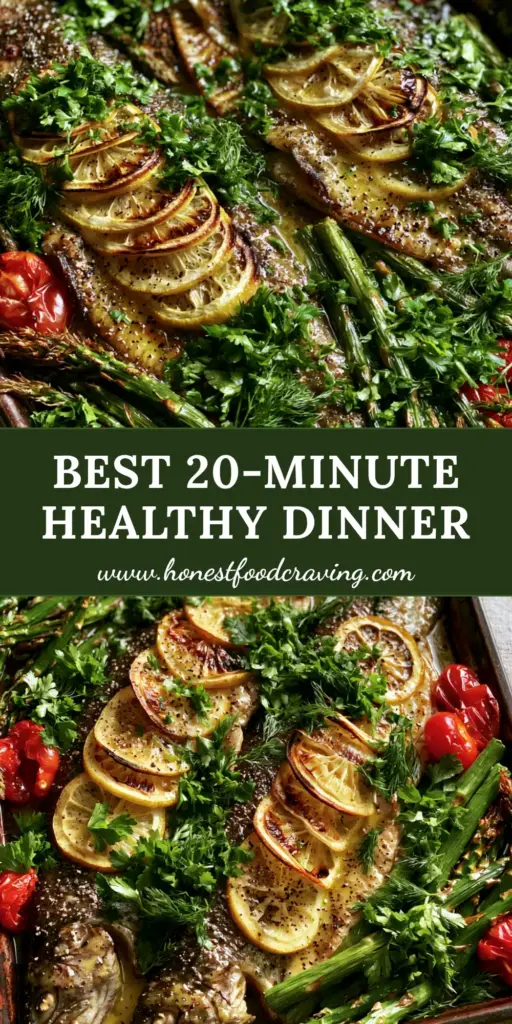
Baked Rainbow Trout with Garlic Herb Butter and Blistered Vegetables
Ingredients
Equipment
Method
- Preheat your oven to 400°F (200°C). On a rustic dark baking sheet, toss asparagus and cherry tomatoes with olive oil and a pinch of salt. Move them to the edges to make space in the center.
- Pat the rainbow trout fillets dry. Season with half of the sea salt and cracked black pepper. Place them in the center of the baking sheet.
- Whisk melted butter with minced garlic. Brush half over the trout. Shingle the lemon slices across the top of the fish, then brush the remaining garlic butter over the lemons and vegetables.
- Bake for 12-15 minutes until the trout is flaky and the tomatoes have blistered. Optional: Broil for 1 minute to get crispy asparagus tips and charred lemon edges.
- Remove from the oven and immediately top with a heavy garnish of fresh parsley and dill. Sprinkle with remaining sea salt flakes before serving.
Notes
Use a dark baking sheet for better vegetable blistering.
Bring the Rustic Gourmet Experience Home
There is something deeply satisfying about a meal that looks as beautiful as it tastes. This baked rainbow trout proves that you don’t need hours in the kitchen to produce a professional-looking, healthy dinner. With its charred citrus and glistening glaze, it is a recipe you will return to time and time again.
We invite you to share your results with us! Did your tomatoes blister perfectly? Did you capture that handheld smartphone photo before digging in? Let us know in the comments below or tag us on social media. For more visual inspiration, be sure to follow us on Pinterest and sign up for our newsletter to get new recipes delivered straight to your inbox.