When you imagine the most iconic culinary experiences across Europe, the list of famous foods in France inevitably begins with the deep, intoxicating aroma of a slow-simmered red wine braise. This rustic Coq au Vin isn’t just a meal; it’s a sensory journey to a sun-drenched bistro in the heart of Burgundy.
The visual appeal is undeniable: glistening chicken skin nestled in a pool of deep burgundy sauce, punctuated by the smoky crunch of bacon lardons. It is a dish that captures the “travel vibe” perfectly, offering a comforting density that has made it a staple in homes and high-end restaurants alike.
Whether you are planning a sophisticated mini wedding menu or simply want to master the foundations of French technique, this recipe provides the roadmap. We are focusing on high-detail textures—from the porous crumb of a torn baguette to the glossy viscosity of a perfectly reduced wine sauce.
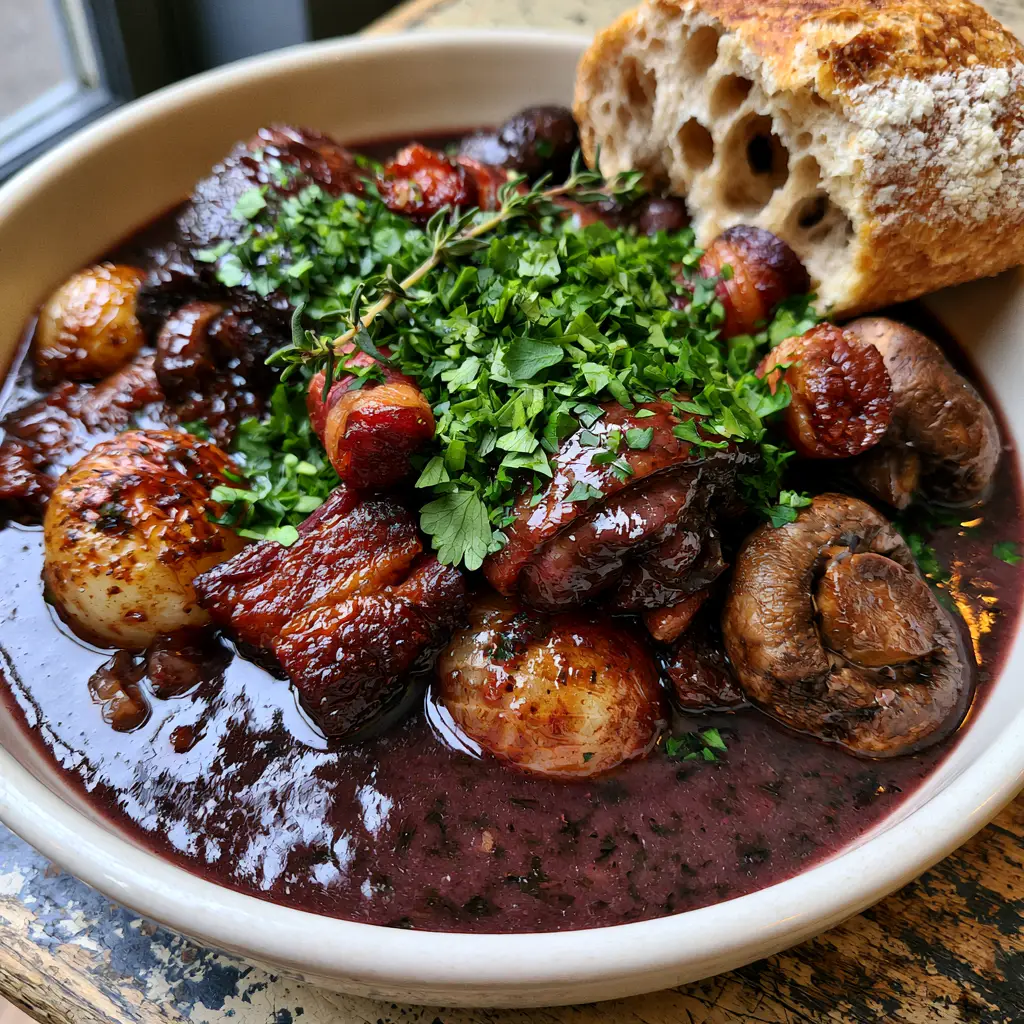
The Hallmarks of a Perfect French Braise
To achieve the authentic results seen in our visual blueprint, this recipe focuses on three distinct layers of flavor and texture that elevate it above a standard stew.
- Deep Color and Gloss: We use a high-tannin Burgundy wine, reduced until it coats the back of a spoon with a shimmering, dark red finish.
- The “Visual Trio”: Whole browned cremini mushrooms, seared pearl onions, and crispy bacon lardons provide structural contrast to the tender chicken.
- Textural Harmony: The pairing of tender, braised chicken thighs with a flour-dusted, crusty French baguette allows you to soak up every drop of the herbal sauce.
- Aromatic Depth: Fresh thyme sprigs and flat-leaf parsley aren’t just garnishes; they provide the vibrant herbal specks visible in every spoonful.
Sourcing Ingredients for Authentic Flavor
To recreate one of the most famous foods in France, selecting the right components is vital for both the flavor profile and the final visual presentation.
Bone-In, Skin-On Chicken Thighs: We use 6-8 large thighs (approx. 3 lbs / 1.4kg) to ensure the meat remains succulent during the long braise while the skin develops a glistening, golden-brown hue.
Burgundy Red Wine: 750ml (1 bottle) of Pinot Noir or a similar dry red wine provides the acidic backbone and the iconic deep red color for the sauce base.
Thick-Cut Bacon Lardons: 8 oz (225g) of bacon, sliced into thick batons, provides the smoky fat used to sear the other ingredients and adds a salty, crispy finish.
Pearl Onions: 1 cup (150g) of peeled pearl onions are seared whole to maintain their shape and provide a sweet, golden-brown pop of flavor.
Cremini Mushrooms: 10 oz (280g) of whole mushrooms are browned in bacon fat to achieve a meaty texture and earthy undertone that complements the wine.
Unsalted Butter and Flour: 2 tbsp (30g) of each are used to create a “beurre manié” or a simple roux, ensuring the sauce achieves a thick, glossy viscosity.
Fresh Herbs: A generous handful of flat-leaf parsley and 4-6 thyme sprigs provide the “herbal specks” and vibrant green garnish required for visual accuracy.
Crusty French Baguette: One large loaf, torn by hand, is essential for serving, showcasing a porous, airy interior that is perfect for dipping.
Foundational Aromatics: 2 large carrots (200g), 2 stalks of celery (100g), and 4 cloves of minced garlic form the “mirepoix” base that builds the sauce’s complexity.
Chicken Stock: 2 cups (480ml) of high-quality stock are added to balance the wine’s acidity and provide enough liquid for a thorough braise.
Essential Kitchen Tools
Achieving the rustic, bistro-style look requires a few specific tools to manage heat and liquid reduction effectively.
A Large Enameled Cast Iron Dutch Oven is the gold standard for this dish, as it retains heat evenly for browning and provides the perfect vessel for oven-braising. You will also need a Slotted Spoon to remove the lardons and vegetables while keeping the flavorful fats in the pan.
A Whisk is necessary for incorporating the flour into the sauce to avoid lumps, ensuring that “glossy” finish. Finally, use a Wide Shallow Ceramic Bowl for serving, which allows the chicken and vegetables to sit beautifully in the shallow pool of sauce.
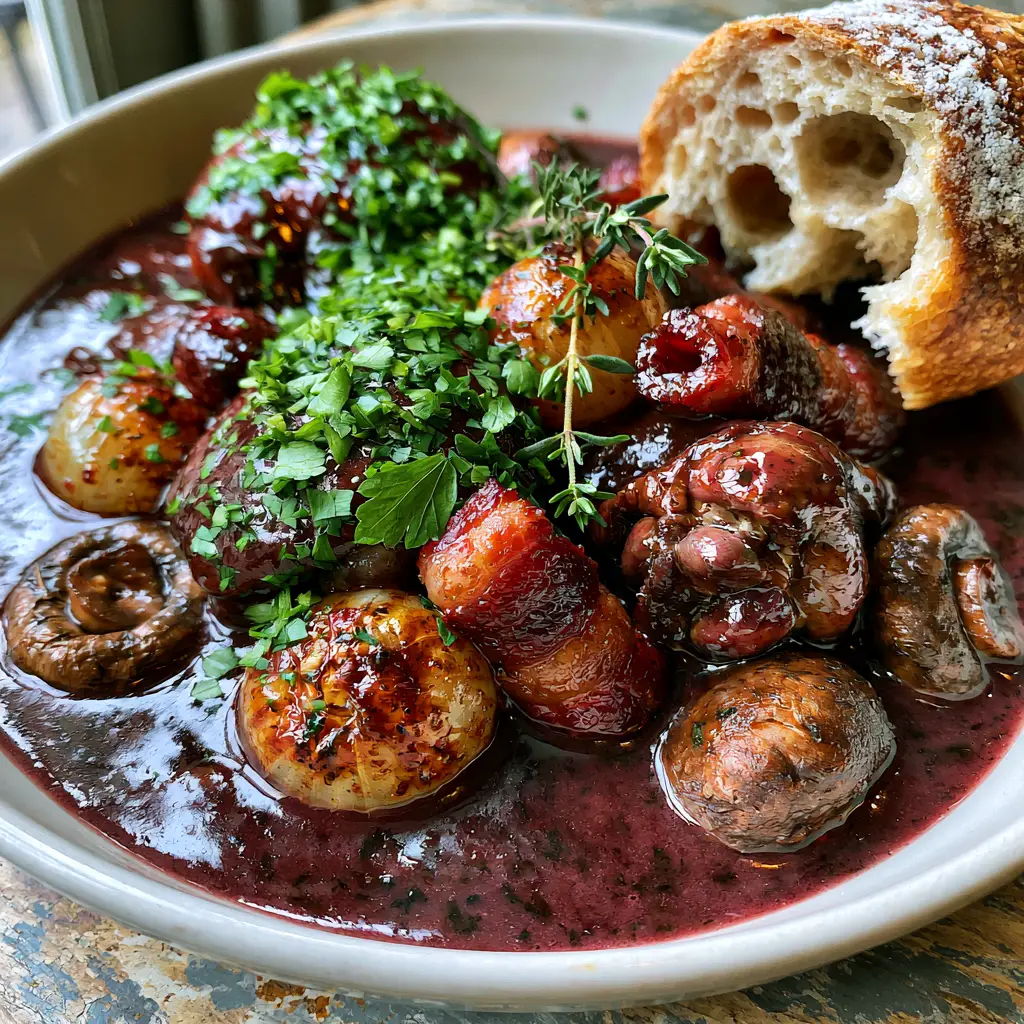
The Art of the Braise: Step-by-Step Coq au Vin
Step 1: Rendering the Lardons and Searing the Chicken
In your Dutch oven over medium heat, add the bacon lardons. Cook until they are golden-brown and crispy, then remove with a slotted spoon, leaving the rendered fat in the pot.
Increase the heat to medium-high. Season the chicken thighs with salt and pepper, then place them skin-side down in the bacon fat. Sear for 5-7 minutes until the skin is glistening and deep golden-brown; remove and set aside.
Step 2: Browning the Visual Trio
In the same pot, add the whole cremini mushrooms and pearl onions. Sauté them for 6-8 minutes, allowing the skins to blister and brown significantly. This is key for the “seared” look mentioned in our famous foods in France blueprint.
Once browned, remove the mushrooms and onions and set them aside with the bacon. If the pot looks dry, add a splash of olive oil (15ml) before moving to the aromatics.
Step 3: Building the Sauce Base
Add the diced carrots, celery, and garlic to the pot. Sauté for 5 minutes until softened. Sprinkle in 2 tbsp (30g) of flour and stir constantly for 2 minutes to cook out the raw flour taste.
Slowly pour in the entire bottle of Burgundy wine, scraping the bottom of the pot to release the “fond” (the flavorful browned bits). Add the chicken stock and thyme sprigs, bringing the liquid to a simmer.
Step 4: The Low and Slow Braise
Nestle the seared chicken thighs back into the pot, ensuring the skin remains above the liquid line to stay glistening. Cover and transfer to a 325°F (165°C) oven for 45-50 minutes.
The chicken is done when it is tender but not falling off the bone. Return the pot to the stove, remove the chicken temporarily, and simmer the sauce for 10 minutes to reduce it to a thick, glossy consistency.
Step 5: Final Assembly and Garnish
Stir the bacon lardons, seared onions, and browned mushrooms back into the thickened sauce. Return the chicken to the pot to warm through.
Garnish with a generous scatter of chopped flat-leaf parsley and fresh thyme sprigs. Serve immediately with large, torn pieces of crusty baguette.
Chef’s Secrets for a Glossy Burgundy Sauce
- The Cold Butter Trick: If your sauce isn’t quite glossy enough, whisk in a tablespoon of cold butter just before serving for a professional shine.
- Don’t Overcrowd: When browning the chicken, do it in batches. Overcrowding causes the meat to steam rather than sear, losing that glistening skin texture.
- Wine Quality: If you wouldn’t drink the wine, don’t cook with it. A mid-range Pinot Noir provides the best balance of fruit and acidity.
- Tear, Don’t Slice: For the most authentic bistro feel, tear the baguette by hand. The jagged edges are better for catching the thick red wine sauce.
Storage and Reheating for Maximum Flavor
Like many famous foods in France, Coq au Vin often tastes even better the next day as the flavors continue to meld in the refrigerator.
Refrigeration: Store leftovers in an airtight container for up to 3 days. The sauce will thicken into a jelly-like consistency when cold; this is a sign of a high-quality, collagen-rich braise.
Reheating: Warm gently on the stovetop over low heat. Add a splash of chicken stock or water (30ml) if the sauce has become too thick during storage.
Freezing: This dish freezes well for up to 3 months. Thaw overnight in the refrigerator before reheating. Note that the mushrooms may lose some of their firmness after freezing.
What to Pair with Rustic French Chicken
While the baguette is the traditional accompaniment, you can balance this rich dish with a light cucumber and tomato salad to cut through the fat of the bacon and chicken skin.
If you enjoy the hearty nature of this braise but want something with a bit more spice next time, try our cajun sausage pasta for a different take on comfort food. For a full European-inspired spread, consider adding a famous French dishes sampler to your weekly meal plan.
Frequently Asked Questions
While possible, you must sear the chicken, bacon, and vegetables in a pan first to achieve the correct textures. The final sauce will also need to be reduced on the stovetop.
Yes, bone-in, skin-on thighs are highly recommended. The bone adds depth to the sauce, and the skin provides the glistening visual and fatty flavor essential to the dish.
Ensure you reduce the sauce sufficiently after braising. If it’s still not glossy, whisking in a tablespoon of cold butter (beurre monté) at the end adds a professional shine.
Traditionally, a red Burgundy (Pinot Noir) is used. You want a dry, medium-bodied red wine with good acidity to balance the richness of the chicken and bacon.
Historically, the dish was made with a ‘coq’ (rooster), which required a long, slow braise in wine to tenderize the tough meat. Modern versions use standard chicken.
Rustic French Coq au Vin with Burgundy Sauce
Famous Foods in France: The Ultimate Rustic Coq au Vin Recipe
Ingredients
Equipment
Method
- Cook bacon lardons in the Dutch oven over medium heat until crispy. Remove with a slotted spoon, leaving the fat behind.
- Season chicken with salt and pepper. Sear skin-side down in the bacon fat for 5-7 minutes until glistening and golden-brown. Remove and set aside.
- Sauté whole pearl onions and cremini mushrooms in the pot for 6-8 minutes until seared and golden. Remove and set aside.
- Stir in flour, cook for 2 minutes, then slowly whisk in the Burgundy wine and chicken stock. Add thyme and bring to a simmer.
- Place chicken back in the pot. Cover and cook in the oven at 325°F (165°C) for 45-50 minutes until tender.
- Remove chicken, simmer sauce on the stove to reduce until thick and glossy. Return chicken, onions, mushrooms, and lardons to the pot.
Notes
Always tear the baguette by hand to create more surface area for the sauce.
Bring the Bistro Home
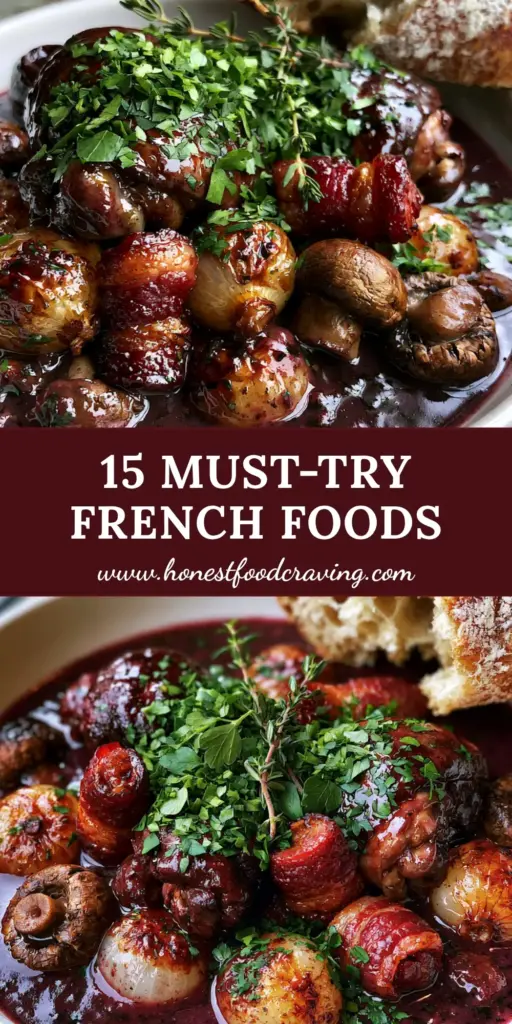
Mastering the famous foods in France is about patience and respecting the ingredients. This Coq au Vin, with its deep burgundy sauce and crispy lardons, brings a touch of Parisian elegance to your kitchen table. The combination of slow-braised chicken and the “visual trio” of onions, mushrooms, and bacon creates a meal that is as beautiful to look at as it is to eat.
If you enjoyed this recipe, please leave a comment below and share your results! Don’t forget to follow us on Pinterest for more culinary inspiration and bistro-style recipes.