Cameroonian Jollof Rice is more than just a meal; it is a centerpiece of celebration, defined by its vibrant orange-red hue and the intoxicating aroma of ginger, garlic, and crayfish. Unlike other variations, the Cameroonian version often emphasizes a rich, spicy tomato oil coating and a specific texture where every grain of long-grain parboiled rice remains perfectly distinct.
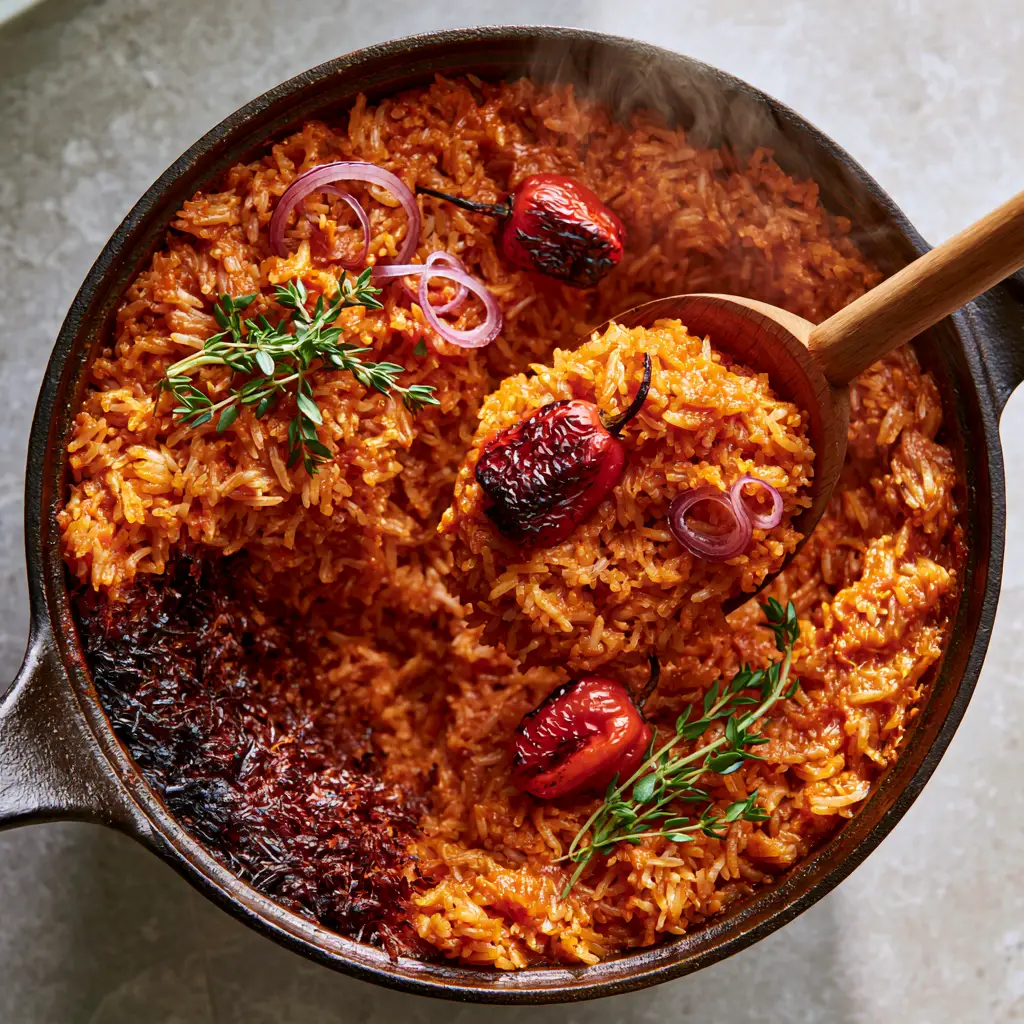
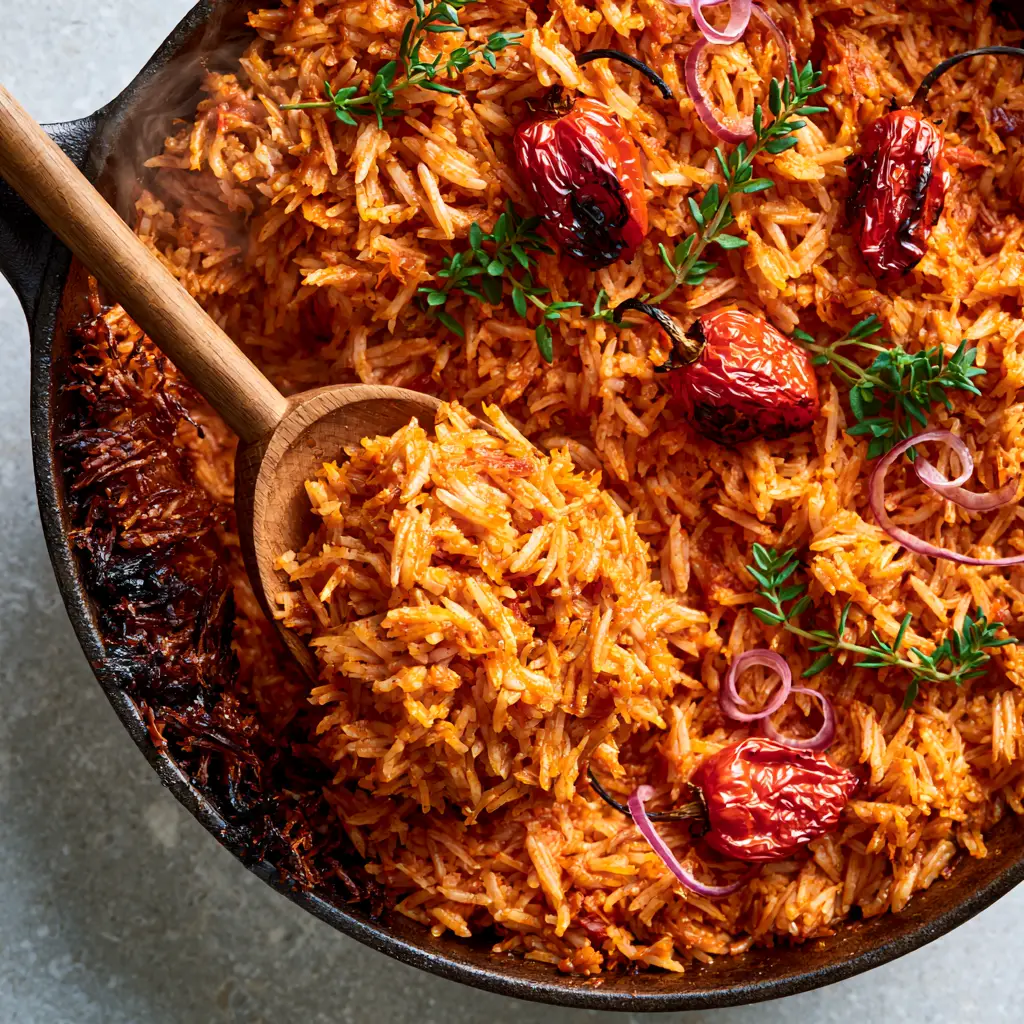
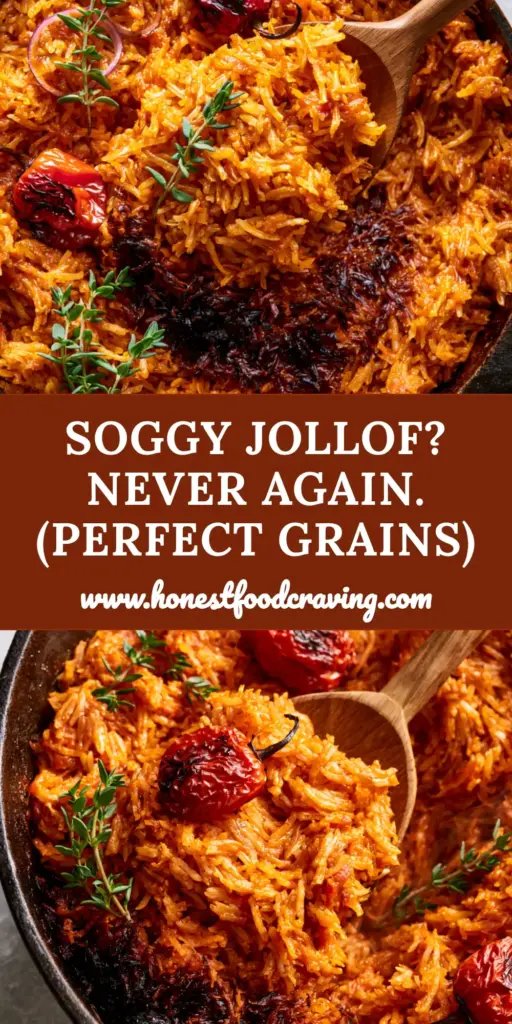
In this guide, we are recreating the exact visual masterpiece seen in our rustic cast iron pot: glistening grains, charred scotch bonnet peppers, and that highly-coveted crispy, dark charred rice base. Whether you call it “bottom pot” or “burnt rice,” that smoky crunch is the hallmark of a master chef.
Why This West African Classic Wins Every Dinner Table
- Perfectly Separated Grains: Using the parboiling method ensures your Cameroonian Jollof Rice never turns into a mushy “pudding” but remains individual and fluffy.
- The Iconic Orange-Red Glow: A concentrated blend of red bell peppers and tomato paste creates a deep, vibrant color that looks as good as it tastes.
- Layered Smokey Depth: Even without a wood fire, our technique for creating a controlled “bottom pot” char infuses the entire dish with a rustic, smokey flavor.
- The Umami Kick: The inclusion of ground crayfish—a staple in Cameroonian cuisine—adds a depth of flavor that sets this recipe apart from its neighbors.
The Anatomy of the Perfect Orange-Red Grain
To achieve the visual and textural results described in our blueprint, every ingredient serves a specific culinary purpose. We are not just boiling rice; we are building layers of flavor through fat, acid, and heat.
Long-Grain Parboiled Rice: 4 cups (800g). Parboiled rice is essential because the starch has been partially gelatinized, allowing the grains to stand up to long steaming without breaking.
Red Bell Peppers (Tatashe): 3 large peppers. These provide the bulk of the “vibrant orange-red” color and a subtle sweetness that balances the heat of the habaneros.
Roma Tomatoes: 5 medium (approx. 500g). Tomatoes add the necessary acidity to cut through the richness of the oil and spices.
Tomato Paste: 6 oz (170g). This is the secret to the concentrated red color and a thick, rich sauce that coats every single grain.
Vegetable Oil: 1 cup (240ml). Jollof requires a generous amount of oil to “fry” the rice during the steaming process, giving it that characteristic glisten.
Ground Crayfish: 3 tbsp (45g). This provides the authentic Cameroonian umami profile that is non-negotiable for a traditional taste.
Aromatic Base: 2 large red onions, 4 cloves of garlic, and 2 inches (5cm) of fresh ginger. This trinity creates the foundational scent that fills your kitchen.
Liquid Gold (Beef or Chicken Stock): 4 cups (960ml). A high-quality, flavorful stock is better than water for cooking the rice to ensure maximum flavor absorption.
Visual Garnishes: 4 whole scotch bonnet peppers, 5-6 fresh thyme sprigs, and 1 small red onion cut into thin raw rings. These provide the final aesthetic flourish and fresh contrast.
Essential Gear for the Most Coveted Burnt Base
To achieve the “crispy dark brown burnt rice base” seen in the wooden spoon lift of our visual blueprint, you need the right tools. Heat distribution is the most important factor here.
A Heavy-Bottomed Cast Iron Pot or Dutch Oven is the gold standard for Cameroonian Jollof Rice. The thick walls retain heat evenly, which is crucial for developing the crust at the bottom without burning the entire batch through to the top.
You will also need a High-Powered Blender to pulverize the peppers and onions into a smooth slurry, and Aluminum Foil to create an airtight seal during the steaming phase, which traps the steam and cooks the rice using its own moisture.
Building the Flavor: The Tomato and Pepper Base
Step 1: The Vibrant Puree
Start by blending your red bell peppers, tomatoes, ginger, garlic, and one of the onions with a splash of water. Aim for a completely smooth consistency; any chunks will interfere with the uniform coating of the rice grains later.
Step 2: Frying the Aromatics
Heat the vegetable oil in your cast iron pot over medium heat. Slicing the second onion thinly, fry it in the oil until translucent and slightly golden around the edges.
Step 3: Concentrating the Color
Add the tomato paste to the hot oil and onions. Fry this for 5-8 minutes, stirring constantly, until the paste turns a deep maroon color and the oil starts to look orange. This step removes the raw metallic taste of the paste.
Step 4: Reducing the Stew
Pour in your blended pepper mix. Cook this mixture down over medium-high heat until the water evaporates and you see the oil begin to separate and float to the top. This “frying” of the sauce is what guarantees a rich, spicy tomato oil finish.
The Secret to Achieving Individual Grains
Step 5: Parboiling and Rinsing
While your sauce reduces, parboil your rice in a separate pot of boiling water for about 8-10 minutes. Drain it and rinse thoroughly under cold water until the water runs clear. This removes excess surface starch, which is the #1 culprit of sticky, clumpy jollof.
Step 6: Incorporating the Rice
Add the rinsed rice to your reduced tomato stew. Stir gently but thoroughly to ensure every single grain is coated in the vibrant orange-red sauce. Add your ground crayfish, seasoning cubes, salt, and white pepper at this stage.
Step 7: The Precise Liquid Ratio
Pour in your stock. The liquid should just barely cover the rice—about half an inch (1.25cm) above the grain line. Over-watering at this stage will ruin the texture.
Steaming and the Science of the Bottom Pot
Step 8: The Airtight Seal
Place your fresh thyme sprigs and the whole charred scotch bonnet peppers on top of the rice. Cover the pot tightly with a layer of aluminum foil, then place the lid on top. This forces the rice to steam in the flavor-packed vapors rather than boiling.
Step 9: The Low and Slow Steam
Turn the heat down to the lowest possible setting and let the rice steam for 30-40 minutes. Do not peek! Opening the lid lets the essential steam escape.
Step 10: Creating the Burnt Base
Once the rice is tender and the liquid is fully absorbed, turn the heat up to medium-high for exactly 3 to 5 minutes. You will start to hear a distinct crackling sound and smell a slightly toasted (not acrid) aroma. This is the “socarrat” or burnt base forming.
Expert Tips for Success
- The “No-Stir” Rule: Once the rice is steaming, do not stir it. Stirring releases starch and breaks the grains, leading to a mushy texture.
- Visual Cue for Done-ness: Look for “wisps of steam” rising when you finally lift the lid; the grains should look slightly curved and elongated.
- Charring the Peppers: For an extra rustic look, sear the whole scotch bonnets in a dry pan for 2 minutes before placing them on the rice to get those beautiful black blister marks.
- The Rest Period: Allow the rice to sit, covered, for 10 minutes after turning off the heat. This allows the moisture to redistribute so the grains fluff up perfectly.
Preserving the Flavor: How to Store and Reheat
Cameroonian Jollof Rice is one of those rare dishes that actually tastes better the next day as the spices continue to meld. Store leftovers in an airtight container in the refrigerator for up to 4 days.
To reheat, avoid the microwave if possible as it can dry out the rice. Instead, place the rice in a pan with a tiny splash of water or stock, cover tightly, and steam on low heat until warmed through. This preserves the individual grain texture and the spicy oil coating.
What to Serve With This Cameroonian Feast
To complete the experience, serve your Jollof with a side of fried plantains (dodo) and a protein like our succulent Maple Glazed Salmon for a modern twist, or keep it traditional with roasted chicken.
A crisp, acidic side like a Refreshing Cucumber and Tomato Salad helps cut through the richness of the spicy rice. If you are looking for other regional rice variations, compare this to our Traditional Native Jollof Rice which uses palm oil for a completely different flavor profile.
For dessert, a light and fruity Sweet Mango Bingsu is the perfect way to cool down your palate after the heat of the scotch bonnets.
Frequently Asked Questions
Yes, but use the heaviest-bottomed pot you own. Thin pots distribute heat unevenly, which can lead to the rice burning before it actually steams through.
The smokey flavor comes from the ‘burnt base’ technique—turning up the heat at the very end of cooking to slightly toast the bottom layer of rice—and from frying the tomato paste until it is deeply caramelized.
To achieve the authentic flavor profile of Cameroon, crayfish is essential. If you have an allergy, you can substitute with a dash of fish sauce or extra bouillon, though the flavor will slightly change.
While both use a tomato-pepper base, Cameroonian Jollof often includes ground crayfish for a unique umami depth and typically uses long-grain parboiled rice to ensure very distinct, non-sticky grains.
Mushy rice is usually caused by using too much water or not rinsing the starch off the rice before cooking. Ensure you parboil and rinse until the water is clear, and only add enough stock to barely cover the grains.
Authentic Cameroonian Jollof Rice Recipe Card
Cameroonian Jollof Rice: The Ultimate Guide to Authentic Smokey Party Rice
Ingredients
Equipment
Method
- Puree bell peppers, tomatoes, ginger, garlic, and one onion until smooth.
- Parboil rice for 8-10 mins, then rinse under cold water to remove starch.
- Fry tomato paste and pepper puree in oil until the oil separates and turns orange.
- Add rice and stock, seal with foil, and cook on low for 40 mins.
- Turn heat to medium-high for 5 mins at the end to create the crispy burnt base.
Notes
Do not stir during the steaming process to avoid mushy grains.
Master the Art of West African Flavors
The journey to the perfect Cameroonian Jollof Rice is a rewarding one that ends in a symphony of spice, smoke, and texture. By following the “bottom pot” technique and ensuring your grains are perfectly separated, you bring a piece of authentic Cameroonian culture to your kitchen.
We would love to see your results! Did you get that perfect crispy base? Tag us in your photos and share this recipe on Pinterest so others can join the Jollof revolution. Don’t forget to sign up for our newsletter for more deep-dives into global culinary forensics.