The quest for the perfect carbonara recipe is a journey through the heart of Roman culinary tradition. It is a dish that relies on the alchemy of just five simple ingredients to create something far greater than the sum of its parts. When executed correctly, you aren’t just eating pasta; you are experiencing a decadent, ultra-glossy, pale golden emulsion that clings to every strand of al dente spaghetti.
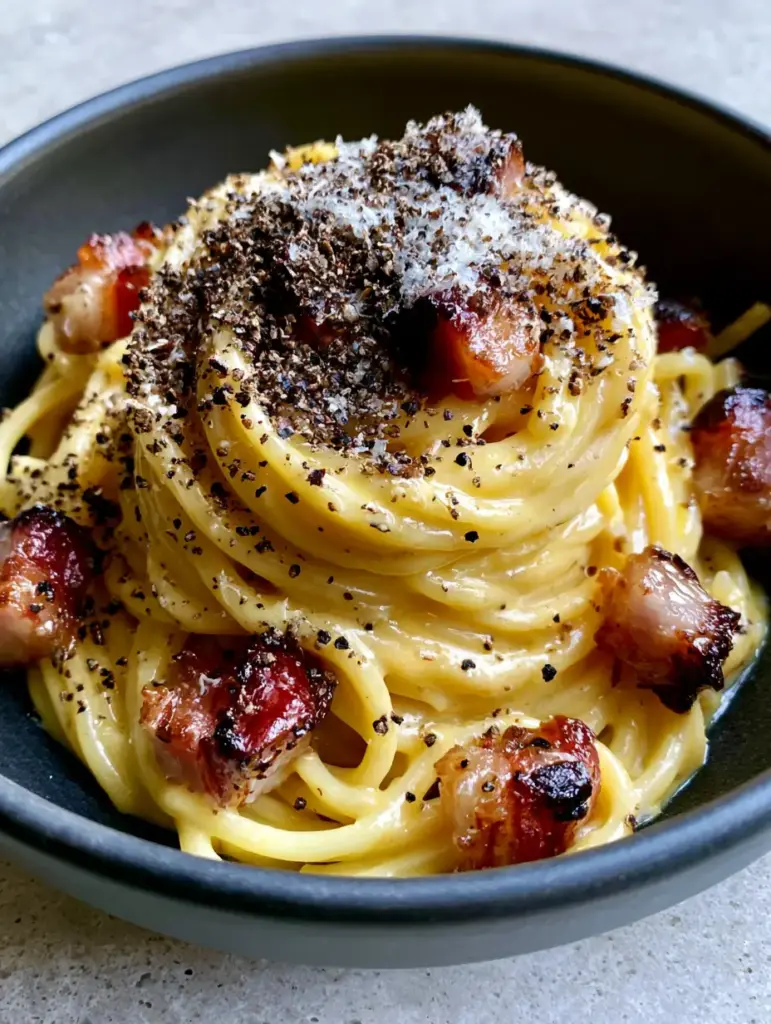
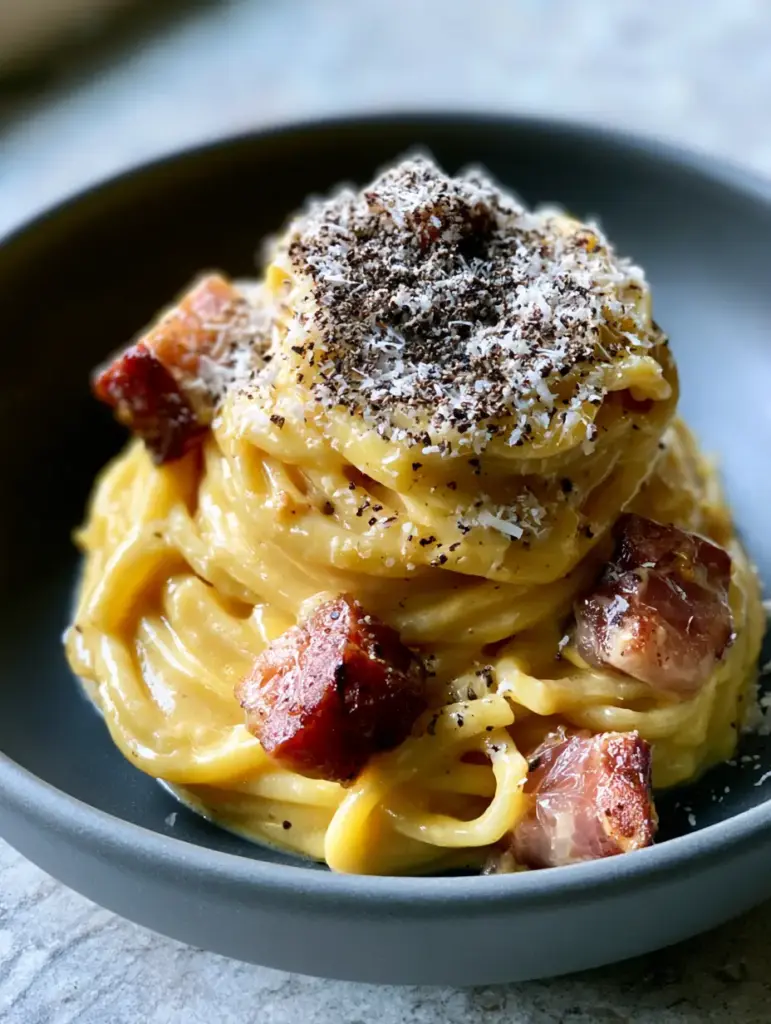
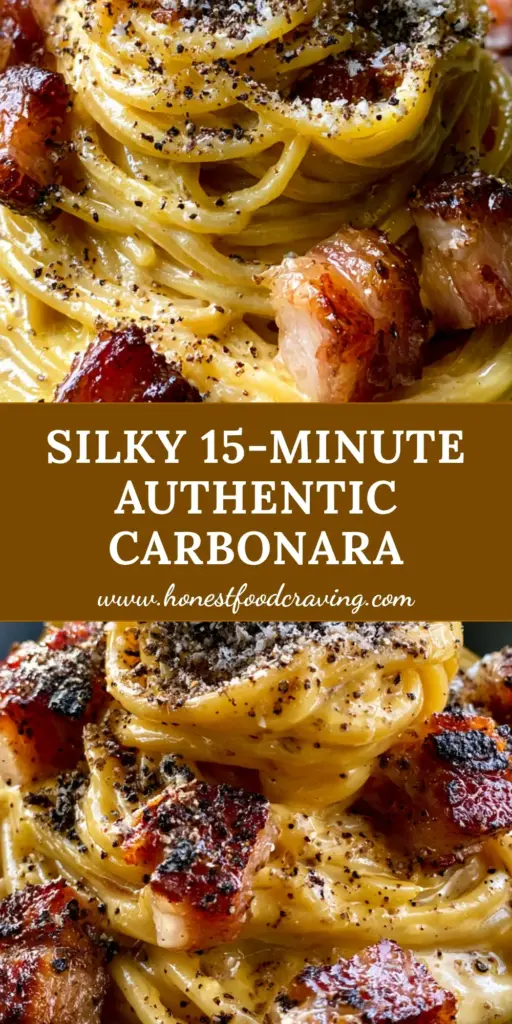
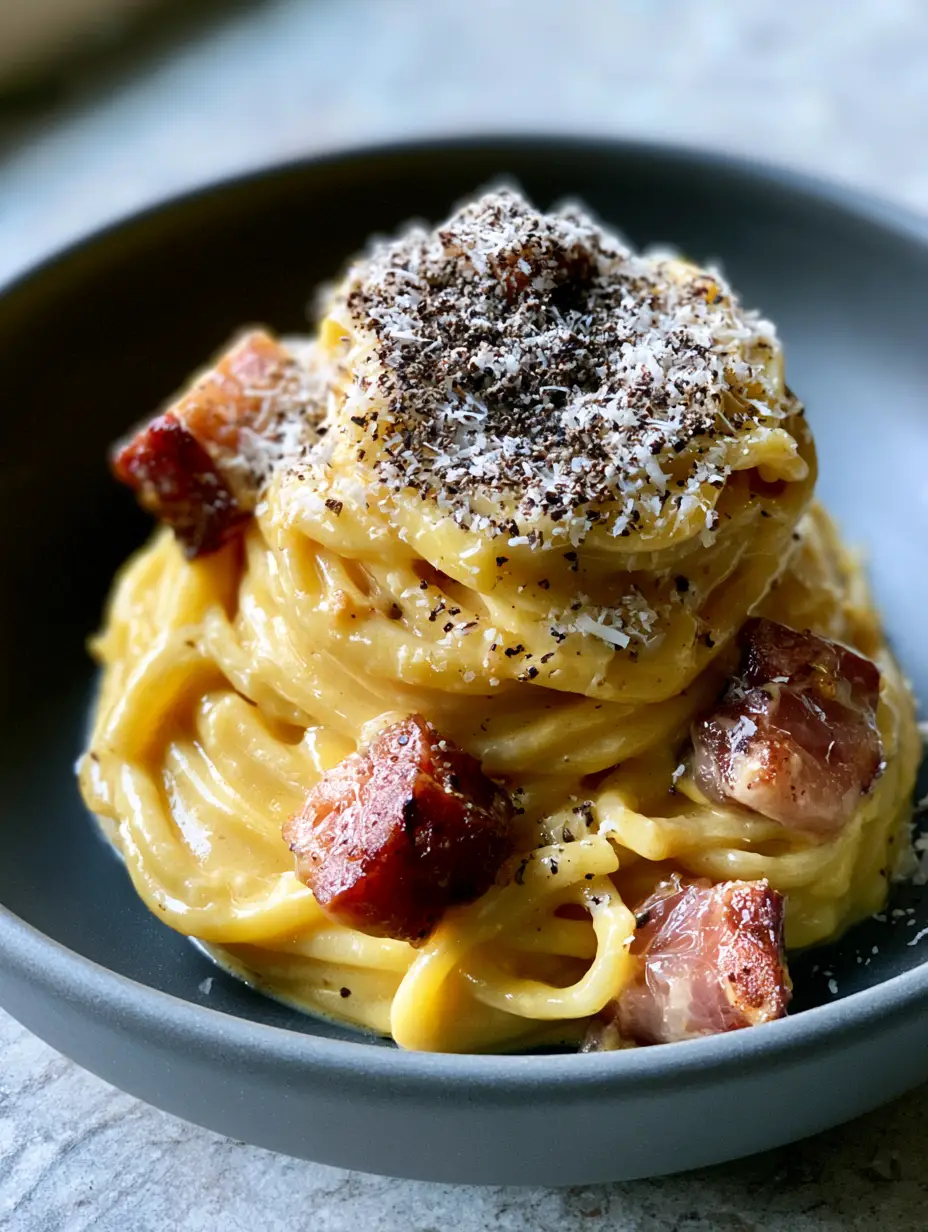
Imagine a tall, elegant nest of pasta sitting in a shallow matte charcoal ceramic bowl, reflecting the soft glow of window light. Tucked within those golden coils are thick-cut, crispy cubes of guanciale, their edges deeply browned while their centers remain translucent with rendered fat. This isn’t just a meal; it’s a masterclass in texture and temperature control that you can achieve in your own kitchen.
To reach this level of culinary perfection, we must move beyond the common misconceptions—there is no cream here, only the scientific magic of egg yolks and finely grated Pecorino Romano. Whether you are looking for healthy dinner ideas to rotate into your weekly menu or a show-stopping weekend feast, this authentic method delivers restaurant-quality results every single time.
Why This Authentic Roman Carbonara Works Every Time
- The Emulsion Science: By using a high ratio of egg yolks to whole eggs, we create a stable, thick sauce that won’t scramble.
- Textural Contrast: The crunch of deeply rendered guanciale provides a savory counterpoint to the silky, “snow-like” layer of cheese.
- Visual Brilliance: The use of coarse cracked black pepper adds a rustic aesthetic and a sharp, floral heat that cuts through the rich fat.
- Structural Integrity: Using bronze-die spaghetti ensures the sauce has enough surface area to grip, maintaining that signature “tall nest” presentation.
The Essential Pantry for a Masterful Carbonara Recipe
Every ingredient in this recipe serves a structural and visual purpose. To achieve the specific look of our “Visual Recipe Blueprint,” we must be discerning with our selections.
Spaghetti (400g / 14 oz): Look for a high-quality, bronze-cut variety. The rough texture of the pasta is what allows the glossy egg yolk and Pecorino Romano emulsion to adhere rather than sliding off to the bottom of the bowl.
Guanciale (150g / 5.3 oz): This cured pork cheek is the soul of the dish. Its high fat-to-meat ratio provides the “translucent rendered fat” necessary to emulsify the sauce and gives the dish its characteristic funky, peppery depth.
Large Egg Yolks (4) + 1 Whole Egg: The yolks provide the “pale golden” color and the rich, velvety mouthfeel. The inclusion of one whole egg adds just enough moisture to prevent the sauce from becoming overly clumpy or dry.
Pecorino Romano (100g / 3.5 oz): This sheep’s milk cheese is saltier and sharper than Parmesan. Finely grated, it should look like a “snow-like layer” that melts instantly into the warm pasta water and egg mixture.
Coarse Cracked Black Pepper (2 tsp / 4g): Avoid pre-ground pepper at all costs. You want large, rustic fragments that provide visual contrast and a punchy, aromatic heat that balances the richness of the fat.
Kosher Salt: Used exclusively for the pasta water. Remember, the guanciale and Pecorino are already heavily salted, so we must season the water with precision—think “seasoned soup,” not “the ocean.”
Precision Tools for the Perfect Emulsion
To achieve the handheld smartphone photo aesthetic—a tall, elegant nest with a glossy finish—you need the right equipment to manage the delicate heat of this dish.
Large Stainless Steel Skillet: This is for rendering the guanciale. Stainless steel allows you to see the “deeply browned edges” clearly, preventing burning while maximizing the fond on the bottom of the pan.
Heat-Proof Glass or Metal Bowl: You will use this to whisk your eggs and cheese. It will eventually be placed over the boiling pasta water (the “bain-marie” method) to gently thicken the sauce without curdling the eggs.
Microplane Grater: Essential for achieving that “snow-like” layer of Pecorino. A fine grate ensures the cheese dissolves instantly into the emulsion rather than clumping.
Tongs and a Carving Fork: To create that professional “tall nest” in your shallow matte charcoal bowl, you need to twirl the pasta against a large spoon or inside a ladle using a carving fork.
Step-by-Step Architecture: Constructing the Carbonara
1. Rendering the Guanciale to Translucent Perfection
Begin by cutting your guanciale into thick, uniform cubes, approximately 1/2 inch (1.25 cm). Place them in a cold skillet and turn the heat to medium-low. This slow start is vital for rendering out the fat until the cubes are crispy with deeply browned edges and a translucent, jelly-like center.
Once the fat is fully rendered, remove the skillet from the heat. Set aside about 2 tablespoons (30ml) of the liquid fat in a separate bowl. This “liquid gold” is the bridge between your pasta and your egg sauce.
2. The “Snow-Like” Cheese and Egg Preparation
In your heat-proof bowl, whisk together the 4 egg yolks, 1 whole egg, and the majority of your finely grated Pecorino Romano. The mixture should form a thick, pale yellow paste. At this stage, add half of your coarse cracked black pepper directly into the paste to bloom its flavor.
If you find this technique fascinating, you might also enjoy the textural complexity of our creamy Cajun pasta recipe, which uses a different but equally compelling emulsification method.
3. Cooking the Spaghetti Al Dente
Bring a large pot of water to a boil, but use about 30% less water than you usually would. This concentrates the starch in the water, which is the “secret ingredient” for a glossy emulsion. Cook the spaghetti for 2 minutes less than the package instructions. It should be “al dente”—firm to the bite with a tiny white dot still visible in the center of the strand.
4. The Manteccatura (The Marriage)
This is the most critical phase. Using tongs, transfer the pasta directly from the water into the skillet with the guanciale and its rendered fat. Add 1/2 cup (120ml) of the starchy pasta water. Toss vigorously over medium heat for 60 seconds. This allows the pasta to finish cooking while absorbing the savory pork fat.
Remove the skillet from the heat entirely. This is non-negotiable. Let the pan cool for 30 seconds. Pour the egg and cheese paste over the pasta, tossing constantly. The residual heat will cook the eggs into a thick, ultra-glossy, pale golden emulsion. If it looks too thick, add a tablespoon (15ml) of pasta water at a time until it shines like silk.
Expert Troubleshooting for a Flawless Result
- The “Scramble” Prevention: If you are worried about the pan being too hot, do the mixing in a separate bowl rather than the skillet. It’s better for the sauce to be a little cool than to turn into scrambled eggs.
- Starch Concentration: Never use a massive pot of water for just a little pasta. You want that water to be cloudy and thick with starch to act as a natural stabilizer for your carbonara recipe.
- The Peppery Punch: Toast your coarse cracked black pepper in a dry pan for 30 seconds before adding it to the eggs to release the essential oils.
- Temperature Control: Ensure your eggs are at room temperature. Cold eggs can shock the emulsion and prevent it from reaching that ultra-glossy state.
Creative Pairings and Serving Suggestions
Because the carbonara recipe is incredibly rich and savory, you want side dishes that offer acidity or brightness. A crisp vinegar cucumber salad provides the perfect sharp contrast to the creamy Pecorino sauce.
Alternatively, you could serve this alongside sauteed asparagus and mushrooms to add an earthy, vegetal element to the meal. If you’re hosting a larger Italian-inspired dinner, consider starting with a stuffed zucchini recipe as an appetizer to keep the meal feeling balanced and sophisticated.
How to Store and Reheat (If You Must!)
Carbonara is a “moment in time” dish. The emulsion is most stable and glossy the second it leaves the pan. However, if you have leftovers, store them in an airtight container in the fridge for up to 2 days.
To reheat, do not use the microwave! The high heat will scramble the egg sauce. Instead, put the pasta in a skillet with a splash of water or milk over the lowest possible heat. Toss gently until just warmed through and the sauce loosens back into a creamy state.
Common Questions About Authentic Carbonara
While guanciale is traditional for its high fat content and peppery cure, you can substitute it with thick-cut pancetta. Standard smoked bacon will change the flavor profile but still works if you prefer a smoky finish.
You can, but the flavor will be milder and less salty. Pecorino Romano provides the signature sharp, tangy punch that defines an authentic Roman carbonara. If you find Pecorino too strong, a 50/50 mix of both is a common middle ground.
Using a high ratio of yolks (like the 4 yolks to 1 whole egg in this recipe) creates a richer, more stable emulsion. The fats in the yolks provide the glossy finish, while too many egg whites can make the sauce watery or more prone to scrambling.
Long, thin strands like spaghetti or rigatoni are best. Spaghetti is the classic choice as its surface area is ideal for the thick emulsion to cling to, especially if using bronze-die pasta which has a rougher texture.
Scrambling happens when the eggs reach 145°F (62°C) too quickly. To prevent this, always remove the pan from the heat source before adding the egg mixture and use a splash of starchy pasta water to temper the heat.
The Masterpiece Carbonara Recipe
Carbonara Recipe: The Ultimate Guide to an Authentic, Glossy Egg Yolk Emulsion
Ingredients
Equipment
Method
- Place guanciale cubes in a cold skillet. Heat to medium-low, rendering until fat is translucent and edges are deeply browned and crispy.
- In a heat-proof bowl, whisk egg yolks, whole egg, and Pecorino Romano into a thick, pale yellow paste. Stir in half the black pepper.
- Cook spaghetti in salted water until 2 minutes shy of al dente. Reserve 1 cup of starchy pasta water.
- Toss pasta in the skillet with guanciale fat. Remove from heat. Quickly whisk in the egg mixture and pasta water until a glossy emulsion forms.
Notes
Use high-quality Pecorino Romano for the best salty, sharp flavor profile.
Final Thoughts on the Perfect Carbonara
Mastering the carbonara recipe is a rite of passage for any serious home cook. It teaches you about the importance of ingredient quality, the nuance of heat management, and the beauty of simplicity. When you look down at that matte charcoal bowl and see the “snow-like” layer of cheese over a “tall, elegant nest” of golden pasta, you’ll know you’ve achieved something special.
Did you manage to get that ultra-glossy finish? We want to see! Share your creations and tag us, or pin this recipe to your favorite board on Pinterest for your next pasta night. Happy cooking!