When it comes to iconic Nigerian lunch recipes, there is one undisputed king that reigns supreme across the West African diaspora: Smoky Jollof Rice. This isn’t just a meal; it’s a sensory event characterized by the aromatic steam rising from a rustic bowl, the deep orange-red hue of perfectly coated grains, and that unmistakable “party” flavor. If you have been searching for that authentic, restaurant-quality finish with separate, non-mushy grains and a hint of charred goodness, you have arrived at the right place.
The secret to the most celebrated Nigerian lunch recipes lies in the balance of the pepper base and the technique of “bottom-burn.” In this guide, we are meticulously recreating the visual and culinary masterpiece described in our professional blueprint—complete with golden caramelized plantains and those thin, translucent red onion rings that provide a sharp, fresh contrast to the rich, spiced rice.
Whether you are looking for a weekend feast or a sophisticated meal prep option, this Jollof rice stands as a testament to the depth of Nigerian cuisine. It pairs beautifully with other staples, and if you enjoy exploring regional African flavors, you might also find our guide to Mozambique-inspired dishes equally fascinating for your next culinary adventure.
The Visual Allure of Authentic Smoky Jollof
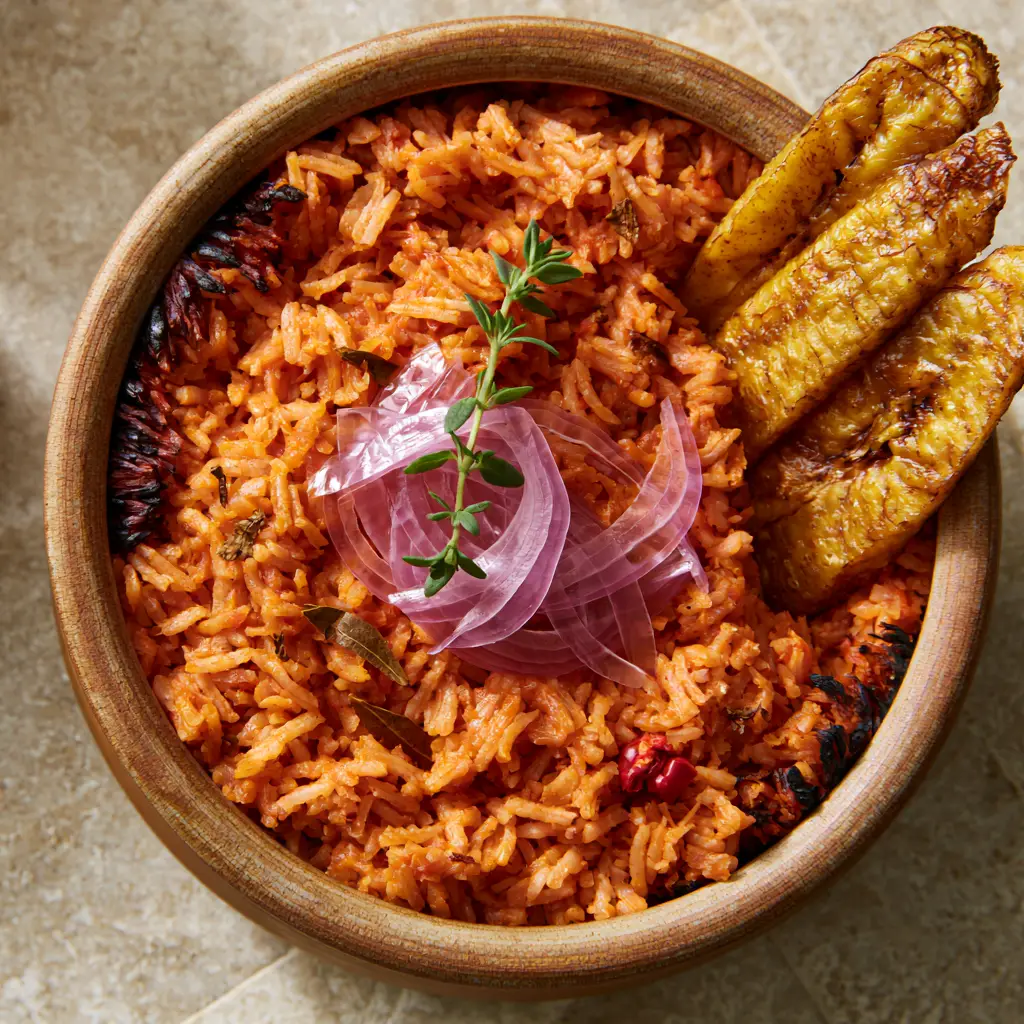
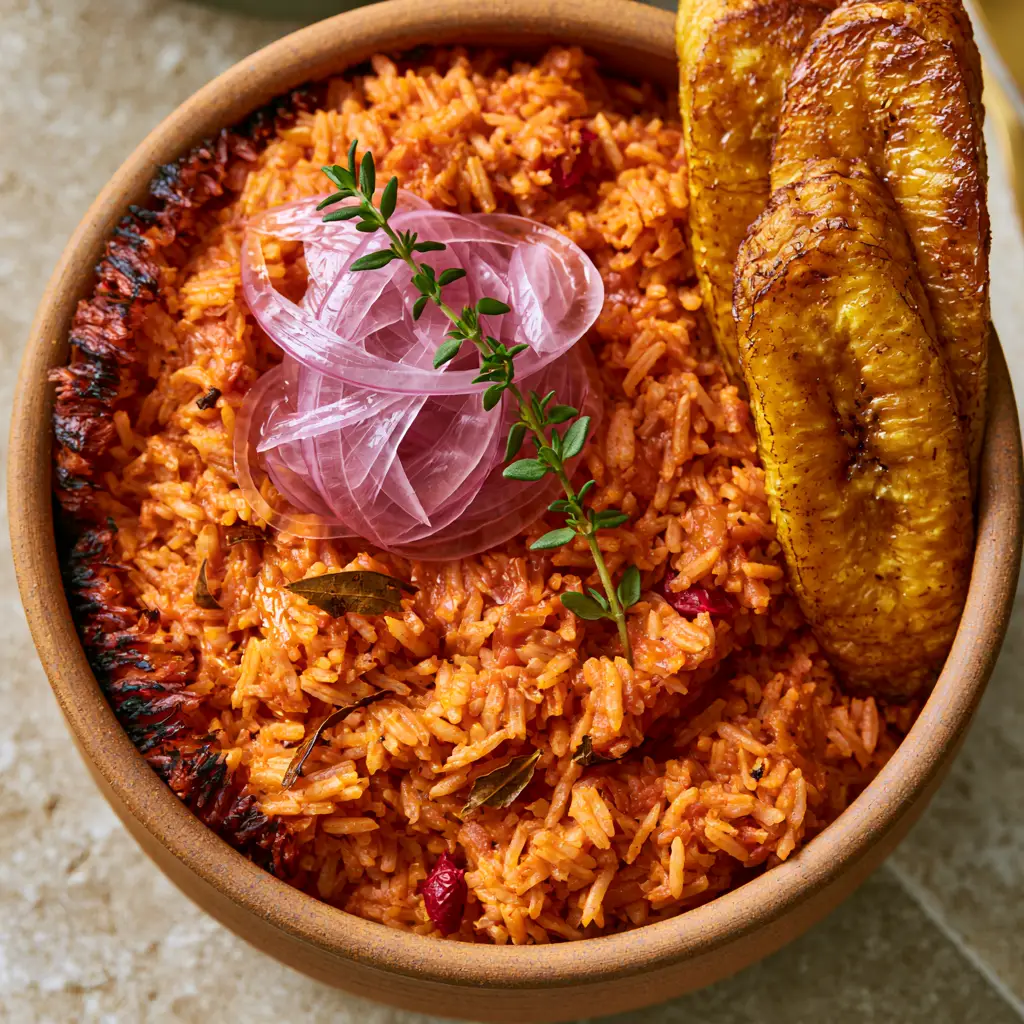
Achieving the perfect “Instagrammable” Jollof requires more than just throwing ingredients into a pot. We are aiming for a specific set of visual cues that signal high-quality preparation:
- Grain Separation: Every single long-grain parboiled rice kernel should be distinct, coated in a concentrated tomato-pepper reduction without being greasy.
- The Iconic “Bottom Burn”: Also known as itadi, these slightly charred rice bits at the edges provide the essential smoky aroma.
- Vibrant Contrast: The deep red rice is offset by the bright green of a fresh thyme sprig and the golden-brown caramelization of diagonal plantain slices.
- The Finishing Touches: Fine flecks of dried bay leaves and red scotch bonnet peppers hint at the heat and complexity within.
The Foundation: Essential Ingredients for the Perfect Base
To recreate the depth of flavor found in the best Nigerian lunch recipes, you must start with a high-quality “Obun-Ata” (the pepper mix). Each ingredient serves a structural and visual purpose in the final dish.
Long-Grain Parboiled Rice: 3 cups (600g). This is non-negotiable for the “separate grain” look. Unlike jasmine or basmati, parboiled rice holds its shape during the long steaming process required for Jollof.
Red Bell Peppers (Tatashe): 3 large (approx. 450g). These provide the vibrant red color and a sweet, smoky base without overwhelming the dish with heat.
Scotch Bonnet Peppers (Atarodo): 2-3 peppers. These provide the signature heat and those tiny red flecks visible in the final presentation. Adjust to your heat tolerance.
Tomato Paste: 1/2 cup (140g) concentrated. This adds the deep orange-red tint and a necessary acidity to balance the richness of the oil.
Vegetable Oil: 1/2 cup (120ml). Essential for frying the sauce until the oil separates, ensuring the rice doesn’t stick together.
Red Onions: 2 medium. One is blended into the base, while the other is sliced into paper-thin translucent rings for the final raw garnish.
Seasoning Foundation: 3 dried bay leaves, 1 tsp (2g) dried thyme, and 2-3 bouillon cubes (Maggi or Knorr). These provide the “savory” backbone that defines Nigerian lunch recipes.
The Garnish: 1 large ripe plantain (yellow with black spots) and 1 fresh thyme sprig. The plantain provides the caramelized sweetness that cuts through the spice.
Professional Culinary Tools for Jollof Success
To achieve the specific “charred rice bits” mentioned in our blueprint, the choice of cookware is vital. A heavy-bottomed cast iron pot or a traditional Dutch oven is superior to non-stick pans. The heavy base allows for even heat distribution and facilitates the “controlled burn” at the bottom of the pot without ruining the entire batch.
You will also need a high-speed blender to achieve a perfectly smooth pepper puree and a fine-mesh strainer to wash the rice until the water runs clear. Removing excess starch is the secret step many home cooks miss when trying to get separate grains.
Step-By-Step: Mastering the Smoky Jollof Technique
1. Preparing the Signature Pepper Base
In a blender, combine the red bell peppers, scotch bonnets, one onion, and two fresh tomatoes. Blend until completely smooth. Pour this mixture into a pot and boil it over medium-high heat for 10-15 minutes until the water evaporates, leaving a thick, concentrated paste. This concentration is what creates the vibrant orange-red coating on the grains.
2. The Searing and Frying Phase
Heat the vegetable oil in your heavy-bottomed pot. Add half a sliced onion and sauté until translucent. Stir in the concentrated tomato paste and fry for 5 minutes. You will know it is ready when the paste turns a darker shade of red and the oil begins to separate from the sauce. Add your boiled pepper mixture and fry for another 10 minutes, stirring frequently to prevent sticking.
3. Incorporating the Grains
Wash your 3 cups (600g) of parboiled rice in warm water multiple times until the water is crystal clear. This removes the surface starch. Add the washed rice to the frying sauce, ensuring every grain is coated. If you’re looking for more protein-heavy Nigerian lunch recipes to serve alongside this, you might consider a side of Nigerian Egg Stew for a lighter brunch-style pairing.
4. The Steaming and The “Burn”
Add 2 cups (480ml) of chicken or beef stock and the crushed bay leaf bits. The liquid should just barely cover the rice. Cover the pot with a layer of aluminum foil, then the lid. This traps the steam, which is what actually cooks the rice. Cook on the lowest possible heat for 30 minutes. In the last 5 minutes, turn the heat up to medium to intentionally create those “charred rice bits” at the bottom. You will hear a slight crackling sound and smell a hint of smoke—this is the “party style” signature.
5. Preparing the Caramelized Plantains
While the rice steams, peel your ripe plantain and slice it into three long, diagonal pieces. Fry in a separate pan with a tablespoon of oil over medium heat until the edges are golden-brown and caramelized. These should be soft and sweet, providing the perfect textural foil to the firm rice grains.
Expert Tips for Visual and Flavor Perfection
- The Steam Secret: Never add too much water. Jollof rice should be steamed, not boiled. If the rice is still hard after 30 minutes, add 1/4 cup (60ml) of water and reseal the foil.
- The Onion Garnish: Slice the raw red onions into thin rings and soak them in ice water for 5 minutes before serving. This removes the “bite” and makes them beautifully translucent.
- The Thyme Touch: Only add the fresh thyme sprig at the very end. Its residual heat will release the oils without the leaves wilting into the rice.
- Resting Period: Allow the rice to sit, covered, for 10 minutes after turning off the heat. This allows the moisture to redistribute, ensuring those separate, glistening grains.
What to Serve with Your Smoky Jollof Rice
While this dish is a powerhouse on its own, many Nigerian lunch recipes thrive on variety. For a complete feast, consider pairing this with a protein of your choice. A thinly sliced ribeye steak seasoned with suya spice is a modern twist that adds incredible luxury to the meal.
If you prefer a more traditional route, a simple side of vinegar cucumber salad provides a refreshing acidity that cleanses the palate between bites of the spicy, smoky rice. For those who enjoy a bit of crunch, smashed baby potatoes seasoned with garlic can add an extra layer of comfort to the plate.
Frequently Asked Questions
While you can use Basmati, it requires much less water and a shorter steaming time. For the traditional Nigerian lunch recipe texture where grains are firm and separate, long-grain parboiled rice is highly recommended.
The secret is the ‘bottom burn’ technique. By sealing the pot with foil and allowing the bottom layer of rice to slightly char on medium heat for the last 5 minutes, you infuse the entire pot with that smoky ‘party’ aroma.
The deep red color comes from two things: using plenty of red bell peppers (tatashe) in your base and frying your tomato paste in oil until it darkens before adding any liquid.
Mushy rice usually happens if you add too much water or don’t wash the starch off the rice. Always wash your rice until the water is clear and remember that the rice should steam in the sauce rather than boil in stock.
The Ultimate Smoky Nigerian Jollof Rice Recipe
Nigerian Lunch Recipes: The Ultimate Smoky Party-Style Jollof Rice
Ingredients
Equipment
Method
- Blend the bell peppers, scotch bonnets, tomatoes, and one onion until smooth. Boil in a pot until the liquid reduces by half and forms a thick paste.
- Heat oil in a Dutch oven. Sauté half an onion, then add tomato paste. Fry for 5 minutes, then add the boiled pepper base. Cook until the oil separates from the sauce.
- Add washed parboiled rice to the fried sauce. Stir to coat every grain. Pour in the stock and add crushed bay leaves and dried thyme.
- Cover the pot with foil and a tight lid. Simmer on low heat for 30 minutes. Do not open the lid during this time.
- In the last 5 minutes of cooking, increase the heat to medium to allow the bottom layer of rice to char slightly, creating the smoky flavor.
- Fry diagonal plantain slices until caramelized. Slice the remaining red onion into thin rings.
- Fluff the rice with a fork. Serve in a bowl topped with raw onion rings, fried plantains, and a fresh thyme sprig.
Notes
The aluminum foil is critical; it ensures the rice cooks through steam rather than boiling in excess water.
Closing & Call to Action
Mastering Nigerian lunch recipes like this Smoky Jollof Rice is a journey into the heart of West African soul food. The combination of charred smokiness, spicy pepper base, and sweet plantains creates a balance of flavors that is truly world-class. If you enjoyed this recipe, please leave a comment below and let us know how your “bottom burn” turned out!
Don’t forget to save this recipe to your favorite boards on Pinterest so you can find it the next time you’re craving an authentic taste of Nigeria. For more global inspiration, check out our collection of Indian dinner recipes or our Korean beef bowl for more quick lunch ideas!