Nigerian Egg Stew is not just a breakfast staple; it is a sensory experience defined by its vibrant crimson sauce and massive, pillowy egg clouds. If you have ever scrolled through mouth-watering photos of authentic West African cuisine, you have likely seen this dish served in a seasoned cast iron skillet, wisps of steam rising from a bed of concentrated tomato reduction. This is the comfort food that fuels millions, offering a perfect balance of heat, acidity, and rich, savory protein.
The secret to a truly elite Nigerian Egg Stew lies in the texture of the eggs themselves. We are moving away from the thin, stringy ribbons of standard scrambles and toward thick, irregular golden-yellow clusters that stand tall in the pan. Paired with the crunch of golden-edged fried yam, this dish is a masterclass in contrasting textures and bold, unapologetic flavors that represent the heart of Nigerian home cooking.
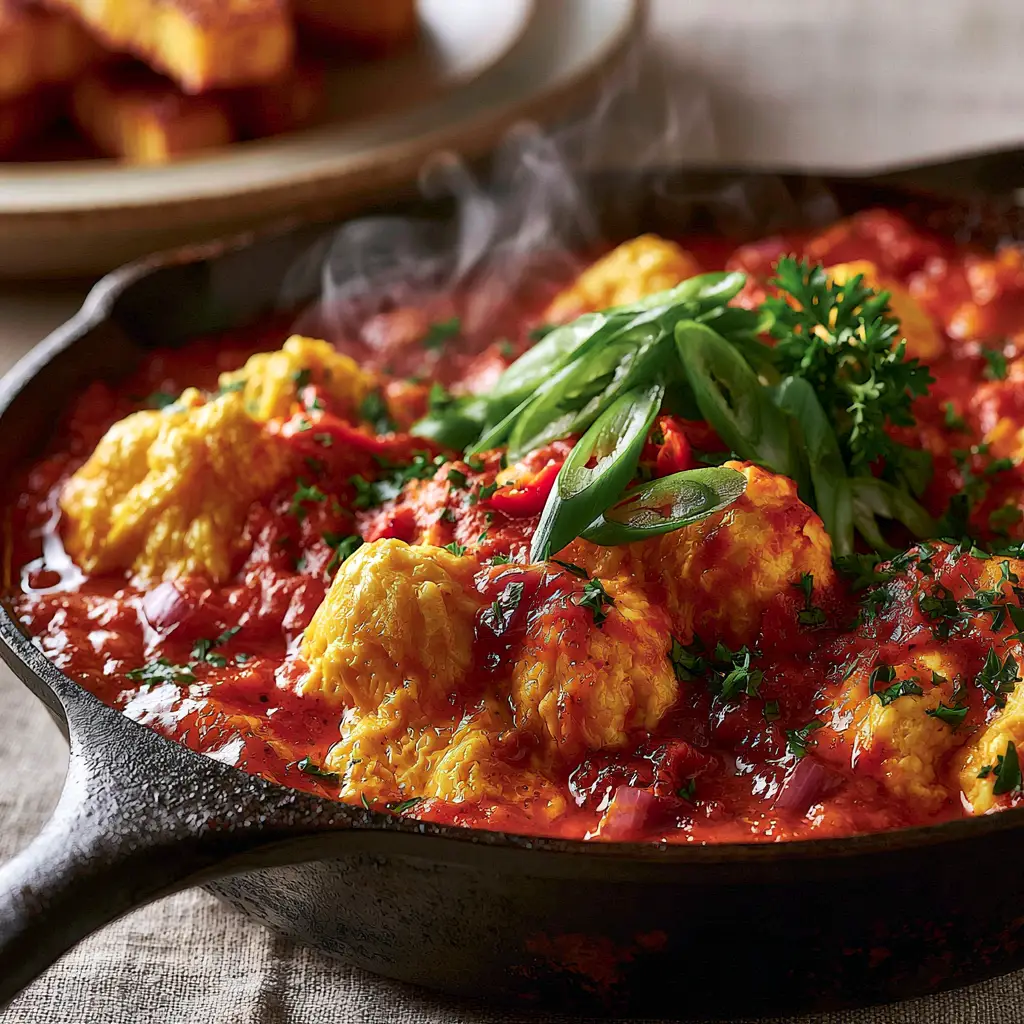
The Anatomy of the Perfect Bumpy Egg Cluster
To achieve the “bumpy” height and high-contrast shadows seen in professional culinary photography, the technique is everything. Most people make the mistake of over-stirring their eggs, which breaks down the proteins into small, flat pieces. For this Nigerian Egg Stew, we use a “low-agitation” method that allows the eggs to set into substantial, textured mounds that soak up the glossy vegetable oil sheen and spicy tomato base.
- Minimal Whisking: Whisk your eggs just until the yolks and whites are combined; over-incorporating air leads to a spongy texture rather than the dense, satisfying bite we want.
- Heat Control: The tomato base must be bubbling and concentrated before the eggs hit the pan to ensure they seize quickly and hold their shape.
- The Gentle Fold: Instead of stirring, we use a silicone spatula to gently lift and fold the eggs from the bottom of the skillet once the edges have set.
The Essential Ingredients for a Deep Crimson Tomato Reduction
The foundation of this Nigerian Egg Stew is the “stew base,” a concentrated blend of aromatics and peppers. Achieving that deep crimson color requires patience and the right ratio of ingredients to ensure there is no watery runoff on the plate.
Large Eggs: You will need 6 to 8 large eggs to create those massive, irregular clusters that dominate the skillet. These provide the structural protein that makes the dish feel like a substantial meal rather than a side sauce.
Plum Tomatoes: Use 4 large plum tomatoes (approx. 400g), finely diced or pulsed. Their lower water content compared to beefsteak tomatoes helps the sauce thicken faster into a heavy, concentrated base.
Red Bell Peppers (Tatashe): 2 large red bell peppers (300g) provide the vibrant red hue and a subtle sweetness that balances the heat of the scotch bonnets. In Nigerian cooking, these are essential for the signature “look” of the stew.
Scotch Bonnet or Habanero Peppers: 1-2 peppers (minced) deliver the necessary fire. Look for flecks of red habanero within the finished sauce to signal the authentic heat level of the Nigerian Egg Stew.
Red Onion: 1 medium red onion (150g), thinly sliced into half-moons. These should be softened until translucent but still hold enough structure to be visible as purple ribbons throughout the deep red sauce.
Vegetable Oil: 1/2 cup (120ml) of high-quality vegetable oil. Do not skimp here; the oil is what creates the glossy sheen and carries the fat-soluble flavors of the peppers and onions.
Seasoning Base: A combination of 1 tsp (5g) curry powder, 1/2 tsp (2g) dried thyme, and 2 bouillon cubes (or 2 tsp (10g) chicken powder). This provides the “umami” backbone typical of West African Nigerian lunch recipes.
Must-Have Equipment for Skillet Mastery
To replicate the rustic, handheld smartphone photo aesthetic, a 10-inch (25cm) seasoned black cast iron skillet is non-negotiable. Cast iron retains heat exceptionally well, allowing the tomato base to reduce evenly without scorching in spots. The dark background of the seasoned metal also makes the golden-yellow egg clusters pop visually.
You will also need a sharp chef’s knife for mincing the scotch bonnets and a wide silicone spatula. The spatula is crucial for the “lifting” motion required to create those high-contrast shadows and “bumpy” heights in the egg clusters. If you enjoy experimenting with different textures in the kitchen, you might also find success using similar techniques for stuffed zucchini recipes or other vegetable-forward pans.
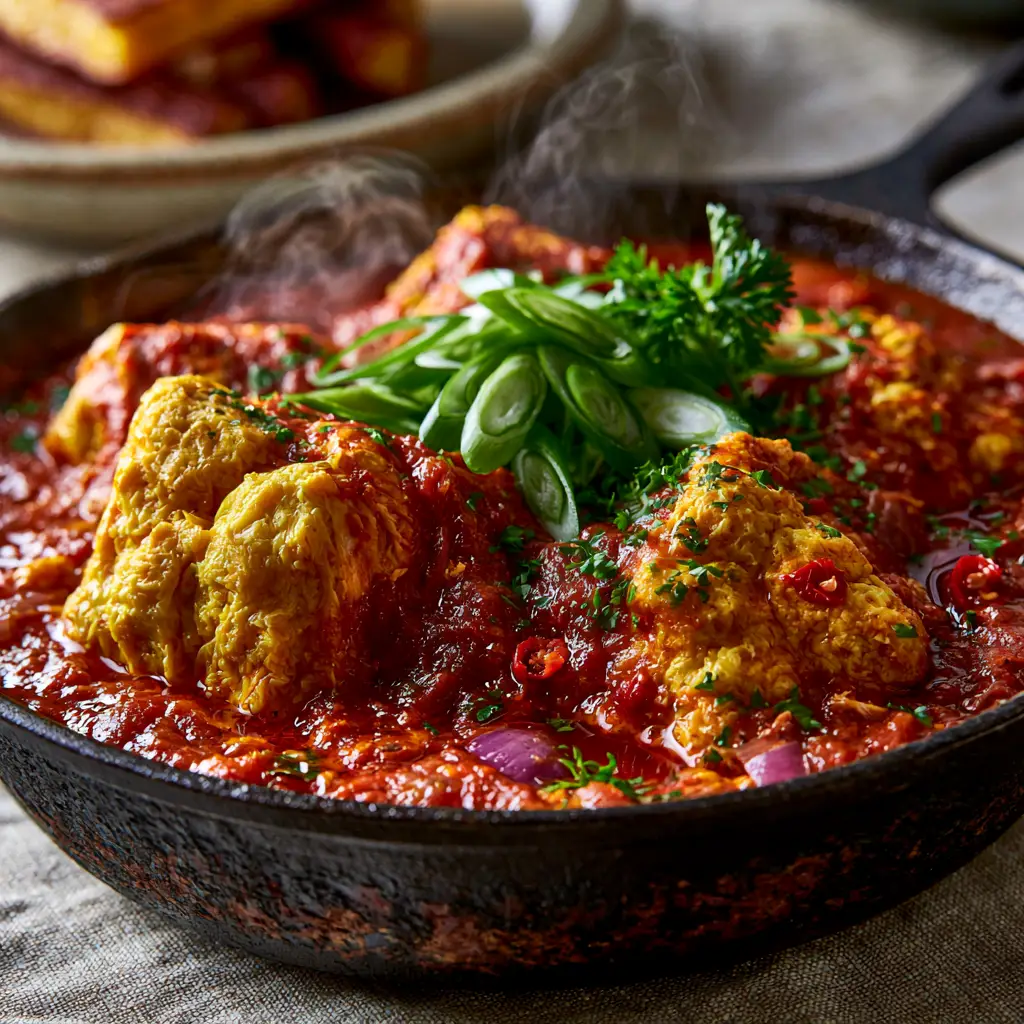
Step-by-Step Instructions for Authentic Nigerian Egg Stew
Preparing the Spicy Tomato Base
Begin by finely dicing your plum tomatoes and red bell peppers. If you prefer a smoother sauce, you can pulse them in a blender, but be careful not to liquefy them; we want a thick, textured reduction. Mince the scotch bonnet peppers carefully, keeping the seeds if you desire maximum heat.
Searing the Aromatics and Reducing the Sauce
Heat the 1/2 cup (120ml) of vegetable oil in your cast iron skillet over medium heat. Once the oil is shimmering and has a glossy sheen, add the sliced red onions. Sauté for 3-4 minutes until softened and fragrant. Add the diced tomatoes, bell peppers, and scotch bonnets. Season with the bouillon, curry powder, thyme, and a pinch of salt.
Cook the mixture for 12-15 minutes, stirring occasionally. You are looking for a specific visual cue: the oil should begin to separate from the tomato mixture and rise to the top. This indicates that the water has evaporated, leaving behind a heavy, concentrated crimson base.
Creating the Signature Egg Clusters
In a medium bowl, crack the eggs and add a pinch of salt. Whisk lightly with a fork just to break the yolks. Pour the eggs directly over the bubbling tomato reduction. Do not stir immediately. Let the eggs sit undisturbed for about 60 seconds until the bottom begins to set into a solid layer.
Using your spatula, gently push the cooked egg from the edges toward the center, allowing the raw egg to flow into the empty spaces. Continue this gentle folding process every 30 seconds. This creates the massive, irregular, and bumpy egg clusters that give this Nigerian Egg Stew its iconic look. Stop cooking while the eggs still look slightly moist; the residual heat of the cast iron will finish them to perfection.
The Final Garnish and Presentation
Turn off the heat and immediately top the dish with a vibrant garnish of sliced green spring onions (scallions) and a touch of chopped fresh parsley. The green provides a stunning color contrast against the deep red and golden yellow. Serve immediately while wisps of steam are still visible.
Expert Tips for Success
- The Oil Separation Rule: Never add the eggs until you see the oil “floating” on top of the sauce. If you add eggs too early, the excess water from the tomatoes will make the eggs soggy and prevent them from forming clusters.
- Don’t Over-Season: Nigerian bouillon cubes are quite salty. Always taste your tomato base before adding extra salt to the eggs.
- Skillet Maintenance: If using cast iron, ensure it is well-seasoned to prevent the eggs from sticking to the bottom, which can ruin the “bumpy” texture.
- Heat Management: If the sauce is splattering too much during the reduction phase, lower the heat slightly. A slow fry creates a deeper flavor than a fast boil.
What to Serve With Nigerian Egg Stew
While this stew is versatile, it is traditionally paired with “Dundun” (fried yam). The thick, golden-edged fried yam fries provide a starchy, slightly sweet vessel for scooping up the spicy egg clusters. If you are looking for healthy dinner ideas, you can also serve this alongside a fresh vinegar cucumber salad to cut through the richness of the oil.
For those who prefer a more westernized breakfast, this stew pairs beautifully with toasted sourdough or even smashed baby potatoes. The key is to have a side dish that can handle the thick, heavy sauce without becoming mushy.
Storage, Reheating, and Freezing Advice
Nigerian Egg Stew is best enjoyed fresh from the skillet, but it can be stored in an airtight container in the refrigerator for up to 3 days. When reheating, do so gently in a pan over low heat with a teaspoon of water to loosen the sauce. Avoid the microwave if possible, as it can make the egg clusters rubbery.
Freezing is not recommended for this specific recipe, as the texture of the fried tomatoes and the delicate egg proteins will change significantly upon thawing, losing that signature “bumpy” height and glossy sheen.
Frequently Asked Questions
Yes, you can use canned crushed tomatoes, but be sure to cook them longer to remove the canned metallic taste and achieve the necessary concentrated thickness.
The secret is low agitation. Let the eggs set for a full minute after pouring them in, then use a spatula to gently fold rather than stir rapidly.
It traditionally has a kick from scotch bonnet peppers, but you can control the heat by removing the seeds or reducing the number of peppers used.
A neutral vegetable oil or peanut oil is best. It has a high smoke point and allows the flavors of the tomatoes and peppers to shine without adding its own heavy flavor.
Watery stew usually occurs if the tomato and pepper base wasn’t reduced long enough. You must fry the sauce until the oil separates and rises to the top before adding the eggs.
The Ultimate Nigerian Egg Stew Recipe
Nigerian Egg Stew: The Ultimate Guide to Thick, Golden Egg Clusters
Ingredients
Equipment
Method
- Heat vegetable oil in a cast iron skillet over medium heat. Add red onions and sauté for 3-4 minutes until softened.
- Add tomatoes, bell peppers, and scotch bonnets. Season with bouillon, curry, and thyme. Fry for 12-15 minutes until the oil separates and the sauce is a deep crimson.
- Pour lightly whisked eggs over the sauce. Let sit for 60 seconds without stirring to allow the base to set.
- Gently fold the eggs from the edges to the center every 30 seconds to create thick, bumpy clusters. Remove from heat while slightly moist.
Notes
Use a cast iron skillet for the best heat distribution and aesthetic presentation.

Closing and Call to Action
This Nigerian Egg Stew is a testament to how simple ingredients—eggs, tomatoes, and peppers—can be transformed through technique into a world-class meal. Whether you are serving it for a traditional Sunday brunch or a quick weeknight dinner, the rich textures and bold spices are sure to impress. If you enjoyed this recipe, please leave a comment below and share your photos with us! Don’t forget to pin this recipe to your favorite breakfast board on Pinterest so you can find it whenever the craving hits.