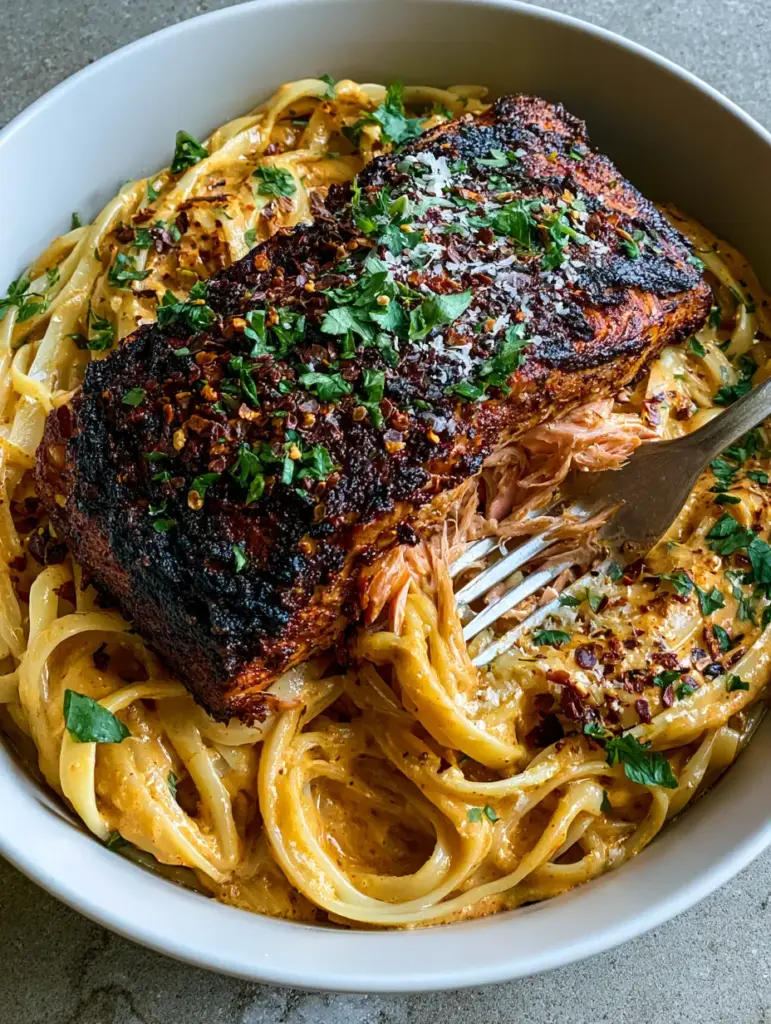
Blackened Cajun salmon pasta is the kind of dish that stops a dinner table conversation the moment it is served. Imagine a perfectly seared, spice-crusted Atlantic salmon fillet resting atop a luxurious bed of al dente fettuccine, all enveloped in a thick, orange-hued cream sauce that carries just the right amount of heat.
This recipe isn’t just about feeding your hunger; it is a sensory experience designed to replicate high-end bistro quality in your own kitchen. We are focusing on the contrast between the dark, crispy blackened crust and the moist, steaming pink layers of the salmon meat.
Whether you are hosting a special date night or simply craving a restaurant-level meal on a Tuesday, this Blackened Cajun salmon pasta delivers on every promise of flavor and texture. Let’s dive into the culinary science of blackening and the secrets to the perfect emulsified cream sauce.
The Essential Elements of This Show-Stopping Seafood Dish
- Textural Contrast: You get the crunch of the blackened spice bark against the buttery, flaky interior of the salmon.
- The “Orange Glow” Sauce: A thick, glossy cream base tinted naturally by smoked paprika and cayenne pepper for a visual and flavorful punch.
- Perfectly Al Dente Base: Fettuccine noodles cooked with enough “bite” to stand up to the heavy, velvety sauce.
- Garden-Fresh Finish: A heavy inventory of finely chopped parsley and micro-planed parmesan to brighten the deep, smoky notes.
The Flavor Palette: Ingredients for Success
To achieve the visual and culinary results seen in professional food photography, every ingredient serves a specific purpose. We aren’t just tossing things in a pan; we are building layers of flavor.
Fresh Atlantic Salmon Fillets: You will need 2 large fillets, approximately 6 oz (170g) each. Look for fillets with vibrant pink color and firm texture to ensure they flake beautifully when pierced with a fork.
Fettuccine Pasta: 8 oz (225g) of dried fettuccine is the ideal canvas. The wide ribbons are structurally necessary to hold the weight of the thick Cajun cream sauce.
Heavy Cream: 1.5 cups (360ml) of high-fat heavy cream provides the glossy, thick foundation for the sauce. Do not substitute with milk, as the sauce will lack the necessary viscosity.
Cajun Seasoning Blend: 3 tbsp (45g) of a blend containing smoked paprika, garlic powder, onion powder, dried thyme, dried oregano, and cayenne pepper. This creates the “blackened” effect when seared at high temperatures.
Unsalted Butter: 2 tbsp (30g) for the sauce base and 1 tbsp (15g) for searing. Butter carries the fat-soluble flavors of the spices and helps create that crispy crust.
Parmesan Cheese: 1/2 cup (50g) of finely grated, micro-planed parmesan. This acts as a thickener and adds a nutty, salty depth that balances the spice.
Foundational Aromatics: 3 cloves of minced garlic and 1 small shallot. These provide the “invisible” flavor bridge between the heavy cream and the bold Cajun spices.
Garnish Essentials: A handful of fresh flat-leaf parsley, dried red pepper flakes for an extra kick, and cracked black pepper for an aromatic finish.
Choosing the Right Salmon for Blackening
When making Blackened Cajun salmon pasta, the quality of your fish is paramount. While sockeye salmon is delicious, Atlantic salmon is often preferred for this specific dish because of its higher fat content, which keeps the meat moist even under the intense heat required for blackening.
Look for “center-cut” fillets. These are uniform in thickness, ensuring that the entire fillet cooks at the same rate. If one side is significantly thinner, it will dry out before the crust has time to fully develop on the thicker side.
Always pat your salmon bone-dry with paper towels before applying the spices. Any moisture on the surface of the fish will create steam, preventing the spices from adhering and forming that signature dark, crispy bark.
The Science of the Perfect Blackened Crust
Blackening is a cooking technique popularized by Chef Paul Prudhomme. Contrary to popular belief, it is not “burnt” food. It is the process of toasted spices forming a delicious, savory crust.
The key is high heat and a fat source with a high smoke point, or using butter in a way that allows it to brown without turning bitter. In this recipe, we use a combination of oil and butter to get the flavor of the butter with the heat tolerance of the oil.
You want to see the spices turn a deep, dark mahogany. This creates a flavor profile known as the Maillard reaction, where proteins and sugars transform into hundreds of different flavor compounds. This is why creamy Cajun pasta tastes so much more complex when the protein is blackened rather than just grilled.
Step-by-Step Evolution of the Dish
Preparing the Blackened Salmon Foundation
Start by mixing your Cajun spice blend in a small bowl. Generously coat the top and sides of the salmon fillets, pressing the spices into the flesh so they stick. You want a thick layer of seasoning; this is what becomes the crust.
Heat a heavy-bottomed skillet or cast-iron pan over medium-high heat. Add 1 tbsp (15g) of butter and a splash of oil. Once the butter is foaming and just starting to brown, lay the salmon fillets skin-side down (or top-side down if skinless) into the pan.
Search for the visual cue: Do not move the fish for at least 3-4 minutes. You are looking for a dark, textured crust to form. Flip carefully and cook for another 3 minutes until the salmon is opaque but still steaming and pink in the center.
Mastering the Glossy Orange Cream Sauce
While the salmon rests, boil your fettuccine in heavily salted water until it is just shy of al dente. Reserve 1/2 cup (120ml) of the pasta water—this is “liquid gold” for sauce emulsification.
In the same skillet used for the salmon (don’t wash it! those brown bits are flavor), add the remaining butter, garlic, and shallots. Sauté until translucent and fragrant, about 2 minutes. Pour in the heavy cream and a tablespoon of the leftover Cajun seasoning.
Whisk constantly over medium heat. You will see the sauce transform into a beautiful, thick orange-tinted liquid. Stir in the grated parmesan cheese until the sauce is glossy and coats the back of a spoon. If you enjoy a variety of textures, you might notice this base is similar to what we use in cajun sausage pasta recipes.
The Final Assembly and Plating
Toss the al dente fettuccine directly into the sauce. If the sauce feels too thick, add the reserved pasta water one tablespoon at a time until the noodles are perfectly swirled in a velvety coating.
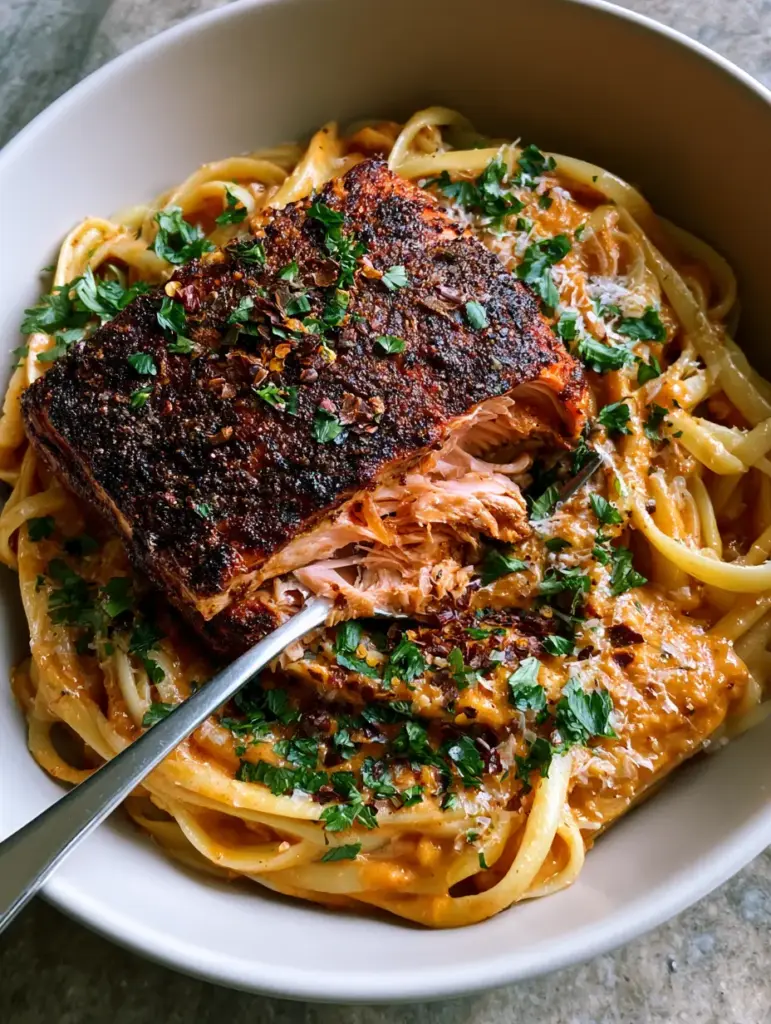
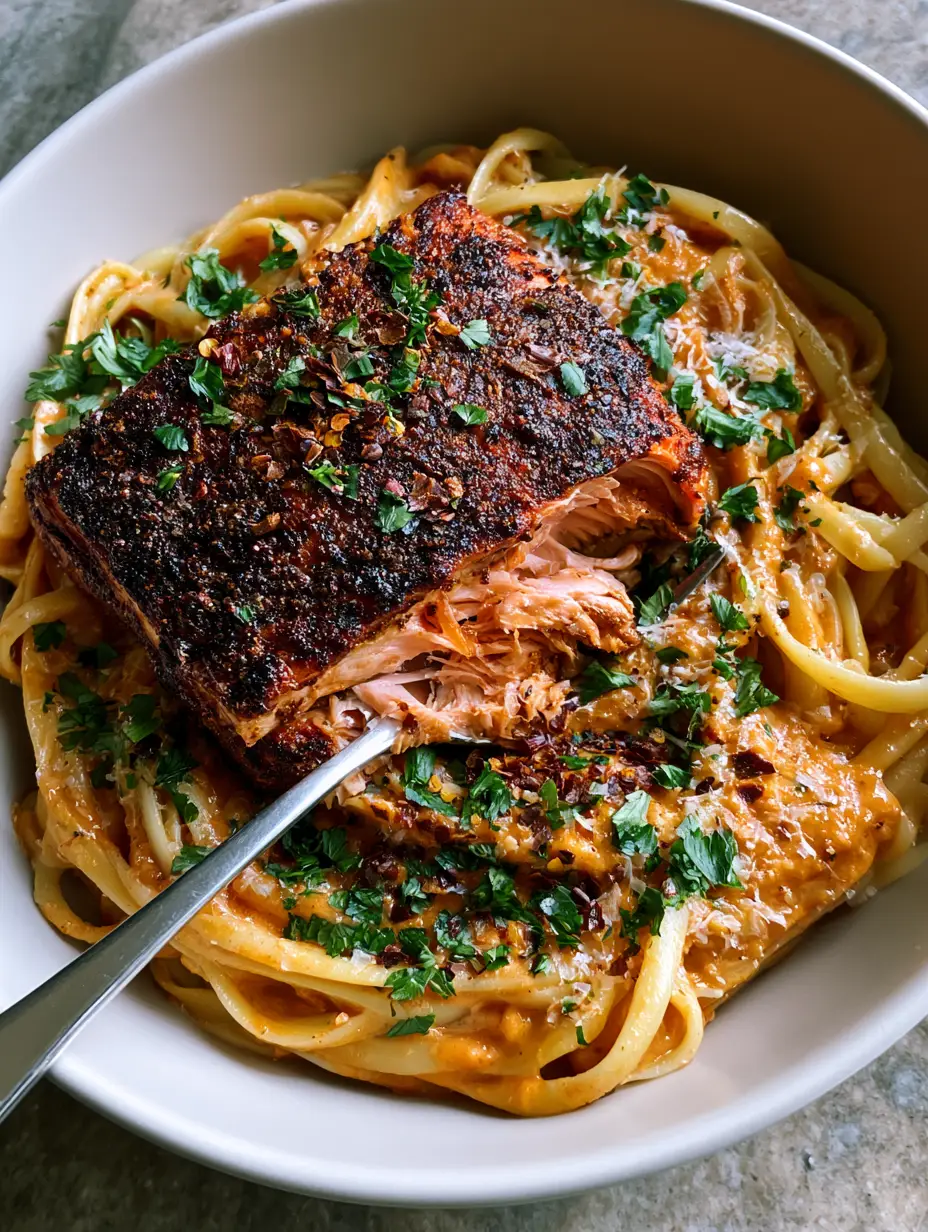
Transfer the pasta to a shallow ceramic bowl. Carefully place the blackened salmon fillet on top. Use a silver fork to gently flake open one corner of the salmon, revealing the moist pink layers inside.
Finish with a heavy garnish of finely chopped parsley, a sprinkle of red pepper flakes, and a final dusting of micro-planed parmesan cheese and cracked black pepper. The contrast of the green herbs against the orange sauce is what makes this dish pop.
Expert Tips for Success
- Don’t Overcook the Salmon: Salmon continues to cook once removed from the pan. Pull it off the heat when it reaches an internal temperature of 130°F (54°C) for a perfect medium.
- Room Temperature Fish: Take your salmon out of the fridge 15 minutes before cooking. Cold fish hitting a hot pan causes the muscle fibers to tighten, resulting in a tougher texture.
- The Pasta Water Trick: Always reserve pasta water. The starch in the water helps the sauce cling to the fettuccine rather than sliding off to the bottom of the bowl.
- Spice Control: If you are sensitive to heat, reduce the cayenne pepper in your spice blend. The “blackened” look comes mostly from the paprika, so you can keep the visual without the burn.
Storage and Reheating Advice
Seafood pasta is always best enjoyed fresh, but you can store leftovers in an airtight container in the refrigerator for up to 2 days. Because of the high cream content, the sauce will thicken significantly as it cools.
To reheat, avoid the microwave if possible, as it can make the salmon rubbery. Instead, place the pasta and a splash of water or milk in a skillet over low heat. Stir gently until the sauce becomes creamy again, then add the salmon at the very end just to warm through.
Freezing is not recommended for this dish, as the cream sauce will likely break and become grainy upon thawing.
Creative Pairings and Variations
This Blackened Cajun salmon pasta is a complete meal on its own, but it pairs beautifully with a crisp green salad or roasted zucchini. If you enjoy this flavor profile, you might also want to explore our Cajun linguine or even a spinach salmon pasta for a lighter, more vegetable-forward option.
For those who prefer different proteins, the same blackening technique works wonders in a one-pot Cajun chicken pasta. If you’re looking for something with a bit of a twist, try adding some sautéed peppers as seen in a spicy rattlesnake pasta.
Frequently Asked Questions
Yes, but ensure it is completely thawed and patted extremely dry with paper towels. Excess moisture will prevent the blackened crust from forming.
It has a medium kick due to the cayenne and red pepper flakes. You can easily control the heat by reducing the amount of cayenne in your spice blend.
Blackened refers to a cooking technique where protein is coated in a heavy spice blend and seared at high heat. The spices toast and darken, creating a flavorful, crispy crust that isn’t actually burnt.
Linguine or pappardelle are excellent substitutes as they provide a wide surface area for the thick Cajun cream sauce to cling to.
The orange color comes from the spices. If it’s too thin, simmer it longer to reduce the liquid or add more parmesan cheese to help it emulsify.
The Complete Blackened Cajun Salmon Pasta Recipe
Blackened Cajun Salmon Pasta: The Ultimate Creamy and Spicy Seafood Dinner
Ingredients
Equipment
Method
- Pat salmon fillets dry. Generously coat all sides with 2 tbsp of Cajun seasoning, pressing it firmly into the flesh.
- Heat 1 tbsp butter and oil in a skillet. Sear salmon for 3-4 minutes per side until a dark, textured crust forms and the interior is flaky pink.
- Cook fettuccine in salted water until al dente. Reserve 1/2 cup (120ml) of pasta water before draining.
- In the same skillet, melt remaining butter. Sauté shallots and garlic until fragrant.
- Whisk in heavy cream and remaining Cajun seasoning. Simmer until thickened, then stir in parmesan cheese until glossy and orange-hued.
- Add pasta to the sauce, using reserved water to adjust consistency. Top with salmon fillets.
- Finish with chopped parsley, red pepper flakes, and extra parmesan.
Notes
Ensure the pan is very hot before adding the fish to achieve the blackened crust.
Join the Honest Food Craving Community
If you made this Blackened Cajun salmon pasta, we want to see it! The dark crust against that orange sauce is a photographer’s dream. Share your photos on Instagram and tag us, or pin this recipe to your favorite dinner board on Pinterest.
For more restaurant-quality seafood recipes delivered straight to your inbox, sign up for our newsletter below. Happy cooking!